























Trump Vows Strikes if Iran Rejects His Terms: NPR


On April 8, 2026, U.S. President Donald Trump reaffirmed that American forces in the Middle East would continue their presence until a definitive agreement with Iran is reached and implemented. His assertion followed escalating tensions during an unstable two-week ceasefire, characterized by ongoing Israeli airstrikes in Lebanon that reportedly resulted in substantial civilian casualties.
Current Tensions and Strikes in Lebanon
In recent days, Israeli operations have intensified, leading to the death of over 250 individuals and wounding more than 1,160 in attacks that struck residential neighborhoods far from Hezbollah strongholds. The Israeli military conducted an unprecedented assault, launching around 100 airstrikes in 10 minutes across Beirut.
According to Israel, these military actions were necessary as they claimed Hezbollah was using civilian areas to disperse their operations. The International Committee of the Red Cross condemned the attacks on densely populated regions.
- Casualties in Lebanon: Over 250 killed, 1,160 wounded
- Israeli Airstrikes: 100 strikes during one day
Ceasefire and Peace Talks Initiative
The ceasefire appears fragile, with confusion surrounding its terms. U.S. and Iranian officials are set to engage in high-level discussions in Islamabad, facilitated by Pakistani Prime Minister Shehbaz Sharif. The U.S. delegation will be led by Vice President JD Vance.
However, Iran has presented a 10-point demand, including full control over the Strait of Hormuz, removal of sanctions, and rights to nuclear enrichment, which the White House has dismissed.
Strait of Hormuz: Key Shipping Route
Control over the Strait of Hormuz is critical, as it accounts for approximately 20% of the world’s oil shipping. Recent reports have arisen regarding Iran potentially blocking this vital waterway, although the White House has refuted these claims, stating that traffic through the strait had increased.
- Importance of the Strait: Carries 20% of global oil shipments
- Ship Traffic: 120 to 150 ships per day before the conflict
Market Reactions
As tensions escalated, markets reacted negatively, reversing previous gains. Oil prices surged, with Brent crude reaching $97 per barrel, a 2.4% increase. Investors are closely monitoring developments in the region.
Iran’s Response and International Reactions
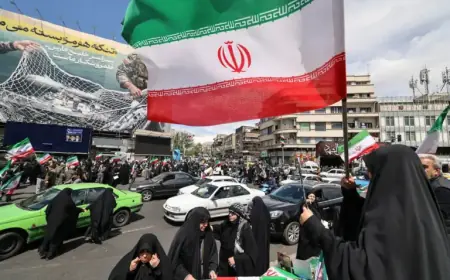
Iran has condemned the ongoing Israeli operations, asserting that the U.S. must act to uphold its commitments. Tehran maintains that the future of the conflict depends on Washington’s actions regarding the terms of the ceasefire.
This statement reflects a broader concern regarding regional stability and adherence to negotiated agreements amid rising hostilities between the involved nations.
The situation remains highly volatile, with the potential for further escalations unless a diplomatic solution is reached promptly.