
























CMS Experiment Delivers High-Precision W Boson Mass Measurement

The recent study conducted by the CMS (Compact Muon Solenoid) collaboration at CERN marks a significant milestone in particle physics. Their experiment focuses on high-precision measurements of the W boson mass, a crucial parameter in the Standard Model of particle physics.
W Boson Mass Measurement: A Key Achievement
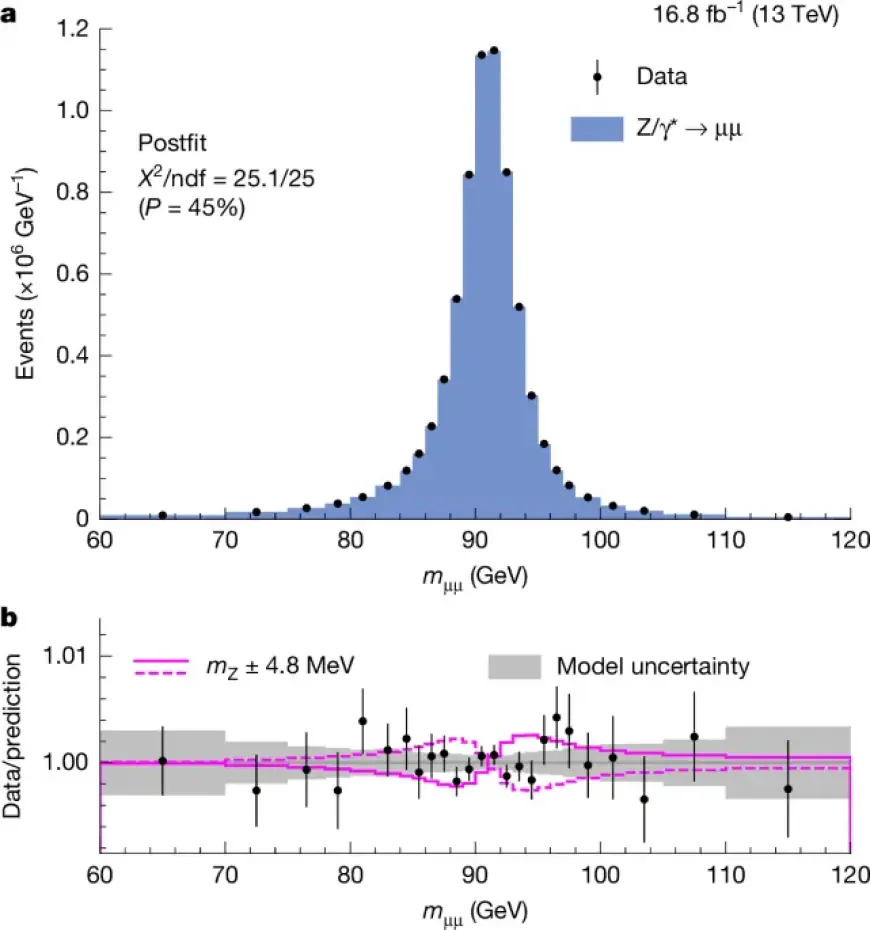
The new findings present a precise determination of the W boson mass. This measurement plays a vital role in testing the predictions made by theoretical models. Precise measurements contribute to our understanding of the fundamental forces in the universe.
Collaborating Institutions and International Efforts
This groundbreaking research involved contributions from numerous institutions worldwide. Notable participating universities and research facilities include:
- Yerevan Physics Institute, Armenia
- Institut für Hochenergiephysik, Austria
- Universiteit Antwerpen, Belgium
- Vrije Universiteit Brussel, Belgium
- Ghent University, Belgium
- Universität Zürich, Switzerland
- Carnegie Mellon University, USA
- National Central University, Taiwan
- University of Tokyo, Japan
- MIT, USA
In total, institutions from over 40 countries participated in this extensive research effort, highlighting the collaborative spirit of the global scientific community.
Significance of High-Precision Measurements
High-precision measurements, such as the W boson mass, not only affirm existing theories but also pave the way for new physics beyond the Standard Model. The precision of these measurements is crucial as it can either validate or challenge fundamental concepts in particle physics.
Conclusion and Future Perspectives
The ongoing research and collaboration at CERN reflect a strong commitment to advancing our understanding of the universe. As physicists analyze the collected data, the insights gained are expected to drive future inquiries and innovations in the field.
For more updates on this important research and its implications in particle physics, stay tuned to Filmogaz.com.