























ASX Drops Amid Ceasefire Uncertainty; Oil Stocks Climb


The Australian share market experienced a downturn amid heightened tensions in the Middle East. The situation escalated after Israel’s recent military actions in Lebanon, creating uncertainty around an already fragile ceasefire. Consequently, the S&P/ASX 200 index fell by 0.5%, losing 45.2 points in early trading.
Impact of Oil Prices and Market Reactions
Oil prices have shown volatility due to ongoing geopolitical conflicts. Following the announcement of a two-week ceasefire by the U.S. in the ongoing crisis involving Iran, oil prices initially plunged. However, as concerns resurfaced, Brent Crude prices rose over 2% to approximately $US97 per barrel, recovering from earlier depths.
Energy Sector Gains
- Woodside shares increased nearly 4%
- Santos shares rose by 2.45%
- Yancoal also experienced similar gains
This increase in energy stocks reflects the market’s reaction to fluctuating oil prices amidst international tensions. Additionally, major financial institutions like the National Australia Bank posted modest gains, with a rise of 1.72%.
Sector Performance Overview
Market uncertainties have led to mixed performances across various sectors:
- Tech sector: Heavy losses, with Wistech down 7.7% and Xero declining by 6.83%
- Mining sector: BHP experienced a 1% drop while Rio Tinto fell over 2%
- Gold mining companies: Evolution Mining down nearly 4% and Northern Star down 1.42%
In contrast, Bendigo and Adelaide Bank shares surged by 9% after announcing job cuts and new technology partnerships aimed at reducing costs.
International Market Trends
Globally, markets reacted positively to the ceasefire news. The U.S. S&P 500 climbed 2.5%, while the Dow Jones Industrial Average and the Nasdaq both rose by 2.8%. Asian markets also reported significant gains:
- South Korea’s Kospi index: +6.9%
- Japan’s Nikkei 225: +5.4%
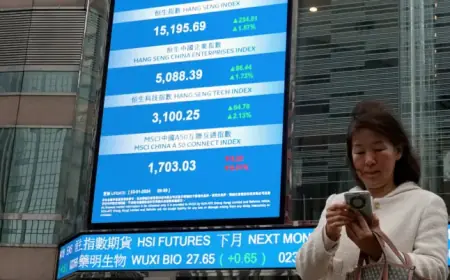
- Hong Kong’s Hang Seng: +3.1%
Future Uncertainties
Despite these short-term gains, analysts warn of ongoing volatility. “There remains a high degree of uncertainty regarding the situation in the Middle East,” noted NAB analysts. Attention will shift to upcoming peace talks scheduled for Saturday in Islamabad, which could influence market stability.
Market participants are also eyeing potential shifts in monetary policy by the Federal Reserve, with a rough estimate suggesting a one-in-three chance of interest rate cuts in 2026 as inflation fears remain prevalent.
As geopolitical events unfold, investors will be watching closely. The intricate link between international relations and market performance continues to drive investor sentiment across the globe.