
























US EIA Warns Fuel Prices May Rise for Months Despite Hormuz Reopening

The U.S. Energy Information Administration (EIA) has issued a warning regarding the potential rise in fuel prices, even with the reopening of the Strait of Hormuz. This critical waterway has historically been a key conduit for approximately one-fifth of global oil and gas supplies. The EIA’s insights contradict previous assurances from the U.S. administration regarding immediate price relief.
Ongoing Conflict Impact
Currently, the ongoing U.S.-Israeli conflict with Iran significantly influences global oil markets. As tensions persist, the EIA warns that full restoration of oil flows through the Strait of Hormuz will take months. This delay could maintain elevated fuel prices until normal production levels from Middle Eastern producers are restored.
Projected Fuel Prices
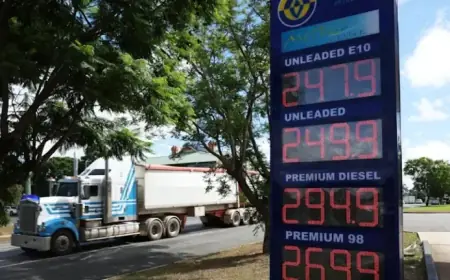
- The EIA projects that U.S. retail gasoline prices will peak at an average of $4.30 per gallon in April.
- For the year, prices are expected to average more than $3.70 per gallon.
- Current gasoline prices are approximately $4.14 per gallon, the highest since August 2022.
- Diesel prices are also on the rise, with expectations of peaking at $5.80 per gallon in April.
- The year average for diesel is forecasted at $4.80 per gallon.
Analysts suggest that if the Strait of Hormuz remains blocked, gasoline prices could surpass the record of $5.017 per gallon achieved in June 2022. Diesel prices experienced notable increases, surpassing $5.65 per gallon recently, reflecting heightened concern over supply disruptions.
Global Oil Demand Trends
In light of the conflict, the EIA has revised its global oil demand growth forecast. Initially anticipated to rise by 1.2 million barrels per day, the new estimate is a modest increase of 600,000 barrels per day, bringing the total to approximately 104.6 million barrels per day. This reduction is primarily attributed to declining demand in Asia, where reliance on Middle Eastern crude is substantial.
Future Outlook
The EIA anticipates a rebound in oil demand in the following year, projecting average growth of 1.6 million barrels per day in 2025. This recovery is expected once supply chains stabilize and production levels normalize in the Middle East.
As the situation develops, the EIA maintains that crude oil prices will continue to carry a risk premium. This indicates that uncertainty regarding future supply disruptions will likely keep fuel prices above pre-conflict levels. Stakeholders and consumers alike should remain vigilant as the geopolitical landscape evolves.