

























Invoking the 25th Amendment Against Trump: A Detailed Explanation

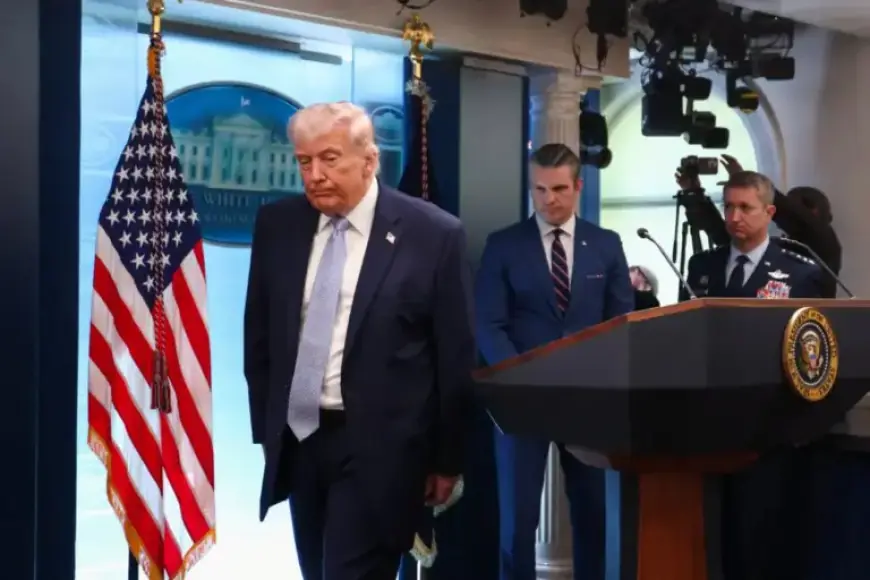
In recent developments, some lawmakers have suggested invoking the 25th Amendment against former President Donald Trump. This arises after his inflammatory comments on social media regarding military actions against Iran. His posts and rhetoric have sparked serious debates about presidential conduct and mental fitness.
Understanding the 25th Amendment
Ratified in 1967, the 25th Amendment addresses issues of presidential succession and disability. It enables the president to transfer power temporarily to the vice president in cases of incapacity. Additionally, it also allows the vice president and a majority of the Cabinet to declare a president unable to perform his duties.
Key Provisions of the 25th Amendment
- Sections Covering Disability: It categorizes situations where a president may be deemed unfit due to physical or mental incapacity.
- Power Transition: If the vice president and Cabinet declare the president unable to discharge his duties, the vice president assumes the role of acting president.
- Reinstatement Procedure: The president can reclaim powers by notifying Congress, unless the vice president and Cabinet dispute this declaration within four days.
The Political Landscape
The call for using the 25th Amendment against Trump follows a history of similar discussions. Lawmakers from the Democratic Party have sought his removal since his first term, particularly after significant events such as the January 6 Capitol riot.
Recently, Senator Chris Murphy highlighted concerns by stating that if he were in Trump’s Cabinet, he would consult legal experts about the 25th Amendment. Other Democrats, like Representatives Yassamin Ansari and Melanie Stansbury, echoed this sentiment.
The Context Behind the Discussion
The backdrop to this debate includes Trump’s recent threats directed at Iran, which raised questions about his judgment. During a Cabinet meeting, Trump humorously remarked about the 25th Amendment, suggesting that his Cabinet might consider it due to the intense scrutiny and criticisms he faces.
In contrast, support for Trump remains strong from his Cabinet and a majority of Republicans in Congress. Most party members consistently endorse his policies.
Historical Insight
The 25th Amendment was conceived after the assassination of President John F. Kennedy. Lawmakers realized the need for a formal procedure for presidential disability. While sections of the amendment faced little controversy, the debate primarily revolved around defining when a president could be considered incapacitated.
Senator Birch Bayh and Representative Richard Poff, instrumental in crafting the amendment, emphasized that it could apply to both physical and mental incapacitations.
Despite ongoing discussions, legal experts suggest that invoking the 25th Amendment against Trump—or any sitting president—remains highly unlikely. The amendment requires consensus and is not designed for removing a president due to policy disagreements or unpopular decisions.
As political tensions rise around presidential behavior, the efficacy of the 25th Amendment in a modern context continues to be a topic worthy of scrutiny.