






















Toronto Considers Regulations to Boost Food Trucks and Sidewalk Vendors

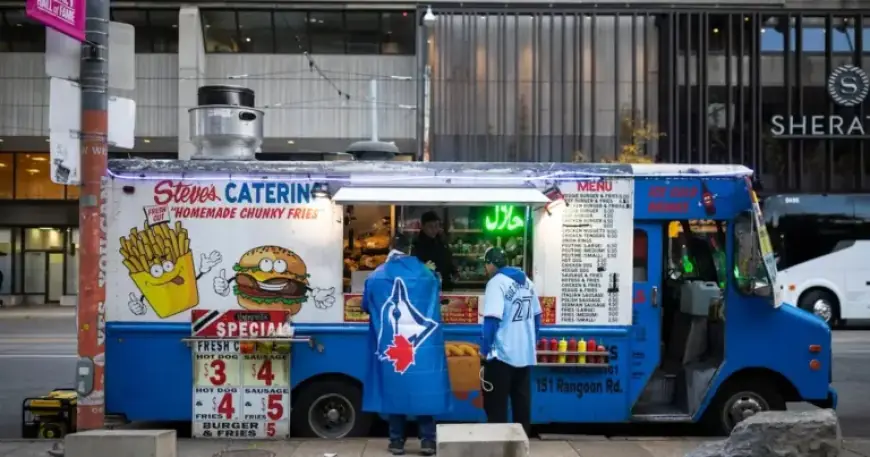
Toronto is evaluating new regulations aimed at enhancing the operations of food trucks and sidewalk vendors. A recent report, which will be presented to the committee this week, suggests modifications following a comprehensive review conducted in 2025. The proposal seeks to stimulate city revenue while providing more business opportunities for vendors and artists.
Key Recommendations for Food Trucks and Sidewalk Vendors
The report emphasizes the importance of street vendors and artists in enriching Toronto’s vibrant culture. It acknowledges their role in boosting community interactions and facilitating convenient access to food, goods, and art.
End of the Sidewalk Vending Ban
- The report proposes eliminating a 24-year-old moratorium on new sidewalk vending in downtown Toronto.
- This restriction, enacted in 2002, aimed to control the number of vendors operating in the area.
- As of 2025, only 47 vendors remained, down from 134 in 2002.
Should the recommendations pass, vendors will be permitted to apply for new sidewalk vending permits, albeit with specific conditions:
- Food vendors must maintain a distance of at least 25 meters from established eateries.
- Non-food vendors must keep the same distance from businesses offering similar products.
- No vendor can set up within 25 meters of a school and must ensure 2.5 meters of passable space.
Extended Time Limits for Food Trucks
Current regulations restrict food trucks to operate in designated mobile vending zones for just five hours daily. However, feedback gathered during the review suggests that this time frame is insufficient for generating adequate revenue. To address this, the city recommends extending the operational limit to 12 hours each day.
New Permit for Mobile Vendors
A new permit type for traveling vendors, akin to ice cream trucks, is also proposed. This permit would allow vendors to function on a city block for 30 minutes at a time, encouraging more flexibility in their operations. The new guidelines would enable a wider range of goods to be sold, including food and refreshments.
Allowing Amplified Music for Buskers
Current regulations prohibit buskers from using amplifiers or selling their music. The new proposal seeks to amend this. Under the revised rules, buskers could utilize amplification with a permit between noon and 8 p.m. They must perform 50 meters away from other buskers, while still enabling the public to report violations.
Reduction in Permit Fees
To further support street vendors, the proposed changes include a reduction in permit fees. The annual permit cost for food trucks, currently $6,631, could decrease to $4,500. Similarly, ice cream truck permits would drop from $687 to about $467.43.
These fee reductions may initially result in an estimated annual revenue decrease of $75,000 to $120,000. However, it is expected that increased participation and permit volume will offset this loss.
Timeline for Implementation
If the proposals receive approval, changes will be phased in, starting with lifting the sidewalk vending moratorium and extending food truck operational hours by June this year. Subsequently, permit fee reductions would commence on January 1, 2027, with all other changes taking effect on March 1, 2027. The city plans to monitor the rollout and adjust as necessary.
The Economic and Community Development Committee is set to discuss this report on April 9, with the city council scheduled to review it later this month.