






















Historian Tom Holland Converts After Uncovering Jesus’s Death and a Supernatural Encounter

In a remarkable personal journey, British historian Tom Holland has experienced a significant shift in his views on Christianity, culminating in his declaration of faith. This transformation is rooted in his investigations into the crucifixion of Jesus and a supernatural encounter that has raised profound questions about his beliefs.
Historic Encounter in Sinjar
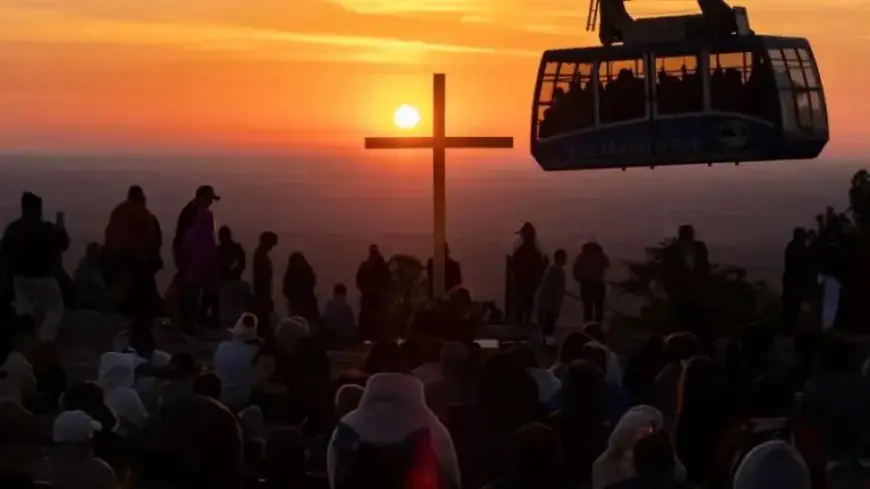
In July 2016, Holland visited Sinjar, Iraq, shortly after the ISIS attacks that devastated the region. This city, known for its tragic history involving the Yazidi community, left a lasting impact on him. Here, amid the ruins and remnants of destruction, he encountered a powerful symbol—a wooden cross standing amidst the wreckage of a church. This surreal moment would prove pivotal in his spiritual journey.
Shifting Perspectives on Christianity
Tom Holland, previously an atheist turned agnostic, had approached his writing about Christianity from a scholarly perspective. While researching his book, “Dominion: How the Christian Revolution Remade the World,” he began to reconsider his stance. His research suggested that values such as compassion and equality, often perceived as universal, are deeply rooted in Christian principles.
“The reports of Christianity’s demise are exaggerated,” Holland stated. His book argues that non-Christians often uphold Christian values without recognizing their origins. He encourages readers to rethink the cultural landscape of Western society, highlighting the lasting influence of Christianity even among secular individuals.
Exploring Faith and Doubt
Holland’s narrative delves into the essence of Christian symbols, particularly the cross. Traditionally associated with humiliation and suffering, early Christians transformed it into a symbol of hope and identification with the marginalized. Reflecting on this inversion, Holland noted how his experiences in Sinjar mirrored the Roman ideals he had previously studied.
This existential exploration deepened with a personal health crisis. Diagnosed with bowel cancer in December 2021, Holland found himself praying for the first time in years. Following successful treatment, he now grapples with the notion of miracles, admitting he enjoys the “shimmering possibility of the supernatural.”
A Changed Belief System
While reflecting on the resurrection of Jesus, Holland has stated: “Christianity would not exist unless something spectacularly odd happened on that first Easter morning.” Now, he identifies as a Christian, embodying a journey that oscillates between faith and skepticism. His transformation mirrors the complexities of belief exhibited by Jesus’ first disciples, often fraught with uncertainty.
Influence on Modern Discourse
Holland’s views have sparked considerable discussion, particularly among evangelical communities in the United States. His perspective on the inherent Christian foundation of Western ethics has been both praised and critiqued. Some, like Fish Stark of the American Humanist Association, argue that morality is not exclusive to Christianity, emphasizing common ethical instincts shared across various cultural and religious traditions.
The conversation around Holland’s work continues to evolve, reflecting the ongoing struggle between faith and reason in contemporary society. His narrative encourages individuals to explore their beliefs, recognize the roots of their values, and consider the possibility of the divine in everyday experiences.
Conclusion
Holland’s journey from historian to a proclaimed Christian encapsulates the dynamic interplay of faith, history, and personal experience. His insights challenge both religious and secular perspectives, inviting dialogue on the profound effects of Christianity in shaping human values and ethics in the modern world.