

























April’s ‘Pink Moon’ Rises Tonight as NASA Prepares Artemis 2 Mission

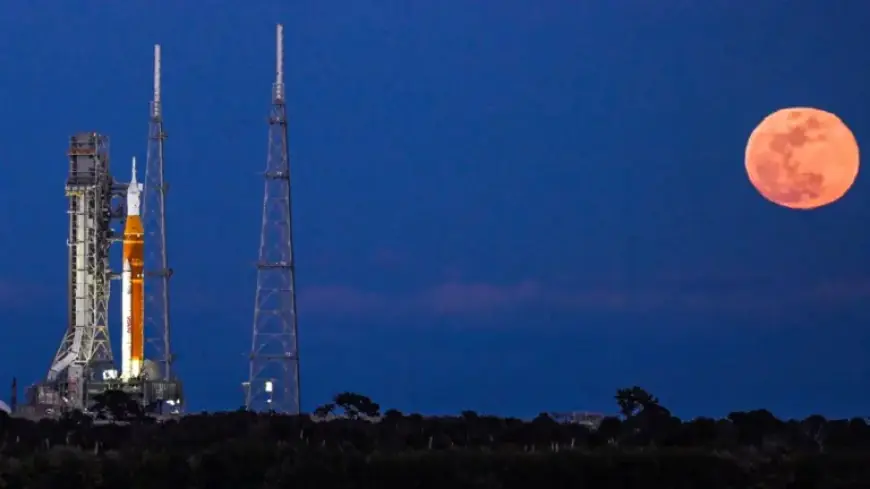
The April full moon, often called the Pink Moon, rises tonight as NASA prepares the Artemis 2 mission. Stargazers can catch the sight as the rocket sits on the pad and four astronauts await liftoff.
The full phase will occur at 10:12 p.m. EDT on April 1. That time equals 0211 GMT on April 2. Moonrise and moonset times will vary by location.
Why it’s called the Pink Moon
The nickname comes from spring wildflowers, not the moon’s color. Ground-covering phlox blooms in parts of North America at this time.
Early observers used floral names to mark seasonal changes. The Pink Moon signals early spring in many regions.
What to look for through a telescope
A full moon removes most surface shadows. That makes bright and dark regions stand out clearly.
A 4-6 inch aperture telescope will reveal fine features. Amateur instruments can show several lesser-known lunar maria.
- Mare Frigoris: a long, dark band across the lunar north. It appears as a faint smear to many observers.
- Sinus Medii: a small mare near the moon’s center. Its name means the Bay of the Center.
- Mare Vaporum: about 150 miles wide (242 kilometers). It sits roughly 15 degrees above Sinus Medii.
- Manilius Crater: borders Mare Vaporum to the east. It is an easy target for small scopes.
- Mare Nubium and Mare Humorum: visible southwest of center. Nubium sits near Humorum in standard lunar orientation.
Artemis 2 and the crew
The Artemis 2 rocket is on the pad and ready for launch. The mission will last about 10 days.
Four astronauts will fly aboard Orion. The crew includes Reid Wiseman, Victor Glover, Christina Koch, and Canadian Space Agency astronaut Jeremy Hansen.
During the Earth-orbit phase and the transfer to lunar space, the crew will see the waning gibbous moon. The terminator will sweep right to left across the lunar surface.
Their trajectory will take them past the Moon’s far side. They will join the ranks of only 24 Apollo-era astronauts who have seen that hemisphere up close. Only a small portion of the far side will be lit during the flyby.
Follow coverage and share your images
Filmogaz.com will run live updates and analysis of Artemis 2. Follow the live blog for launch status and mission news.
If you photograph the Pink Moon, consider sharing your images with Filmogaz.com. Send photos, your name, and location to [email protected].