























Video: Washington Must Acknowledge China’s Co-Belligerence, Says Guermantes Lailari


Retired U.S. Air Force foreign area officer Guermantes Lailari told a webinar on March 31 that China is acting as a co-belligerent in the conflict involving Iran. He presented technical, financial, and personnel links he said tie Beijing to Tehran’s military and security programs. A recording titled “Video: Washington Must Acknowledge China’s Co-Belligerence, Says Guermantes Lailari” captures his full remarks.
Alleged Chinese support to Iran
Lailari traced expanded Chinese involvement to a 25-year, $400 billion framework agreed with Tehran around 2021–2022. He said the pact covers energy and military development, including training and intelligence cooperation.
He highlighted Beidou, China’s satellite constellation of roughly 500 satellites. Lailari argued Beidou supplies targeting data and in-flight guidance that Tehran otherwise lacks.
Technicians, equipment and casualties
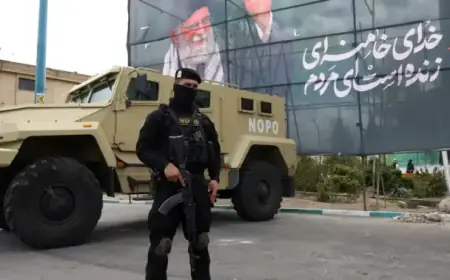
The former officer said China shipped radar systems to Iran and deployed technicians to operate them. He reported at least three Chinese radar technicians were killed and cited broader estimates of up to 300 Chinese nationals dying while supporting Iran’s defense and security infrastructure.
He also linked Chinese surveillance technology to domestic repression in Iran. Lailari asserted a January crackdown resulted in many civilian deaths, citing figures he attributed to his research.
Regional implications and UN abstention
Lailari discussed the UN Security Council vote on Resolution 2817. He noted Beijing and Moscow surprised many by abstaining, not vetoing a measure backed by roughly 135 nations.
He argued Gulf states drove the resolution and that China weighed its energy and trade ties. Saudi Arabia, the UAE and Kuwait supply nearly a quarter of China’s crude oil imports, he said. He added Gulf-China trade hit $257 billion in 2024.
Ties to nonstate actors and attacks
The analyst said the same intelligence and guidance channels benefit Houthi forces. He claimed those capabilities have enabled strikes on commercial shipping and attacks directed at Israel. He warned such support has resulted in casualties among Americans and other nationalities.
Taiwan, force readiness and deterrence
Lailari rejected the notion of an imminent Chinese invasion of Taiwan. He pointed to recent internal shakeups in Beijing’s military leadership, saying Xi Jinping dismissed more than 100 generals and left the Central Military Commission with just two active members.
He also questioned the performance of Chinese equipment after deployments in Venezuela, India-Pakistan clashes and Iran. He argued these factors temper Beijing’s near-term operational options.
Taiwan’s response
Taiwan has accelerated defense purchases, Lailari said. He cited $20 billion in new weapons buys equivalent to the island’s entire defense budget, raising spending above 3.2 percent of GDP. An additional $14 billion in acquisitions reportedly remains in the pipeline.
He described U.S. training under the National Defense Authorization Act. The goal is a “porcupine strategy” to make Taiwan costly for any attacker to seize.
Information campaigns and public sentiment
Lailari warned Beijing runs parallel information operations. He said these campaigns promote “American skepticism” and “Taiwan skepticism” to undermine alliances and deterrence.
He contrasted this with polling that shows strong local resolve. Between 60 and 70 percent of respondents say they would defend Taiwan, and most identify as Taiwanese rather than Chinese.
Economic vulnerabilities and diplomacy
The analyst argued China’s most acute strategic weakness is food security. He noted China holds roughly 120 days of oil reserves but relies heavily on food imports. He suggested food embargoes would inflict significant pressure.
He also proposed reciprocal limits on Chinese farmland purchases in the United States. He noted Beijing does not permit foreign ownership of its farmland.
Looking ahead
Lailari expected a Trump-Xi meeting in mid-May to cover more than trade. He predicted the agenda would include Chinese activities in the Western Hemisphere, the Panama Canal and the war in Iran.
He warned China is expanding its nuclear forces and said Taiwan could become a nuclear flashpoint. He urged caution, saying assertive moves risk provoking a harsh reaction.