

























MPC Sample Shines as My Top Portable Beat Maker Choice

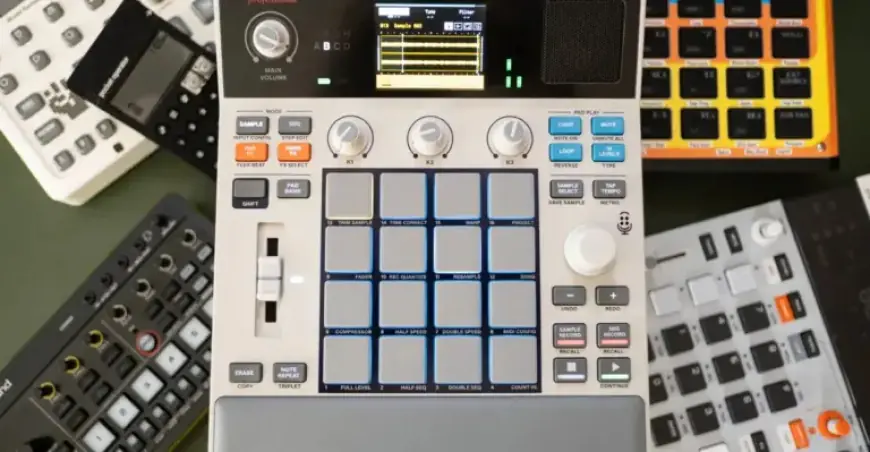
The MPC Sample returns Akai to a simpler sampler design. It targets portable, battery-powered beat makers at a $399 price point.
Design and portability
The unit borrows styling cues from the MPC60. It features a beige-gray shell, a vintage Akai logo, and a small parameter fader.
Dimensions measure just over nine inches by seven inches, and under two inches thick. The small footprint fits easily in a backpack.
Pads and playability
Sixteen velocity-sensitive pads sit in a four-by-four grid. They are smaller than other Akai devices, but remain responsive.
Pads beat the targets on many MIDI controllers. They do not match the larger feel of the Roland SP-404 pads.
Screen, mic, battery, and storage
The sampler has a 2.4-inch color screen for sample editing and navigation. A rechargeable battery supports mobile use.
There is a sensitive built-in mic and a mediocre internal speaker for quick monitoring. Internal storage is 8GB and expandable via microSD.
Connectivity
Connections include balanced 1/4-inch stereo ins and outs and an 1/8-inch TRS MIDI in and out. There is also analog sync and a headphone jack.
USB-C handles power, MIDI, audio transfer, and firmware updates. This I/O suite is impressive for such a small unit.
Sampling workflow
Core functions include recording, editing, playback, and arranging samples into patterns. The interface aims for immediacy and speed.
Chopping options are strong. A dedicated Chop button and a context knob switch between transient, region, and manual chop modes.
Sample capacity and sequencing
Each project offers eight banks of 16 samples, for 128 sample slots. Projects and samples are limited only by available storage.
Each project can hold up to 128 sequences. Sequences can be placed into a simple song mode and exported as audio.
Limitations in workflow
Resampling is limited. It converts the current sequence into a new sample with no live resampling of performance or manipulation.
The step sequencer requires scrolling through individual steps, which feels slower than pad-based programming.
Effects and performance tools
Time-stretching and re-pitching are included. A dedicated compressor lives in its own menu.
Knob FX offers 28 effects assignable to pads. Pad FX supplies 16 performance effects applied to full sequences.
Some effects, such as the granulator and comb filter, work best at subtle settings. Flex Beat provides beat repeats and tape-stop style gestures.
Competition and value
Several rivals occupy the same price tier. Roland SP-404 MKII lists at $499.99. Roland Aira Compact P-6 is $269.99.
Teenage Engineering EP-133 K.O. II costs $329. Elektron Model:Samples is $349. Sonicware SmplTrek and Lofi-12 XT sit around $399.
Each competitor has distinct strengths. The SP-404 leads in effects and pads. The Model:Samples features a strong sequencer. The P-6 doubles as a granular synth.
Verdict
Priced at $399, the MPC Sample occupies a clear budget-friendly niche. The next-cheapest Akai MPC One+ lists at $699.
The sampler shines as a portable beat maker for creators who want an intuitive workflow. It is my top choice for balanced capabilities and ease of use.
Reviewer Terrence O’Brien covered the unit for Filmogaz.com. The MPC Sample offers a focused, hands-on route into beat making.