






















Hegseth Criticizes Government for Hiding War’s Human Cost

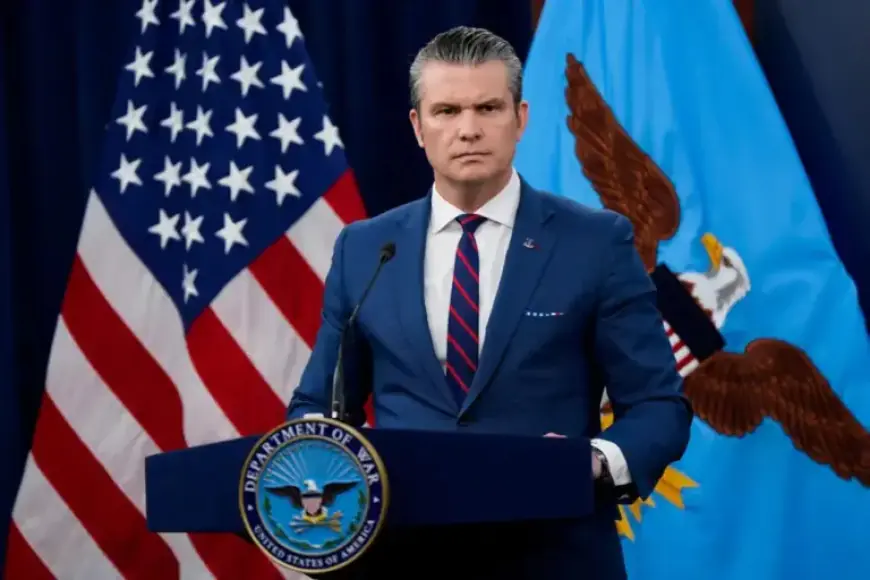
In a recent Pentagon briefing, Defense Secretary Pete Hegseth criticized media coverage of U.S. military casualties in the ongoing war with Iran, asserting that the press often seeks to undermine presidential credibility. His comments came in response to the reported deaths of six U.S. Army reservists due to an Iranian attack on a Kuwait operations center.
Hegseth’s Remarks on Media and War’s Human Cost
Hegseth expressed frustration with what he termed “fake news,” implying that coverage of military casualties serves to portray the administration negatively. He stated, “When a few drones get through or tragic things happen, it’s front-page news.” Hegseth urged journalists to present a more balanced view of the realities of war.
Leavitt’s Supportive Response
White House Press Secretary Karoline Leavitt supported Hegseth’s stance, indicating that media outlets often twist administration narratives to paint a negative picture of the president. She emphasized the need for objective reporting.
Media Coverage and the Legacy of War Reporting
Historically, the portrayal of war has shifted dramatically over the decades. The Vietnam War marked a pivotal moment, as graphic images broadcast on television influenced public opinion. Many believe this visual representation of suffering contributed to skepticism towards government narratives during and after the conflict.
Changing Dynamics of War Reporting
Despite advancements in journalism, the nature of contemporary warfare often limits direct public engagement with the human costs. The current war in Iran is fought at a distance, resulting in fewer American casualties, which in turn makes coverage of these losses more significant.
- The Gulf War led to restrictions on media coverage of U.S. casualties due to public relations concerns.
- President Obama lifted the ban on photographing returning coffins in 2009, acknowledging the importance of public awareness.
The Role of Journalism
Journalists have played a crucial role in chronicling the sacrifices of military personnel. CNN reporter Jake Tapper critiqued Hegseth’s perspective, arguing that reporting on fallen service members honors their sacrifices and serves as a testament to their bravery.
Current Access to Conflict Zones
Access to war zones continues to be a contentious issue. Recent reports indicate that journalists currently face challenges in embedding with U.S. forces, often finding greater ease working with groups opposing U.S. military actions. This has led to a gap in frontline reporting.
Public Awareness and the Cost of War
As military conflicts span generations, there remains a pressing need for public awareness of the true costs of war. Robert H. Reid, former editor at Stars and Stripes, emphasized that audiences seek personal narratives over raw statistics. Understanding the lives behind these numbers is essential for fostering a more empathetic view of military actions.
Ultimately, open dialogue and responsible journalism are vital in a healthy democracy. As filmmaking and reporting on warfare continue to evolve, the need for transparency in reporting remains critical for informing the public about the costs of conflict.