

























Isack Hadjar Joins Red Bull Hot Seat Beside Verstappen Ahead of Australian Grand Prix

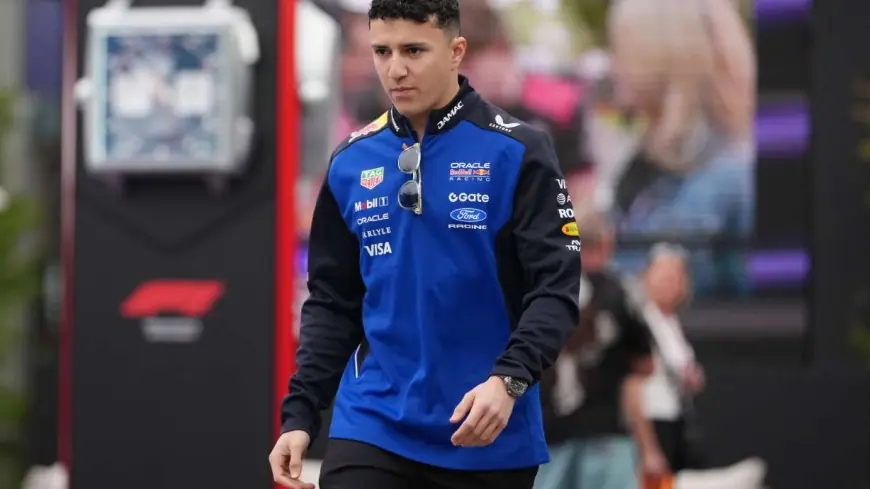
The 21-year-old isack hadjar begins his debut season at Red Bull Racing with an uncommon blend of optimism and realism, saying he expects to win a race while preparing to share a garage with four-time world champion Max Verstappen. His arrival matters now because Red Bull's new RB22 package and power unit are central to whether the team can deliver on that ambition at the season-opening Australian Grand Prix in Melbourne.
Isack Hadjar and the RB22 power unit
Hadjar has singled out the competitiveness of Red Bull's new engine as a key reason for his belief. He described the power unit's reliability and driveability as unexpectedly strong, noting the project was completed in roughly 3 1-2 years after a late start, and that those factors make the RB22 a car capable of surprising opponents in race conditions. He tempered that assessment by saying one-lap pace was a weaker point, but emphasized the race package as the area where the team could gain advantage.
The cause-and-effect is clear in his framing: the engine's smoother delivery and dependable operation have increased his confidence in race stints, which in turn underpins his prediction of taking a victory in his first season. What makes this notable is that Hadjar reached these conclusions after a rookie campaign in which he scored points at 10 of 24 races and claimed a podium with third place at the Dutch Grand Prix.
Laurent Mekies, Verstappen and the teammate pressure
Hadjar will not be stepping into an unfamiliar management environment. Laurent Mekies remains team boss, the same figure who oversaw Hadjar's F1 debut, and the driver said continuity there provided stability as he adjusts to the demands of racing alongside Verstappen. That continuity matters because Verstappen's recent run of teammates—four in about 15 months—has underscored the difficulty of the role inside the team.
The turnover has had measurable consequences: one former teammate, Sergio Pérez, spent four years beside Verstappen before being dropped at the end of 2024 despite having two years left on his contract, and has moved on to a new seat at Cadillac. Such developments increase the scrutiny on anyone entering Verstappen's garage, a pressure Hadjar acknowledges but treats as a competitive stimulus rather than an impediment.
From Faenza to London: preparations and past resilience
Part of Hadjar's preparation has been logistical as well as technical. He relocated from Faenza, Italy, to London to be closer to Red Bull Racing's Milton Keyes operation, a move he framed as a practical step to better integrate with the team. That change in base is tied directly to the effect he hopes to achieve: closer proximity to engineers and headquarters should accelerate learning and setup work as he adapts to the RB22.
Hadjar's trajectory into this role includes immediate tests of resilience. On his debut at last year's Australian Grand Prix he was involved in a formation-lap crash, yet he rebounded to score points regularly over the season. That recovery—10 points-paying finishes from 24 starts and a top-three at Zandvoort—provides the empirical basis for his present confidence rather than optimism alone.
Hadjar has framed his stint at Red Bull as both a learning opportunity and a measurement against the grid's benchmark: "I'm just happy, at my age, to be able to see what it's like to be next to the best driver on the grid, " he said, emphasizing the practical value of direct comparison. As the field prepares to race at Albert Park, the interplay of engine performance, team continuity under Mekies and Hadjar's own early-season adjustments will determine whether the rookie's bold forecast translates into points and, ultimately, a victory.