

























Hyundai Pickup Truck Plans Take Shape as the Brand Eyes a Body-on-Frame Midsize Challenge in North America

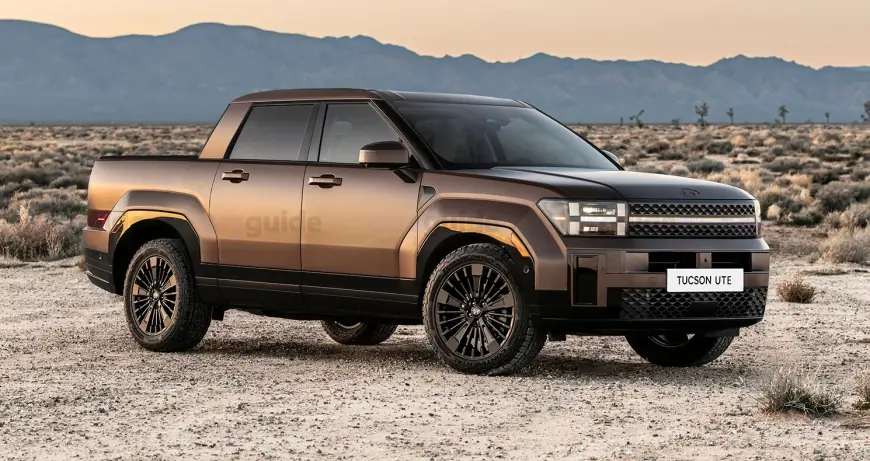
Hyundai’s pickup truck strategy is shifting from “niche alternative” to a longer-term bet on the heart of the North American market: a rugged, body-on-frame midsize truck aimed at buyers who care about towing, payload, and off-road durability. The move matters because it signals Hyundai is no longer testing the waters with lifestyle trucks alone. It’s preparing to compete in a segment where loyalty is high, margins can be strong, and product missteps are remembered for years.
In recent months, Hyundai leadership has publicly indicated that a new midsize body-on-frame pickup for North America is in development, with timing framed as arriving before 2030. Separate discussions around regional partnerships have also underscored that Hyundai may pursue different truck solutions for different markets, rather than relying on a single global pickup.
What Hyundai is building, and how it differs from the Santa Cruz
Hyundai’s current pickup offering in the United States, the Santa Cruz, is built with a unibody structure that shares its fundamentals with crossovers. That design favors comfort, everyday drivability, and car-like handling.
A body-on-frame midsize pickup is a very different statement. It is the architecture typically used for trucks designed to handle tougher work demands, higher towing capacities, and more punishing conditions. Hyundai’s signals point to a product positioned closer to mainstream midsize leaders rather than a crossover-based alternative.
Just as important: Hyundai has suggested this North American midsize truck is being developed in-house, while other truck efforts connected to partners are being discussed for markets outside the United States. That split hints at a strategy built around local expectations and local constraints.
Behind the headline: incentives, constraints, and the stakeholders who matter
Context
Hyundai has expanded rapidly in the U.S. with SUVs and electrified models, but trucks remain the largest gap in its portfolio. In many regions, a midsize pickup is not only a vehicle choice but a lifestyle and identity signal. Entering that space is as much about brand credibility as it is about sales volume.
Incentives
Hyundai has a clear motivation: trucks can deliver stronger pricing power, resilient demand through economic cycles, and deep customer retention. A credible body-on-frame midsize truck can also lift showroom traffic for other models.
Constraints and pressure points
This segment is brutal. Buyers compare towing, payload, off-road hardware, durability reputation, dealer support, and resale value. Hyundai must also navigate U.S. production economics and compliance requirements while ensuring the truck feels genuinely “truck-grade,” not a crossover in work boots.
Stakeholders
Hyundai’s U.S. dealers want a product that can bring in new buyers and keep them loyal. Suppliers and factories want predictable volume. Existing truck brands will defend their turf with incentives and frequent updates. Consumers will judge Hyundai on real-world capability, not marketing.
What we still don’t know about the Hyundai pickup truck
Key details remain unconfirmed or not fully disclosed:
-
Nameplate strategy: whether Hyundai will extend an existing name or create a new truck identity
-
Powertrains: gasoline, hybrid, plug-in hybrid, or a mix, and how quickly electrification arrives
-
Target capabilities: towing and payload benchmarks that would define competitiveness
-
Production plan: where it will be built for cost control and supply stability
-
Platform decisions: how much is shared with other vehicles, and how much is purpose-built for truck duty
-
Pricing: whether Hyundai aims to undercut rivals or compete on features and warranty value
These missing pieces matter because they determine whether Hyundai can win early adopters or will need years to build trust.
Second-order effects: what a real Hyundai truck could change
A successful midsize Hyundai pickup would ripple beyond Hyundai’s lineup.
-
Competitive pressure: rivals may respond with faster refresh cycles, feature upgrades, or pricing moves
-
Dealer ecosystem shift: Hyundai retailers could attract a more truck-oriented customer base, changing service and accessories demand
-
Supplier impact: higher-volume truck parts and accessories can reshape local supply chains
-
Brand perception: Hyundai could move closer to “full-line” status, which improves long-term loyalty and cross-shopping strength
-
Product mix and margins: if executed well, a truck can become a profit pillar that supports investment in electrification and software features
What happens next: realistic scenarios and triggers to watch
-
A formal teaser or confirmation window tightens
Trigger: Hyundai begins describing timing in specific model years rather than “before 2030.” -
Powertrain direction becomes clear
Trigger: Hyundai starts publicly emphasizing hybrid growth tied to trucks, or mentions towing-focused hybrid torque benefits. -
Production footprint is announced
Trigger: Hyundai confirms a U.S. build strategy, which would strongly influence pricing and availability. -
The Santa Cruz role is clarified
Trigger: Hyundai either refreshes the Santa Cruz to keep it as a lifestyle companion or pivots away from it to avoid internal overlap. -
A concept or prototype strategy emerges
Trigger: Hyundai shows a near-production design or begins testing in highly visible locations, indicating the truck is past the planning stage.
Why it matters
Hyundai isn’t just considering a pickup truck. It’s considering entry into one of the most demanding and identity-driven vehicle categories in North America. If the company delivers a body-on-frame midsize truck with credible capability, sensible pricing, and a strong ownership experience, it can change how buyers think about the brand. If it misses on durability, capability, or execution, the segment will punish it quickly.
For now, the direction is clear even if the details aren’t: Hyundai wants a real seat at the truck table, and it is preparing a product that aims to earn it.