
























Flights To Dubai and Middle East routes in limbo as airspace closures and travel warnings fuel uncertainty


Why this matters now: the sudden closure of regional airspace and fresh travel warnings have immediate consequences for passengers, national evacuation planning and global long‑haul schedules. Flights To Dubai sit at the center of a wider disruption that has left travellers stranded, prompted government advisories, and introduced real operational uncertainty for carriers and airports across the Gulf.
Risk snapshot: Flights To Dubai suspended as airspace closures persist and evacuation plans are discussed
Emirates has suspended all operations in and out of Dubai, stranding passengers worldwide, while airspace closures have forced airlines to cancel or divert services at major hubs. British government officials are understood to be formulating plans to potentially evacuate UK nationals from the Middle East, but the timings of any move remain unclear as much of the region's airspace stays closed.
What happened in the region — event summary embedded
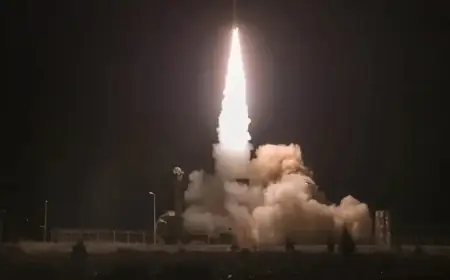
US and Israeli strikes on Iran began early on Saturday and were followed by Iranian attacks on the Gulf states in retaliation. Airlines serving the Middle East cancelled and diverted flights on Saturday after the strikes. Flights in and out of airports in Tel Aviv, Dubai, Doha and other international hubs in the region have been suspended amid the evolving security situation.
Who is feeling the impact on the ground and in the air
One person has been killed and 11 others injured at airports in Dubai and Abu Dhabi since the strikes began. Four of those injured were members of staff at Dubai International, the world's busiest airport by passenger traffic. The UK Foreign Office is warning British citizens against all but essential travel to Bahrain, Kuwait, Qatar and the United Arab Emirates, and those already there have been advised to shelter.
Personal disruption is widespread: Richard and Hannah from London were en route to Oman but are now stuck in Bahrain. Hannah said a drone attack on the airport in the early hours prevented them reaching Oman as planned, and she described an uneasy 24 hours; with the situation that could escalate, they are now looking to return home, Richard added. What's easy to miss is how fast a single regional incident can ripple through multi‑stop itineraries and strand travellers far from home.
Operational timeline and airline actions
- Emirates has suspended operations in and out of Dubai until 15: 00 local time (13: 00 GMT) on Monday because of airspace closures.
- Etihad has suspended flights out of Abu Dhabi until 02: 00 local time (unclear in the provided context what day this refers to).
- British Airways has cancelled services to Tel Aviv and Bahrain until Wednesday and warned that services between Heathrow and Abu Dhabi, Amman, Bahrain, Doha, Dubai or Tel Aviv could be affected for several days.
- Virgin Atlantic suspended services between London and Riyadh and Dubai over the weekend and warned that flights to India, Saudi Arabia and the Maldives may take longer due to rerouting around the affected region.
- Heathrow has urged travellers to check with their airlines as long‑haul travel is being affected more widely.
The real question now is how long restricted or closed airspace will persist and how many long‑haul routings will remain disrupted as carriers rework networks.
Quick Q&A for travellers and families
Q: Can I travel to or through the Gulf right now?
A: Travel to Bahrain, Kuwait, Qatar and the UAE is being advised only for essential reasons by the UK Foreign Office; many flights into regional hubs have been suspended.
Q: Are airlines cancelling large parts of their schedules?
A: Several major carriers have suspended or cancelled services — Emirates and Etihad have paused operations out of Dubai and Abu Dhabi for set periods; British Airways and Virgin Atlantic have halted specific routes and warned of wider impacts.
Q: What should passengers do now?
A: Check with your airline, expect reroutes or cancellations, and follow official sheltering advice if you are in affected countries.
It’s easy to overlook, but casualty reports at airports and the scale of airspace closures are the immediate drivers of operational decisions by airlines; these are the concrete restraints shaping travel options today.
Forward signals to watch include restoration of regional airspace, formal evacuation orders with clear timings, and public re‑opening notices from the carriers named above. Recent coverage shows cancellations and diversions continue while authorities assess the wider security situation, and details may evolve.