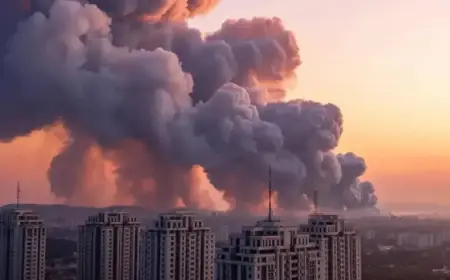

























Erbil area shaken as smoke and explosions hit near U.S. base — who feels the impact first

The immediate human and security impact landed close to erbil: smoke rose over a U. S. base near Irbil International Airport and explosions were heard in the surrounding area, creating new uncertainty for people and operations near the regional capital. The strike and the lack of immediate official statements deepen tensions already flagged by prior threats from Iran-backed Iraqi militias.
Erbil area: immediate effects on people in the vicinity and local security
Here’s the part that matters: residents, personnel at the nearby base and anyone working at or around the airport are the first to face disrupted conditions — visible smoke, audible explosions and an uptick in short-term uncertainty about safety. Local media indicated missiles were shot down near the base, and a journalist in the area heard explosions, signaling direct impacts on daily life and on localized security posture.
What’s easy to miss is that the absence of immediate official comments does not mean the situation is contained — it means confirmation and situational updates may take time to emerge. The real question now is how long heightened caution will persist around the airport and base.
Event details and a short timeline
- Smoke was seen rising from a U. S. base near Irbil International Airport, the regional capital of Iraq’s semiautonomous Kurdish region.
- A journalist in the area heard explosions; local media indicated that missiles were shot down in the vicinity.
- There was no immediate statement from Iraqi officials or from the U. S.
- Earlier the same day, a drone strike targeted a headquarters of the Iran-allied Kataib Hezbollah militia southwest of Baghdad, killing two.
Micro timeline (sequence as available):
- An earlier drone strike hit a militia headquarters southwest of Baghdad, with fatalities recorded.
- Later, smoke and explosions were observed near the U. S. base by Irbil International Airport.
- Local outlets indicated missiles had been shot down; official statements were not issued immediately.
These points suggest an immediate spike in localized hostilities and a follow-on period where confirmations and operational updates are likely to shape responses.
Here are practical signals that could clarify the direction of events: public statements from security authorities, movement or closure notices for the airport area, and follow-up reporting on any subsequent strikes or intercepts. If those appear, the situation will move from uncertain to documented.
Short bullets to keep in mind:
- People closest to the airport and base feel the first effects: visible damage, noise, and disrupted routines.
- Official silence leaves room for competing explanations and prolongs anxiety in the region.
- Recent violence elsewhere in the country — including a lethal drone strike — increases the risk that isolated incidents may feed wider tension.
Finally, a practical note on terminology: Irbil International Airport is the airport referenced in descriptions of the incident; some accounts use variant spellings for the city name. The situation remains fluid and details may evolve as authorities speak and additional verification emerges.