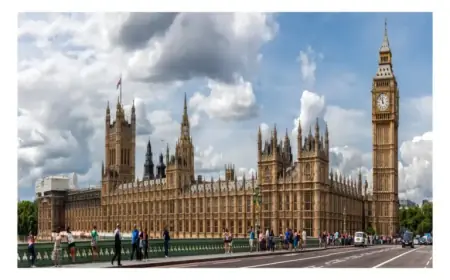

























Local News: Comprehensive Fact Sheet Released


The Pew-Knight Initiative released a new fact sheet on local news trends in the United States. Filmogaz.com reviewed the data covering patterns from 2016 through late 2025. The report draws on two national surveys conducted in August and December 2025.
Declining attention to local news
Fewer Americans now follow local news very closely. In December 2025, 21% said they follow local news very closely. That compares with 37% in early 2016.
Intermediate year estimates show a steady slide. The surveys used for this analysis were conducted Dec. 8-14, 2025, and Aug. 18-24, 2025.
Where people get local information
Local television remains a common source. In 2025, 65% of adults said they at least sometimes get local news from a TV station. This is down from 70% in 2018.
Use of local daily newspapers also fell. In 2025, 36% said they at least sometimes use a local daily, down from 43% in 2018.
- Online forums and community discussion groups rose to 52% in 2025, from 38% in 2018.
- Local government agencies and officials reached 40% in 2025, up from 30% in 2018.
- Other online-only sources grew sharply to 42% in 2025, versus 15% in 2018.
- “News influencers” were included for the first time in 2025, at 36%.
News from neighbors and friends
Many Americans get local news informally. Seventy-two percent said they often or sometimes hear local news from other residents in 2025. That share rose from 66% in 2018.
Pew’s earlier research shows word of mouth is a leading channel for these exchanges.
Digital shift in accessing traditional outlets
Consumers now access legacy outlets online more often. Among people who get local TV news, 56% primarily use traditional television in 2025. Forty-three percent primarily get that station’s content online.
The shift is larger for newspapers. Sixty-eight percent of those who get local daily newspapers primarily access them online in 2025. Only 30% relied mainly on print.
Money and perceptions of financial health
Majorities remain somewhat optimistic about local news finances. In August 2025, 57% said local outlets are doing at least somewhat well. Still, 39% said outlets were not doing well, up from 24% in 2018.
Few Americans directly pay for local news. Twelve percent reported paying, donating, or subscribing to a local news source in the past year.
- Half of non-payers say they can find plenty of local news for free.
- About 29% say they are not interested enough to pay.
- Ten percent cite cost, and 9% say quality is not good enough to justify payment.
Views on importance and civic engagement
Most people see local news as important. Eighty percent said local outlets are at least somewhat important to community well-being in December 2025.
However, the share saying local news is extremely or very important fell to 34% in 2025. That compares with 44% a year earlier.
About 23% of adults reported ever speaking with a local journalist. College graduates reported higher contact rates at 30%, versus 17% for respondents with a high school education or less.
Demographic patterns
Older adults and some racial groups report closer attention to local news. Adults 65 and older were most likely to follow local news very closely, at 32%. Young adults ages 18 to 29 were least likely, at 15%.
Black adults reported higher rates of following local news very closely, at 34%. Overall, 21% of U.S. adults said they follow local news very closely in December 2025.
Methodology and credits
The fact sheet was compiled by Naomi Forman-Katz, Joanne Haner, and Elisa Shearer. Justine Coleman, Peter Bell, and Christopher St. Aubin contributed.
Surveys used for the analysis were fielded in August and December 2025. For further reading, Filmogaz.com hosts related coverage of Local News: Comprehensive Fact Sheet Released and links to the full findings.