























Aipac money is reshaping Chicago primaries — who feels the squeeze and why it matters

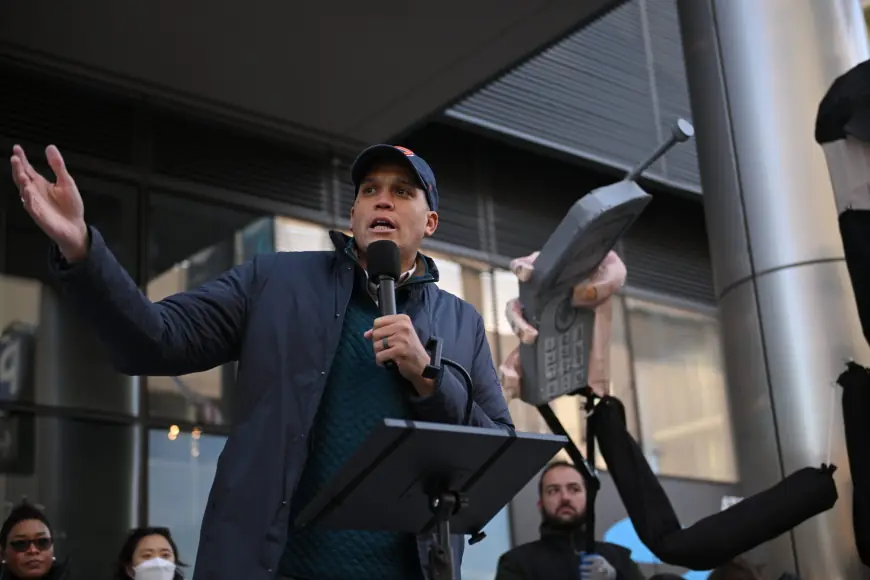
For primary voters and the crowded field of Chicago-area Democrats, the practical effect of outside spending is immediate: campaign airwaves, mailboxes and debate calendars are being remade to favor candidates aligned with pro-Israel donors. Recent updates indicate Robert Peters has moved from private outreach to aipac into a campaign centered on public opposition to the group's influence; details may evolve. What this means first is a pressure-test on how candidates answer questions about U. S. aid and donor ties.
Aipac cash and covert PAC activity are changing choices for voters and candidates
Big outside spending—measured in the low tens of millions—has meant that several Democratic primary contests in the Chicago area no longer play out as typical grassroots fights. The money is concentrated on a handful of candidates who have drawn scrutiny for support linked to pro-Israel donors and affiliate organizations. That influx shifts campaign strategy in two clear ways: it encourages caution on sensitive foreign-policy stances, and it redirects public messaging toward domestic topics the spending groups prefer to highlight.
Here's the part that matters: heavy spending can pressure candidates to avoid direct answers on whether U. S. military aid should carry strict conditions, a question many primary voters want addressed. In multiple races, campaign surveys and public questionnaires produced broad agreement on adding scrutiny to aid, but the candidates with the highest-profile backing have declined to give straightforward yes-or-no answers. That non-answer posture is itself a strategic signal to donors and voters.
What the on-the-ground picture shows (embedded details)
Several races in the region are under the microscope because of linked financial activity. Donors and affiliates tied to the pro-Israel lobby have funneled roughly $13. 7 million into four Chicago-area primaries, concentrating resources on certain contenders rather than across the full field. Some candidates engaging with the group reported open conversations about support; others say they were effectively passed over after raising conditional views on foreign aid.
- Spending patterns: $13. 7 million directed at preferred candidates in four primaries, with communications focused on domestic pocketbook issues rather than directly on the Middle East.
- Candidate behavior: multiple respondents in a broad candidate survey supported tougher conditions on aid, yet the quartet of candidates linked to the spending would not commit to simple yes-or-no positions on that question.
- Campaign mechanics: the pro-Israel network is using newly formed political committees and affiliations that make tracing the ultimate funders more difficult; messaging produced by those entities has emphasized immigration and affordability.
- Timing: at least one of the contested primaries is scheduled for March 17, when voters will decide among crowded fields in several districts.
What's easy to miss is that private engagements between candidates and outside groups have sometimes produced more measured policy papers than the public rhetoric that follows—an indication that strategy and posture can diverge sharply in these contests.
- Major implications: Voters may receive curated issue frames that downplay the donor network’s core priorities, altering how local priorities are debated.
- Affected groups: primary voters, challengers dependent on small-dollar grassroots fundraising, and incumbent-aligned candidates find messaging environments warped by outside buys.
- Signals that could confirm the next turn: public financial filings for the newly formed committees, an increase in unbranded mail or digital ad buys, or candidates changing their public stances after additional outside support arrives.
Recent updates indicate one prominent Illinois state senator who once engaged privately with the pro-Israel lobby has shifted publicly to an anti-influence posture; that development is still unfolding and may reshape rivalries inside the primary. The real question now is whether heavier outside spending will force clearer rules on disclosure and coordination in these local contests.
The pro-Israel network involved in this activity has a long institutional history, spanning multiple decades, and is using modern political vehicles to extend its influence in state and local races. Voters and campaign teams should expect continued messaging that emphasizes domestic concerns even as foreign-policy alignment remains the unstated backdrop of the spending wars.
Editor’s aside: The bigger signal here is how targeted funding can change which issues surface in primary debates—campaigns that look similar on paper can be driven apart by the composition of their backers.