




















President Vucic Breaks Silence on Novak Leaving Serbia Amid Political Storm

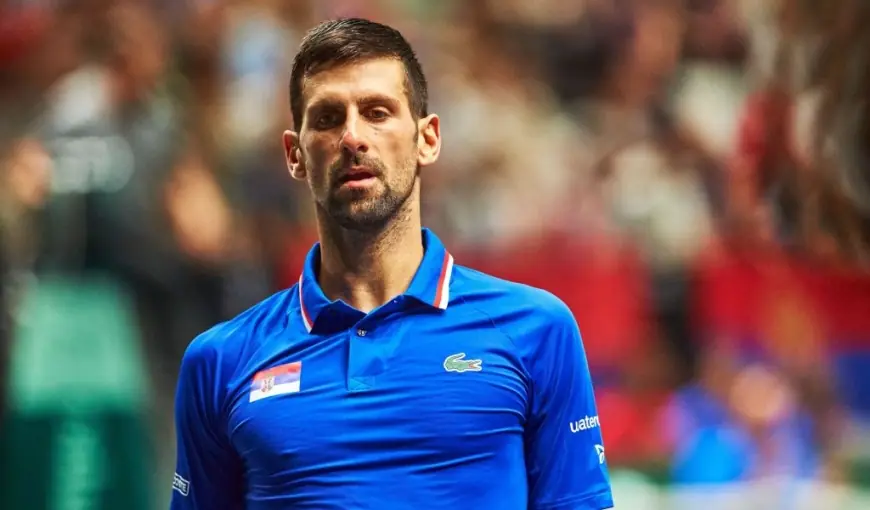
novak Djokovic has been at the center of a fierce political row after publicly backing student-led protests; Serbia’s president has now issued a blunt response as the champion lives in exile in Athens with his family. The exchange highlights growing tension between the player’s public stance and state-aligned forces.
Novak's relocation and family details
Belgrade-born Novak Djokovic relocated to Athens in September last year with his wife, Jelena, and their two children, Stefan and Tara. He has not explicitly stated the reason for the move; it is believed to be related to him being at odds with the Serbian government.
Political backing and the protests that followed
In December 2024, Djokovic expressed support for student-led protests against President Aleksandar Vucic and the government. That wave of unrest followed a catastrophic collapse of a railway station canopy in Novi Sad the previous month that killed 16 people; demonstrators accused Serbian police and local authorities of negligence and corruption. By March 2025, protests had spread to 400 cities and towns.
Smear campaign and media attacks
Jaschar Dugalic, a journalist, said the Serbian government set its sights on Djokovic because of his stance. Dugalic added that regime-friendly media launched attacks on Djokovic’s character, with one tabloid branding him a "disgrace. " After it was reported that Djokovic was considering moving to Athens with his family, the same tabloid labelled him "a false patriot who had presented himself as a symbol of Serbia for years only to now flee to Greece. "
Dugalic also said an entrepreneur and opponent of the protests published a video linking Djokovic’s father to an alleged paedophile. These lines of attack formed part of a sustained campaign that many observers describe as personal and politically motivated.
Australian Open run and recent form
At the age of 38, Djokovic became the oldest player to reach an Australian Open final with his run at the 2026 Melbourne major last month. The 24-time Grand Slam champion downed Jannik Sinner in an epic five-set semi-final before falling in four sets to world No 1 Carlos Alcaraz in the title match. Commentators have noted Djokovic used feeling "hurt deeply" as fuel in his semi-final victory, a point attributed to Patrick Mouratoglou, and there was wider commentary that Djokovic "feels Greek" after shared moments with fellow players such as Stefanos Tsitsipas following dinner with the champion.
Vucic's message and the president's defiant stance
Speaking on television, President Aleksandar Vucic congratulated Djokovic on his Australian Open performances and praised his representation of the country. Vucic declared he "wholeheartedly support[s] Djokovic and all the people who wear the Serbian tricolour" and called Djokovic "the greatest of this time in a difficult and demanding sport, " while saying he supports him regardless of the result of the final.
At the same time, Vucic made a pointed clarification about his own position: "I told him what I thought... I will not change my convictions under the influence of any sports, theater, or entertainment star. " That line framed the president’s reply as conciliatory on performance but firm on political principle.
What remains unclear and what to watch next
- Djokovic has not explicitly stated the full reason for his move to Athens; the motive is described as unclear in the provided context.
- A line in recent coverage expresses encouragement for Elena Rybakina and mentions a wish to see Zverev win tournaments, but the speaker and attribution for those remarks are unclear in the provided context.
- The smear campaign, the tabloid labels, and the circulated video linking Djokovic’s father to an alleged paedophile are active elements of the dispute and could shape public reaction in Serbia.
The interplay between Djokovic’s high-profile sporting life and his political positioning has produced a rare public confrontation with Serbia’s leadership. The president’s praise for Djokovic’s on-court achievements, coupled with a refusal to alter his convictions, frames the standoff: support for national representation is separated from agreement with the player’s political choices. Recent updates indicate details may continue to evolve.