
























Why Are We Bombing Iran? Operation Epic Fury Explained: Every Reason the US Launched Strikes on Tehran

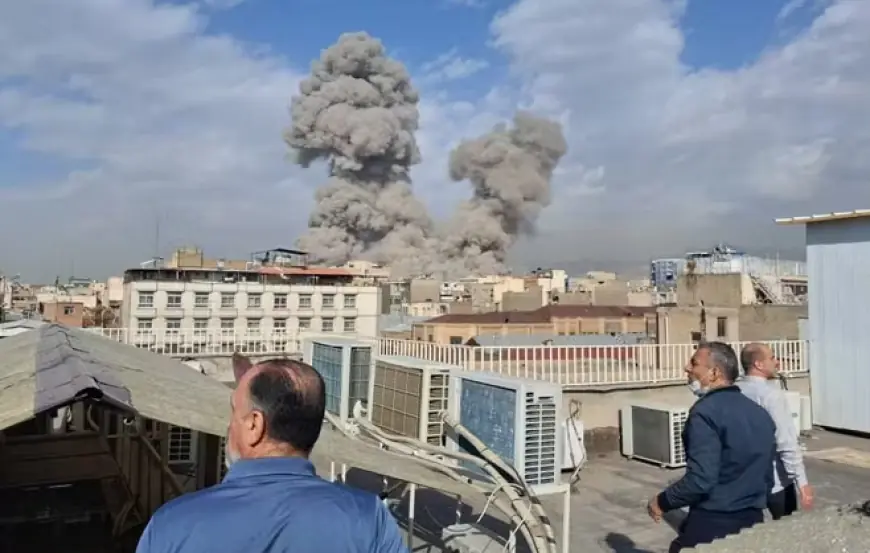
The United States is bombing Iran because decades of nuclear defiance, proxy terror, failed diplomacy, civilian massacres, and direct military provocations finally collided on Saturday, February 28, 2026. President Trump launched Operation Epic Fury in the early morning hours ET, calling it a "massive and ongoing" military campaign. Here is every reason the US is bombing Iran, explained clearly.
Reason 1: Iran Refused to Give Up Its Nuclear Program
The core reason the US is bombing Iran is Tehran's relentless push toward a nuclear weapon. In May 2025, the IAEA reported Iran had sharply increased its stockpile of uranium enriched to 60% purity — just below weapons-grade — reaching over 408 kilograms, nearly a 50% rise since February. The agency warned that this amount is enough for multiple nuclear weapons if further enriched.
Trump said Iran had "rejected every opportunity to renounce their nuclear ambitions," which prompted the US to take military action. Despite three rounds of indirect talks in Geneva, Iran refused to dismantle its nuclear infrastructure. The final US ultimatum was rejected, and strikes began within hours of the last round of failed negotiations collapsing on Thursday, February 27.
Reason 2: Iran's Ballistic Missile Program Was Never on the Table
The US is also bombing Iran because Tehran flatly refused to include its ballistic missile program in any deal. Iran's foreign minister declared publicly that missiles were off limits as a negotiating item — a position Trump and Secretary of State Marco Rubio called completely unacceptable.
The offensive follows the collapse of high-level diplomatic engagements aimed at limiting uranium enrichment levels, restricting advanced centrifuge deployment, and constraining long-range missile development. Talks failed to produce a framework that would verifiably cap enrichment thresholds or dismantle elements of Iran's expanding nuclear infrastructure. Without a verifiable missile agreement, Washington concluded diplomacy had reached a dead end.
Reason 3: 47 Years of Iranian Terror Against the United States
Trump cited nearly half a century of Iranian aggression as a foundational justification for bombing Iran. Trump stated: "For 47 years the Iranian regime has chanted 'death to America' and waged an unending campaign of bloodshed and mass murder, targeting the United States, our troops, and the innocent people in many, many countries. It's been mass terror. And we're not going to put up with it any longer."
The list of grievances spans from the 1979 US Embassy hostage crisis through Iran's arming of Hezbollah and Hamas, the financing of Houthi attacks on Red Sea shipping, and the orchestration of militia strikes that killed US soldiers in Iraq and Syria. House Majority Whip Tom Emmer stated: "The Ayatollah is responsible for killing hundreds of U.S. service members and slaughtering its own people."
Reason 4: Iran Massacred Thousands of Its Own Protesters
The brutal crackdown on Iranian protesters was a key reason Trump decided to start bombing Iran now rather than later. Trump recounted decades of aggression against US forces at the hands of the regime while also pointing out the tens of thousands of protesters who have been slaughtered in Iran in recent months.
Mass anti-government protests erupted across Iran in late 2025, fueled by economic collapse and public rage at the Islamic Republic. Trump had previously threatened military action in January 2026 if the killings continued, but held off to give diplomacy one final chance. When talks collapsed, the protesters' deaths became one of the stated justifications for launching Operation Epic Fury.
Reason 5: Iran's Direct Military Provocations in the Strait of Hormuz
A string of direct Iranian military provocations in early 2026 accelerated the US decision to start bombing Iran. On February 3, six IRGC Navy gunboats attempted to stop and seize a US tanker in the Strait of Hormuz. A US F-35 fighter jet shot down an Iranian Shahed drone approaching the aircraft carrier USS Abraham Lincoln. On February 5, Iran seized two foreign oil tankers near Farsi Island in the Persian Gulf.
During nuclear talks in Geneva on February 17, Supreme Leader Khamenei threatened US warships in the area, stating Iran is "capable of sinking them." Iran additionally closed the Strait of Hormuz for several hours during a live military fire drill. Each act was interpreted in Washington as deliberate escalation designed to test American resolve — and each one brought the strike date closer.
Reason 6: Trump Wants Regime Change in Iran
Beyond the military and nuclear justifications, the US is bombing Iran with a broader political goal that has never previously been stated so openly by an American president. Trump issued a warning to Iran's Revolutionary Guard Corps and armed forces telling them to "lay down your weapons and have complete immunity, or in the alternative, face certain death." He urged Iranian civilians to overthrow the Islamic Republic, saying: "The hour of your freedom is at hand. When we are finished, take over your government. It will be yours to take. This will probably be your only chance for generations."
Trump stated: "For the United States military is undertaking a massive and ongoing operation to prevent this very wicked, radical dictatorship from threatening America and our core national security interests." The explicit call for regime change transforms Operation Epic Fury from a targeted military strike into the most expansive US foreign policy action in the Middle East since the 2003 invasion of Iraq.