





















Bbc succession: poisoned chalice as the bbc’s shortlist thins and a Google boss rises

The is facing a shrinking and unsettled contest to replace Tim Davie as director-general, with several high-profile executives declining to stand and fresh crises piling pressure on the next leader. The combination of a calamitous Bafta broadcast chain and the Panorama controversy means the incoming director-general will confront immediate legal, financial and reputational tests.
succession and the shrinking shortlist
As Tim Davie prepares to stand down, an impressive shortlist circulating in media circles contains several names who are no longer in the running. Observers say events in the past week have helped explain an alarming attrition rate among potential candidates, and one prominent media figure described the job as "a wonderful, beautiful, terrible poisoned chalice. "
Inside the corporation, senior figures expressed horror at recent mistakes, and John Shield, the 's former director of communications, said: "I struggle to think of a harder job in public life. " He added that the director-general is expected to be a brilliant creative leader in an inflationary environment, to exercise outstanding editorial judgment amid fractious politics, to operate under constant public scrutiny, to adapt to rapidly changing viewing habits and to secure a stronger, more sustainable funding model.
The organisation is described as sprawling, with tens of thousands of employees, and that accumulation of crises has contributed to Davie leaving earlier than planned.
Bafta broadcast chain and Lisa Nandy’s rebuke
Bafta, independent producers and the were involved in a chain of events that resulted in the inclusion of the N-word in televised coverage of the Bafta awards. The slur was shouted out by Tourette syndrome campaigner John Davidson while actors Michael B Jordan and Delroy Lindo were on stage.
The broadcaster issued several apologies and announced an internal investigation. The culture secretary Lisa Nandy issued a Wednesday night statement that focused solely on the broadcaster's failings. Inside the corporation, horrified senior figures openly admitted to a major mistake.
High-profile declines: Jay Hunt, Alex Mahon and Charlotte Moore
Several names that had been touted as front-runners have stepped away. Jay Hunt, the former One controller and Channel 4 chief creative officer who is now at Apple TV, was an early favourite; her reputation as an uncompromising "Marmite figure" was seen both as a strength and a potential sticking point. Hunt did not apply, despite being sounded out.
Alex Mahon, who was Channel 4's chief executive until leaving last year to run the events company Superstruct, is also no longer in the running; the job was said to have come up too soon for her and there were figures who did not see her as the right fit. Charlotte Moore, until recently the 's chief creative officer who now runs Left Bank Pictures, was widely regarded as a potential successor but also did not apply.
The board even sounded out Mark Thompson, one of the only director-generals to leave on his own terms; he is settled in the US and has already earned a knighthood for his previous tenure.
Matt Brittin as the tech candidate and scrutiny over his record
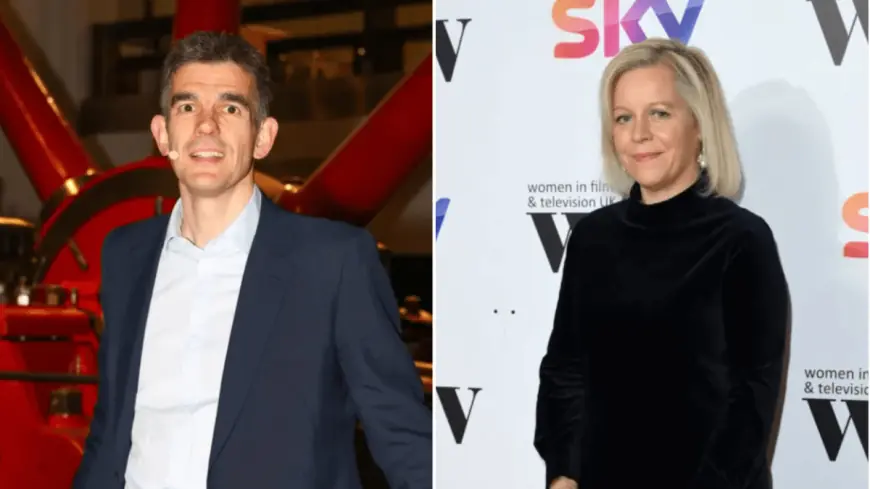
Matt Brittin, Google's former head of European operations, has emerged as the prime candidate to become director-general, a role that would replace Tim Davie, who resigned over the misleading Panorama edit of a Donald Trump speech. Brittin, 57, is Cambridge-educated and rowed for Team GB at the 1988 Seoul Olympics. He left Google last year after 18 years, the last 10 as president for Europe, the Middle East and Africa.
Some staffers are wary that Brittin has no programme-making experience. Colleagues who back him point to his Google background and frequent contact with regulators and politicians as valuable preparation for steering the organisation in future, a future they say in which linear TV channels could soon disappear altogether. One ally said: "The big picture is getting the licence fee right. Everyone agrees it has to change. Matt knows his way around Whitehall and the Treasury. He is extremely personable too. " A separate remark urged a candidate who knows YouTube "inside out. "
Political scrutiny could also resurface: the selection panel could raise a 2016 appearance before the Commons Public Accounts Committee where Brittin said he could not remember his exact Google salary and defended Google's UK tax arrangements. Committee chair Meg Hillier said Brittin "lived in a different world" to that of most MPs' constituents. Brittin is believed to have earned many multiples of the £550, 000 salary paid to the director-general and may have Google stock that would have to be placed into a trust if he were appointed.
Immediate challenges: licence fee talks, a $10bn lawsuit and deep cuts
The candidate chosen by the board will be thrust into negotiations with the Government over a radical overhaul of the licence fee; non-payment and evasion cost the £1bn last year. They must also consider whether to fight or seek to settle a $10bn lawsuit filed by the US President over the Panorama failure, which is set for trial in Florida next year.
On the finances side, the incoming director-general must identify £600m in fresh cuts that Davie announced before his departure, turbo-charge commercial income from selling shows and win back viewers who have been leaving for deep-pocketed streaming platforms. They also need to tackle claims of institutional bias in the news operation and find an accommodation with YouTube as it becomes the first-choice TV service in people's homes.
The Board, led by chairman Samir Shah, is seeking a director-general with "resilience" to withstand intense public scrutiny. Kevin Bakhurst, now director-general at Ireland's RTÉ, had been of interest to bosses but declined to apply and is not expected to go for the new deputy director-general position that will be created to make the top job more manageable.
Concerns about the demands of the role predate Davie's departure; Davie's departure came after a row over alleged bi — unclear in the provided context.