























Why Are We at War With Iran? A Full Timeline of How the US-Iran Conflict Began

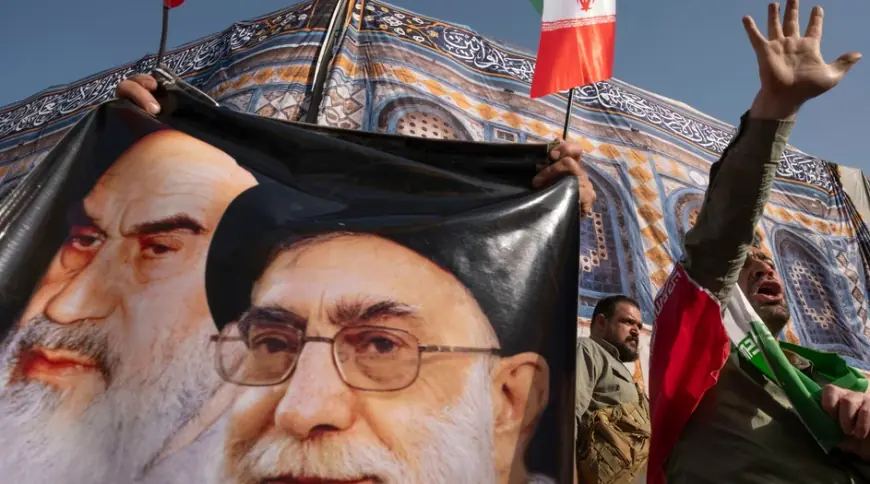
The United States and Iran are now in open military conflict as of Saturday, February 28, 2026. Decades of tension, a nuclear standoff, mass protests, failed diplomacy, and a series of escalating provocations all converged in the early hours of Saturday morning when US and Israeli forces launched strikes on Tehran. Here is a clear, factual breakdown of how it got to this point.
The Nuclear Program: The Root Cause of the US-Iran War
Iran's nuclear ambitions have been the central flashpoint between Washington and Tehran for decades. Although Iran suspended its formal nuclear weapons program in 2003, the UN nuclear watchdog IAEA reported in December 2024 that it had enriched uranium to levels approaching weapons-grade, with an unprecedented stockpile of highly enriched uranium without a credible civilian purpose — giving Iran the capacity to produce enough fissile material for multiple bombs on short notice.
In 2015, under the Joint Comprehensive Plan of Action, six countries lifted sanctions on Iran in exchange for freezing its nuclear program. In 2018, President Trump unilaterally withdrew from the agreement, after which Iran began stockpiling enriched uranium and largely suspended International Atomic Energy Agency monitoring. That withdrawal set off the chain of events now ending in full-scale war.
The Twelve-Day War of 2025: The Conflict That Lit the Fuse
The Iran-Israel war, also known as the Twelve-Day War, took place from June 13 to June 24, 2025. It began when Israel bombed military and nuclear facilities in Iran in a surprise attack, assassinating prominent military leaders, nuclear scientists, and politicians. Iran retaliated with over 550 ballistic missiles and over 1,000 suicide drones, hitting civilian population centers, military sites, energy infrastructure, and government facilities.
The United States intercepted Iranian attacks during the conflict and bombed three Iranian nuclear sites on June 22, 2025. Iran retaliated by firing missiles at a US base in Qatar. On June 24, Israel and Iran agreed to a ceasefire under US pressure. That ceasefire, however, resolved nothing. The underlying disputes between Tehran, Washington, and Tel Aviv remained entirely intact and continued festering throughout the second half of 2025.
Mass Protests and Government Crackdown: The Catalyst for US Intervention
The crisis unfolded against the backdrop of Iran's deepening economic collapse and internal unrest, which had begun in late 2025 and continued into early 2026. Anti-government protests erupted across Iran in late December 2025, with Iranians demanding regime change amid a collapsing economy and deep anger at the Islamic Republic's leadership.
Trump came close to striking Iran in early January 2026 over the killings of thousands of protesters by the Iranian regime. The protests emerged over economic grievances, with some protesters demanding regime change. Trump threatened to hit Iran if security forces killed protesters, stating "we are locked and loaded and ready to go." Security forces cracked down hard, with many reports putting the death toll in the thousands. Trump ultimately delayed military action and resumed nuclear talks instead — buying only weeks of time.
Failed Diplomacy: How Negotiations Collapsed Into War
Diplomatic contacts between the United States and Iran resumed in early February 2026, as both governments sought to avert a military confrontation while maintaining sharply incompatible positions. Oman served as mediator throughout, with Foreign Minister Badr bin Hamad Al-Busaidi conveying messages between delegations. The US delegation included special envoy Steve Witkoff, Jared Kushner, and CENTCOM commander Admiral Brad Cooper — the first time a senior US military commander had been present at negotiations with Iran.
The US and Iran had off-and-on talks about striking a nuclear deal for months. During these talks, the Trump administration pressed Iran to completely dismantle its nuclear and missile programs — a demand Iran refused. Iran's foreign minister stated publicly that Iran's ballistic missile program was never part of the talks' agenda, a position Trump and Secretary of State Marco Rubio called a non-starter. Talks in Geneva on February 27 ended without a deal, and strikes began within hours.
Iran's Provocations in Early 2026 Accelerated the War
On February 3, 2026, six IRGC Navy gunboats attempted to stop and seize a US tanker in the Strait of Hormuz. The Stena Imperative tanker ignored their demands and continued toward the Arabian Sea under the escort of the USS McFaul. Additionally, a US F-35 fighter jet shot down an Iranian Shahed drone approaching the aircraft carrier USS Abraham Lincoln. On February 5, Iran's IRGC Navy announced it had seized two foreign oil tankers near Farsi Island in the Persian Gulf.
During the second round of nuclear talks in Geneva on February 17, Iran's Supreme Leader Khamenei threatened US warships in the area, stating Iran is "capable of sinking" them. In addition, the Strait of Hormuz was closed for several hours during a live military fire drill. Each of these acts was interpreted in Washington as deliberate provocation designed to test American resolve ahead of a potential deal — or conflict.
Trump's Four Stated Reasons for Going to War With Iran
President Trump offered four distinct rationales for the military buildup: the nuclear program, support for the protesters who had been killed in Iran's crackdown, Iran's continued support for terrorism through Hezbollah and Hamas, and Iran's ballistic missile program. He combined these justifications in his State of the Union address without clearly defining the mission's ultimate objective.
In a video posted on Truth Social confirming the operation, Trump cited decades of Iranian aggression against US forces and tens of thousands of protesters slaughtered in recent months. He stated that US policy has been to prevent Iran from obtaining nuclear weapons and developing long-range ballistic missiles, calling it "a massive and ongoing operation to prevent this very wicked, radical dictatorship from threatening America and our core national security interests." He also explicitly called for regime change — the most expansive war objective any US president has stated regarding Iran.