
























Caspar San Giorgio: Arrest and Charges Spotlight the Immediate Impact of the Churchill Statue Vandalism

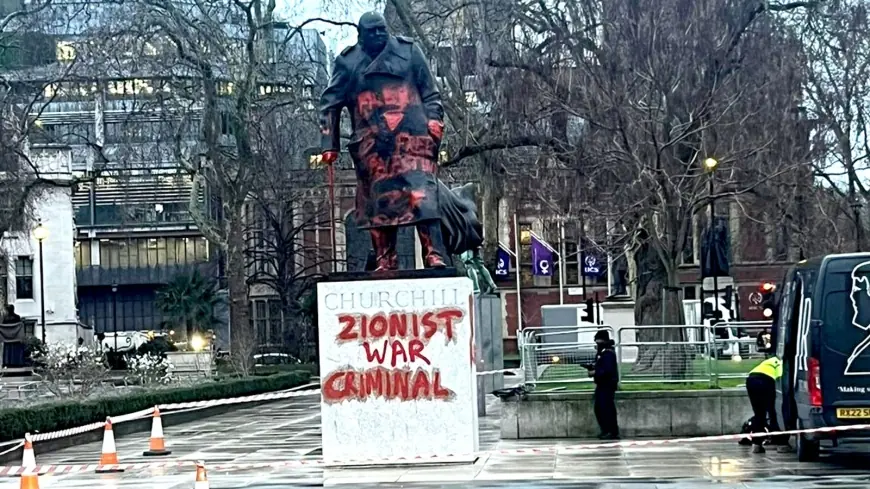
The arrest of Caspar San Giorgio, 38, of no fixed address, has put a sharp focus on who feels the impact first when a high-profile monument is targeted. The incident has disrupted access to Parliament Square, prompted a rapid police response and drawn forceful statements from political and community figures — while cleaning and legal steps proceed amid heightened sensitivities.
Who is affected right away and how the scene changed
Public access to the Churchill statue in Parliament Square was immediately restricted: the monument was cordoned off and work was under way to remove the paint. Local authorities and security resources were mobilised, and organisations representing Jewish communities and national government spokespeople issued strong condemnations. A No 10 spokesperson called the vandalism "completely abhorrent" and said "the perpetrator must be held to account. " A Home Office spokesperson described Churchill as "a figure of great national pride" and called those who defaced the statue "a disgrace. " A Greater London Authority spokesperson said officials were "appalled" and that work was under way to remove the graffiti as quickly as possible.
Caspar San Giorgio: arrest, charges and custody
Officers were alerted shortly after 04: 00 GMT on Friday 27 February and, police accounts, the first officers were on the scene within two minutes. A 38-year-old man, identified as Caspar San Giorgio, was arrested shortly after 04: 00 GMT on Friday and taken into custody. He was charged with criminal damage and was remanded into custody; he was due to appear at Highbury Corner Magistrates' Court later. Earlier updates described the initial arrest as on suspicion of racially aggravated criminal damage, and police later said he had been further arrested on suspicion of supporting Palestine Action, which is a proscribed organisation, under the Terrorism Act. He remains in custody.
What was painted on the statue and how it was described
The bronze sculpture was defaced with multiple slogans and symbols. Phrases visible on the monument included "Zionist war criminal, " "Stop the Genocide, " "Free Palestine, " "Never again is Now" and "Globalise the Intifada. " Some of those words were sprayed in red paint. Commentators who examined shared images noted elements such as a red triangle alongside the words "Free Palestine. "
Context: policing guidance, past vandalism and the statue's history
Last December, both the Metropolitan Police and Greater Manchester Police announced that anyone using or chanting the slogan "globalise the intifada" would face arrest; that decision followed two terror incidents named by police — an attack at Bondi Beach in Australia and an attack at Heaton Park synagogue in Manchester on 2 October. The Churchill statue has been vandalised on several past occasions: in June 2020 it was scrawled with graffiti accusing Churchill of being a racist during a Black Lives Matter protest triggered by the death of George Floyd in the United States, and later that year an activist linked to an environmental protest was ordered to pay more than £1, 500 after painting "racist" on the plinth. The 12ft (3. 6m) monument was created by Ivor Roberts-Jones and unveiled in 1973 by Lady Clementine Churchill; it is one of 12 statues on or around Parliament Square, alongside figures such as Abraham Lincoln and Nelson Mandela.
Here’s the part that matters for short-term signals:
- Cleaning and cordons will likely remain until authorities confirm removal is complete and any evidence gathering is finished.
- Legal steps are already in motion: initial arrest, a charge of criminal damage, remand and a scheduled magistrates' appearance.
- Police enforcement policy on slogans tied to "globalise the intifada" is active and has precedent from December guidance tied to past attacks.
- Community and government reactions are vocal and coordinated, increasing public scrutiny of policing and restoration efforts.
Reactions from civic and communal organisations
Community groups and leadership bodies reacted strongly. The Jewish Leadership Council said it was "disgusted" by the defacement and said targeting the statue of a figure who led the country in the fight against the Nazis combined "a hatred of Jews with a disdain for Britain. " Phil Rosenberg, president of the Board of Deputies of British Jews, described the image of the defaced statue as a perversion of Churchill's legacy and invoked the warning that those who forget the past are condemned to repeat it. A commentator who examined shared images noted the presence of "Free Palestine" alongside a Hamas red triangle "if you zoom in close enough. "
It’s easy to overlook that this particular monument has repeatedly become a focal point in protests; previous clean-ups and legal actions show the site remains a symbolic flashpoint for competing public sentiments and policing priorities.