























Global Response to U.S. and Israeli Strikes in Iran

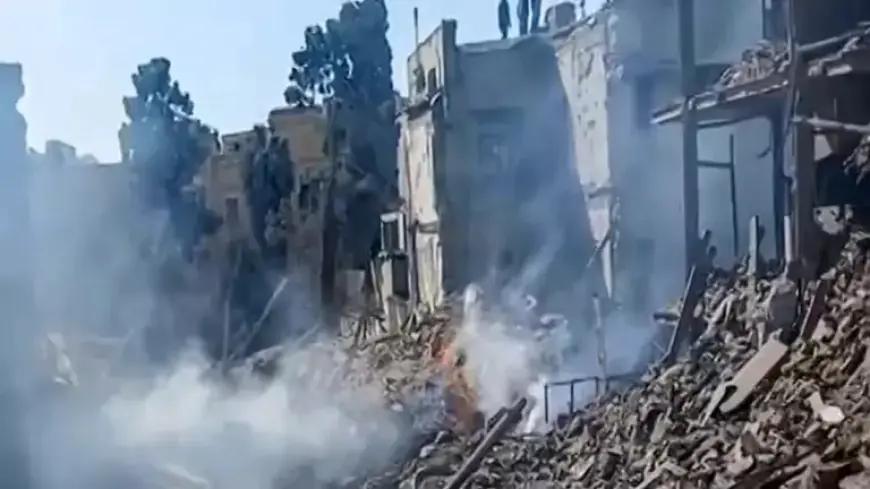
Recent military strikes by the United States and Israel on Iran have heightened tensions in the region. Both nations called for a change in leadership within Iran. In response, Iranian officials pledged to retaliate, describing the attacks as acts of aggression.
Iran’s Response to Military Strikes
The Iranian Foreign Ministry declared a firm response to the U.S. and Israeli strikes. State television labeled the actions an “aerial aggression” by what they called the “Zionist regime.” Meanwhile, Iranian President Massoud Pezeshkian remains unharmed, according to official reports.
International Reactions
The military actions in Iran prompted varied international responses, from support to disapproval, reflecting global concern over potential escalation.
Russia
- Dmitri Medvedev, former President and current deputy secretary of the Russian Security Council, criticized the U.S. for revealing its true intentions. He claimed all negotiations with Iran were merely cover-ups.
Lebanon
- Lebanese Prime Minister Nawaf Salam stated the country would not be dragged into the conflict with Iran. There are fears of Hezbollah’s involvement in the crisis.
Australia
- Prime Minister Anthony Albanese expressed Australia’s support for U.S. actions to prevent Iran from acquiring nuclear weapons, labeling the Iranian nuclear program a global threat.
United Kingdom
- The British government emphasized the need to avoid an escalation into a broader regional conflict. They are prepared to protect their interests in the area.
France
- Alice Rufo, the French Minister Delegate for Armed Forces, prioritized the safety of French citizens and personnel in the Middle East amid escalating military tensions.
African Union
- The African Union called for immediate restraint and dialogue, warning that escalation could worsen global instability, especially affecting energy markets and economic resilience in Africa.
Sweden
- Swedish Foreign Minister Maria Malmer Stenergard urged restraint, blaming Iran for the current tensions in the region and calling for a return to diplomatic negotiations.
Norway
- Norwegian Foreign Minister Espen Barth Eide expressed concern over the failure of diplomatic negotiations with Tehran and the risks of a large-scale conflict in the Middle East.
Netherlands
- Dutch Foreign Minister Tom Berendsen urged all parties to exhibit restraint and prevent further escalation, emphasizing the importance of stability in the region.
South Korea
- The South Korean government is closely monitoring the situation and called for all parties to make efforts to de-escalate tensions, while ensuring the safety of its citizens in Iran.
The unfolding events illustrate a complex web of geopolitical dynamics, with numerous nations weighing in on the crisis and calling for measured responses. As the situation develops, the potential for escalation remains a significant concern for global stability.