

























Operation Epic Fury Raises a Defining Question: Is the US at War With Iran After Strikes and Iran Retaliation?

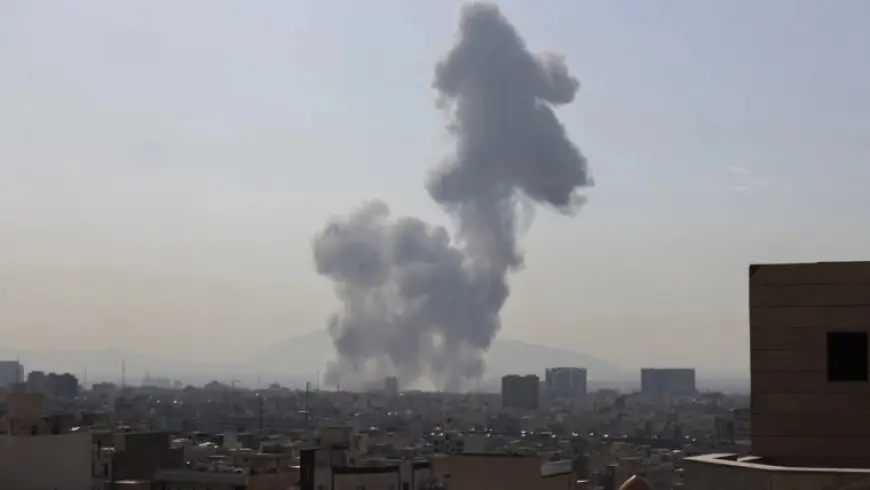
The United States launched major strikes on Iran on Saturday, Feb. 28, 2026 (ET), in an operation the Pentagon has named Operation Epic Fury, triggering rapid Iran retaliation across the region and reigniting public debate over a blunt question: is the US at war with Iran? The fighting has already spilled beyond Iran and Israel, with missile activity reported around Gulf states that host U.S. forces, fresh alarms in Iraq, and a jump in energy-market volatility as traders track oil prices today.
Operation Epic Fury: Did We Bomb Iran and What Was Hit?
Yes—U.S. forces struck Iranian targets as part of Operation Epic Fury. The opening hours featured coordinated U.S.-Israeli action aimed at degrading Iranian military capabilities tied to missiles and naval assets, with strikes and explosions reported in and around Tehran and at other sites across the country.
While early battlefield details remain fluid, the campaign’s stated focus has been on systems used to launch or support attacks beyond Iran’s borders. Some reporting and video evidence circulating online suggests U.S. warships may have contributed with Tomahawk missile launches, though operational specifics have not been fully detailed publicly in a way that can be independently verified in real time.
Is the US at War With Iran, and Did Trump Declare War?
The U.S. is engaged in active hostilities with Iran, but a formal declaration of war is a separate legal step. As of Saturday (ET), there has been no indication that Congress has issued a declaration of war.
President Donald Trump publicly confirmed large-scale combat operations and warned that U.S. casualties are possible. That has fueled the “is the US at war” debate inside the U.S., where the Constitution assigns Congress the power to declare war while presidents have historically initiated strikes under claimed authorities tied to self-defense and existing security mandates.
Lawmakers are already signaling an imminent fight over war powers, with proposals expected to push a vote designed to constrain or require explicit authorization for continued operations. The practical reality is that sustained combat—especially if it continues for days or weeks—can look and feel like war even without a formal declaration.
Why Is US Attacking Iran Now?
The immediate rationale presented by U.S. and Israeli leaders centers on stopping what they describe as urgent threats connected to Iran’s missile capacity and nuclear trajectory. The escalation follows a period of heightened tension and stalled diplomacy, with both sides hardening positions on limits to Iran’s nuclear activities and the scope of Iran’s missile program.
This phase also arrives after earlier clashes and a broader regional conflict environment, including repeated exchanges involving Israel and Iran-aligned forces. For many Americans and Britons, the core public question—why did the US attack Iran—is now inseparable from the likely duration of fighting and the risk of retaliatory strikes on U.S. forces and partners.
Iran Attacks Israel, Iran Strikes US Interests, and the Bahrain Missile Attack
Iran’s response began quickly with missile and drone activity aimed at Israel and at locations tied to U.S. presence in the Gulf. Multiple Gulf states activated air defenses and issued public safety guidance as interception efforts unfolded.
A particular flashpoint has been the Bahrain missile attack, where Bahraini authorities confirmed a strike affecting a facility connected to U.S. naval operations. That incident underscores the regional exposure: even limited Iranian volleys can disrupt countries that host U.S. bases and logistics hubs, raising the odds of further escalation if casualties mount.
The situation remains volatile, with the IRGC signaling continued resistance. Separately, reports have circulated about casualties among senior Iranian security leadership, including claims involving Mohammad Pakpour. Iran has not uniformly confirmed such claims in public, leaving some leadership outcomes uncertain as the operation continues.
Iraq on Alert as the Iran US War Spills Across the Region
Iraq sits directly in the middle of the operational geography, both because of past U.S.-Iran tensions on Iraqi soil and because flight paths and missile routes can traverse Iraqi airspace. Security alerts around U.S. positions in Iraq are expected to intensify, and Iraqi political pressure could rise if the country is drawn into spillover effects—whether by debris, misfires, or retaliation aimed at U.S. assets.
This adds a second strategic problem for Washington: managing an Iran campaign while protecting widely dispersed personnel and infrastructure across multiple countries, often within range of short- and medium-range missiles.
Oil Prices Today: Energy Markets React as Risks Spread
Energy markets moved higher on fears that conflict could threaten exports and shipping routes, especially if instability reaches critical transit points. Analysts have also focused on whether major producers may increase output to offset disruption risk.
| Market Factor | What Traders Are Watching | Why It Matters |
|---|---|---|
| Gulf retaliation risk | Additional strikes near bases and ports | Higher security costs and supply anxiety |
| Shipping uncertainty | Any threat to key maritime routes | Faster price spikes and insurance surcharges |
| Producer response | Potential production increases | Could cap price rises if sustained |
| Duration of Operation Epic Fury | Whether strikes expand beyond initial targets | Longer conflict tends to support higher crude prices |
For U.S., U.K., Canadian, and Australian audiences, the next 24–48 hours will likely determine whether Operation Epic Fury remains a concentrated campaign or becomes a broader war on Iran dynamic—defined less by legal labels and more by the scale of combat, the pace of iran retaliation, and the ability of leaders to prevent a widening regional conflict.