

























Iran News: U.S.-Israel Strikes on Iran Trigger Retaliation, Airspace Shutdowns, and Global Ripple Effects

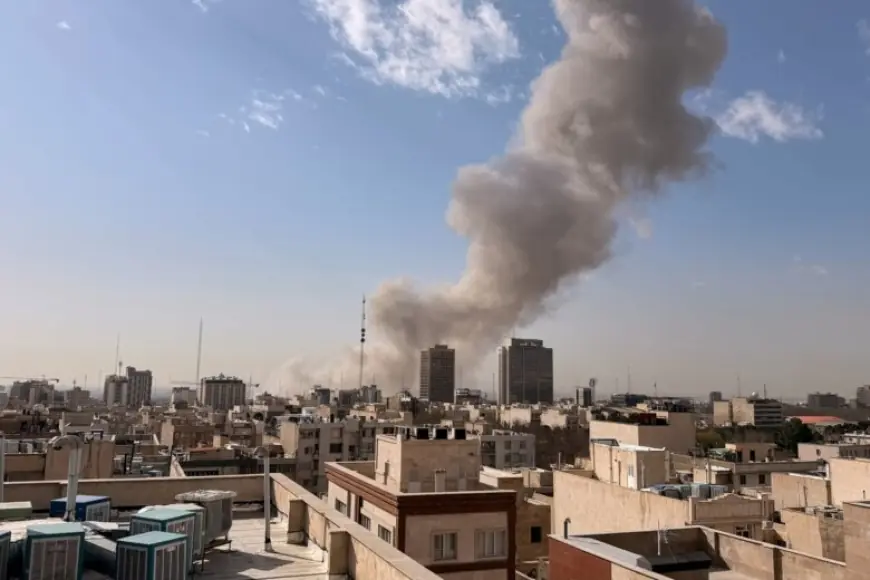
A major military escalation erupted Saturday, Feb. 28, 2026 (ET) after the United States and Israel carried out coordinated strikes across Iran, setting off explosions in Tehran and other locations and prompting immediate Iranian retaliation. The flare-up has rapidly expanded beyond battlefield targets into aviation, regional security, and energy risk, sharpening concerns in the United States, the United Kingdom, Canada, and Australia about travel disruption, citizen safety, and wider instability.
Iran News: What Happened Overnight and Where Fighting Spread
Iranian authorities confirmed blasts in the capital and activated air defenses, while U.S. officials described the campaign as large-scale combat operations. Israel framed its action as preventive, and both governments tied the strikes to stopping missile and nuclear-related threats.
Iran’s response followed quickly with missile and drone launches aimed at Israel and at U.S. military sites across the Gulf region. Multiple governments moved to heighten air defenses and restrict airspace as the situation evolved, raising the risk of further regional escalation over the coming hours and days.
Iran News: Airspace Closures Disrupt Flights From London to Sydney
The most immediate effect for the public has been aviation chaos. Several Middle Eastern air corridors were closed or heavily restricted, forcing airlines to cancel, reroute, or extend long-haul flights. That disruption is cascading into transatlantic and Asia-Pacific schedules, affecting travelers connecting through regional hubs on routes commonly used by passengers from the U.S., U.K., Canada, and Australia.
Airlines typically respond to fast-moving security threats by avoiding entire flight information regions, not just a single country’s airspace, which can push traffic north over Turkey/Caucasus corridors or south over Egypt and the Arabian Sea—adding time, fuel costs, and knock-on delays.
Iran News: Nuclear Tensions Intensify With Fresh Focus on Isfahan
The strikes landed against a backdrop of rising international alarm over Iran’s nuclear program. In the past 24–48 hours, new attention has centered on the Isfahan complex and underground storage areas connected to highly enriched uranium stockpiles, sharpening the political argument in Washington and Jerusalem that time-sensitive action was required.
For European partners, the immediate challenge is balancing de-escalation efforts with nonproliferation concerns. In London, officials are likely to face pressure to clarify the U.K. posture on regional defense coordination, maritime security, and the protection of British nationals across the Gulf.
Iran News: Market and Maritime Risks Rise, With Hormuz Back in Focus
Even without a confirmed threat to shipping lanes, the Strait of Hormuz is again the market’s central anxiety point. Any perception of risk to tanker traffic can lift energy prices, raise insurance costs, and tighten refined fuel supplies—effects that can show up quickly at U.S. and Canadian pumps and in U.K. household energy bills.
For Australia, the concern is less direct supply disruption and more the global price transmission: higher oil and freight costs can filter into transport, food distribution, and inflation expectations, particularly if air and sea routes remain constrained for more than a few days.
Iran News: What People in the U.S., U.K., Canada, and Australia Should Watch Next
The next phase depends on whether the conflict remains confined to military exchanges or broadens into sustained regional confrontation. Key indicators to monitor include:
| Near-Term Indicator | What It Signals | Why It Matters Internationally |
|---|---|---|
| Expanded airspace closures | Rising threat environment | Longer flight times, cancellations, higher fares |
| Additional strikes on Gulf bases | Wider military footprint | Greater risk to personnel and regional stability |
| Missile salvos toward Israel | Sustained retaliation cycle | Potential for broader conflict and diplomacy strain |
| Maritime alerts near Hormuz | Shipping risk premium | Higher energy prices and supply uncertainty |
| Emergency diplomatic meetings | De-escalation pathway | Possibility of pauses, corridors, or talks |
In the near term, travelers should expect rolling schedule changes and last-minute reroutes as airlines adapt to evolving no-fly zones. Diplomatically, allies in North America and Europe will be watching for signals of off-ramps—ceasefire proposals, monitored pauses, or confidence-building steps—while defense planners prepare for the possibility that this crisis becomes prolonged rather than a short, sharp exchange.