




















Why Novak’s Serve Is Forcing Opponents and Coaches to Rethink Match Plans

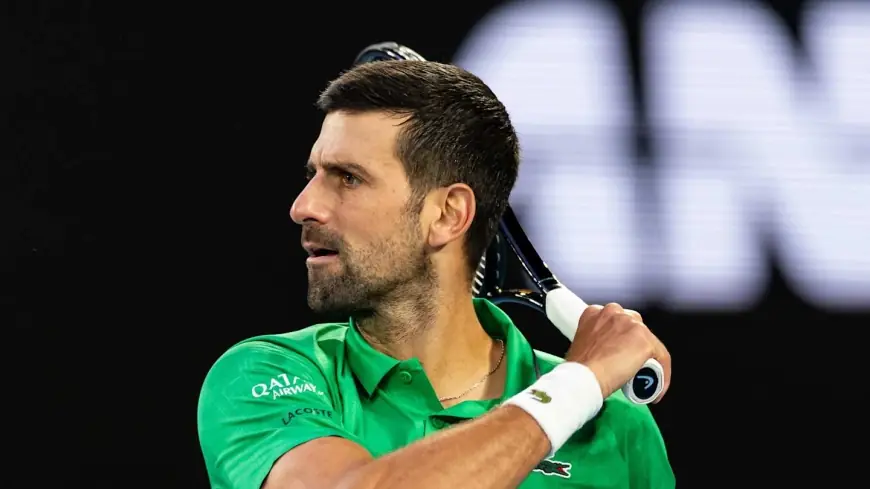
For opponents and coaches on the ATP Tour, novak’s serve has moved from a background detail to a tactical priority. At age 38 and still chasing a 25th major, his serve — prized for accuracy and precision rather than raw speed — is changing how players prepare, especially after a season of high-profile moments and pointed peer commentary.
What Novak’s serve asks of opponents and coaching staffs
Chris Eubanks, who reached the Wimbledon quarter-finals in 2023 and is elsewhere described as Christopher Eubanks and as a retired tennis player, flagged the serve in a discussion on the Served podcast with Andy Roddick. He said many players who have faced Novak believe one area of his game doesn’t get talked about nearly enough: the serve. Eubanks also noted that he never had a chance to face Djokovic in his career, but relayed broadly held peer views that the serve is underrated.
Here's the part that matters… preparing for Novak often means neutralizing placement and precision rather than chasing extreme pace. What's easy to miss is how that shifts practice priorities: return positioning and rally patterns replace pure speed reaction drills.
Serve performance tied to recent match results
Match-level moments underline the point. In a 2025 Miami Open semi-final, Djokovic landed 51 of 57 first serves in a victory over Grigor Dimitrov; after that match he described himself as primarily a baseline player whose return and backhand have gained the most attention, and said the serve might be underrated. He emphasized accuracy and precision over simply adding miles per hour, noting a preference for hitting the perfect spot — even at roughly 120 miles per hour — rather than forcing higher speed that misses the line.
Despite that semi-final serving performance, Djokovic lost the Miami Open final to Jakub Mensik in straight sets, with scores of 6-7, 6-7, and Mensik claimed his first-ever Masters title. Earlier in the season Djokovic came close to a 25th major at the 2026 Australian Open but was beaten in the final by Carlos Alcaraz, who became the youngest player ever to complete a men’s singles Career Grand Slam. At that Australian Open Djokovic had rallied from two sets down in the semi-final to beat Jannik Sinner, demonstrating how his serve and other big-match attributes can swing critical moments.
Numbers and peer context
Career-level serving figures cited in recent coverage place Djokovic’s first-serve reach and efficiency in clear relief: a 65% first-serve landing rate and winning 74% of those points, with points won on his second serve dropping to 55%. For comparison, Roger Federer posted a 62% first-serve landing rate and won 77% of those points, while Rafael Nadal is listed at 68% first serves landed but winning 72% of first-serve points. Those figures reinforce the notion that Djokovic’s serve combines reliability with point-clinching placement rather than sheer dominance by speed.
That combination sits alongside a common appraisal of Djokovic’s game: he is viewed as near-complete with few weaknesses, though some coverage notes a tendency at times to lose focus or composure in tight matches, which can produce errors, even as he remains one of the mentally toughest players on tour.
- Peers are increasingly reframing practice plans to counter precision serving rather than just pace.
- High first-serve conversion in select matches (51 of 57 in one semi) reinforces the serve's tactical value.
- Career percentages show Djokovic lands a high share of first serves and wins a large share of those points; second-serve points are comparatively weaker.
- An opponent’s successful strategy will likely be measured by neutralizing placement and winning extended rallies rather than matching mph.
Short notes and related headlines from recent coverage
Other items mentioned alongside these discussions include: Jennifer Capriati being named as the greatest junior ever over Serena Williams by her former coach; Stan Wawrinka offering advice for players aiming to challenge Carlos Alcaraz and Jannik Sinner; and Jessica Pegula issuing a public apology after withdrawing from a WTA tournament.
There are several small but telling signals to watch for confirmation that Novak’s serve is changing opponent tactics: repeated matches where first-serve placement forces short rallies, coaching reports focused on return positioning, or opponents explicitly altering practice to simulate his serve patterns. The real question now is whether those adjustments will reduce the serve’s impact or simply elevate Djokovic’s margin for tactical victory.
Writer’s aside: It's easy to overlook how a preference for precision over raw speed quietly reshapes whole practice weeks; players and coaches tend to pivot quickly when a persistent pattern emerges in elite match play.