

























When Are 6 Stars Aligning In 2026: six planets form a planetary parade this week

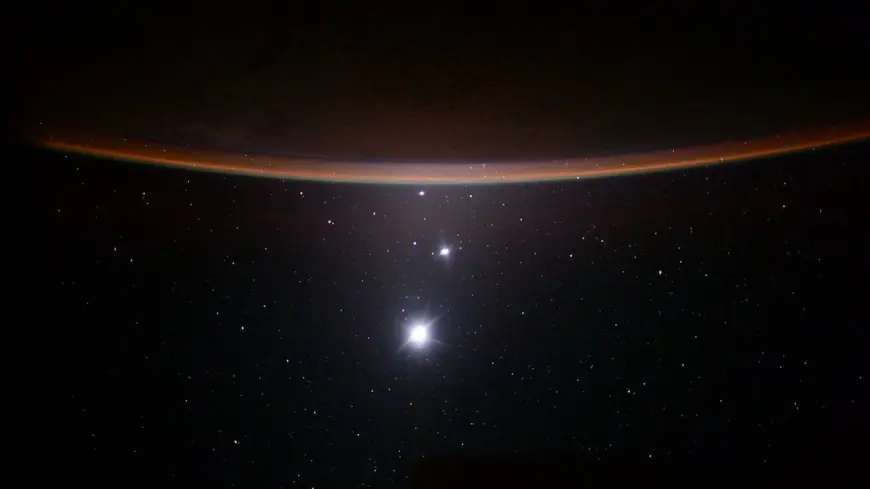
Skywatchers are seeing six planets appear together in the evening sky shortly after sunset, a planetary parade that offers the chance to spot Mercury, Venus, Jupiter, Saturn, Uranus and Neptune in a single sweep. when are 6 stars aligning in 2026 is the immediate question for observers planning where and when to look.
Photographer Josh Dury captured the line-up from Worth Matravers
Josh Dury, from Bristol, photographed the phenomenon from a radar memorial in Worth Matravers, Dorset, on Tuesday just after 18: 30 GMT. His image includes Earth, Mercury, Venus, Jupiter, Saturn, Uranus and Neptune, as well as the Moon. Dury made a gruelling four-hour journey to reach the site — a trip that should have taken two hours but was extended by road closures.
Dury described the effort as "a matter of arriving on location and seeing the sun go down to get into position to wait for the sky to darken. " He called it a "battle against time" and said he used a wide lens that "meant it was possible to capture a nearly 180 degree field of view, so you could almost capture them like a string of pearls in the sky. " He said he was "positively overwhelmed" and that "it was wonderful to see the developmental stages of the parade happen, " adding that the photograph is "quite a rare photograph purely because it's that line-up of how they appear in the night sky" and that "it just really puts into perspective our place among the solar system. "
Which planets will be easy to see and which need optics
Mercury, Venus, Saturn and Jupiter should be visible to the naked eye, while Uranus and Neptune will likely require binoculars or a telescope. Just after sunset, Mercury, Venus, Saturn and Neptune will appear low in the western sky, close to the horizon; Mercury and Venus in particular will sit very low, so a viewing spot with the clearest view of the western horizon is recommended.
Higher in the sky, Uranus will be sitting in the constellation Taurus and won't set until around midnight, giving skywatchers with the right equipment a better chance of tracking it down. Jupiter will be the easiest of the six to find, shining brightly in the constellation Gemini and high enough to stay in view for much of the night, even from light-polluted towns and cities. If you do not have binoculars or a telescope, attending a local astronomy society event can provide access to the necessary equipment.
When Are 6 Stars Aligning In 2026: dates, closest grouping and city windows
The planets will appear most closely grouped on 28 February, though the exact date depends on your location. Viewing windows given for major cities include: 25 February in São Paulo; 28 February in Athens, New York, Mexico City and Tokyo; 1 March in Beijing, Berlin, London and Mumbai; and 2 March in Reykjavik. For viewers in the UK, the best time to see them was noted as Sunday, and the parade will be visible again from sunset on Saturday.
Some guides note 28 February as the date of closest grouping, but all six planets are already visible in the night sky and have been for a few days, appearing together in a small window just after sunset.
Why the planets look aligned: expert explanations
Dr Becky Smethurst, Royal Astronomical Society Research Fellow at the University of Oxford and a YouTuber, explains that the planets "will be in a straight line, but it's a straight line on a curved sky, " adding that all the planets orbit in the same flat plane. She used the analogy of taking a ball of pizza dough and setting it spinning above your head so it flattens out, saying that is what happened to the gas cloud around the Sun that ended up forming the planets.
Jason Steffen, assistant professor of physics and astronomy at the University of Nevada, Las Vegas, offered a visual comparison: suppose you were the size of a pool ball standing on a pool table, and all of the other balls, regardless of their position, would appear in a line across your field of view. The geometry of the shared orbital plane compresses into a line from Earth's perspective, producing the parade effect.
Practical tips, recurrence and a brief historical note
Planet parades are not always one-night events; the planets move slowly and stay generally visible for weeks. To find the dimmer planets it is best to use a star chart, because Uranus and Neptune can be confused with stars. Mercury can be hard to spot, showing up only near sunset or sunrise, and Uranus and Neptune will require a telescope.
Seeing six planets gathered in the sky isn't an everyday event, but it is not as rare as some might think. A full seven-planet parade is far less common: one appeared in February 2025. Other recent alignments include a six-planet parade in January 2025 and a four-planet lineup in August 2025. Alignments do not trigger natural disasters or meaningfully alter Earth's gravity; the combined pull of the other planets is negligible compared with the influence of the Moon and Sun. Historically, when the outer giant planets clustered on the same side of the solar system in the late 1970s and early 1980s, that clustering motivated NASA to launch the Voya