

























Resident Evil Requiem marries old-school scares with modern tech — and a contested Switch 2 port

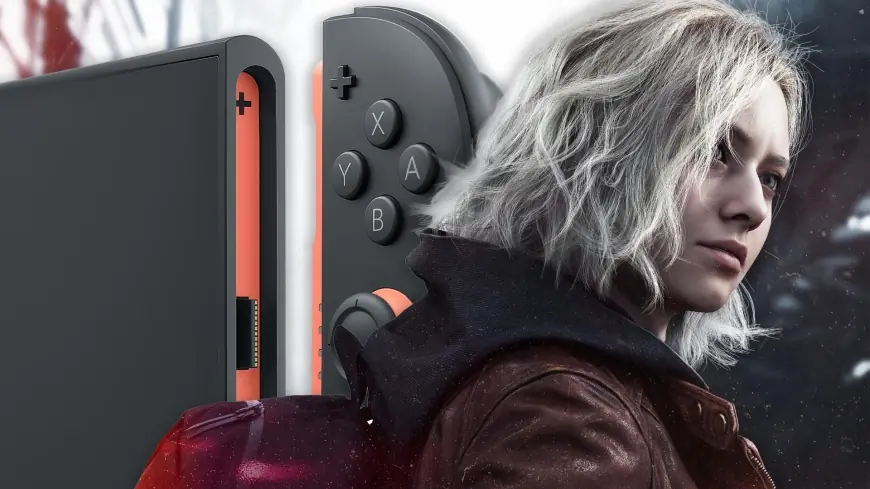
Resident evil returns in a new installment released to excited fans on Friday, pairing the franchise’s 30-year legacy of survival horror with contemporary technical fixes on multiple platforms. The game matters now because Capcom is explicitly trying to walk a tightrope between the series’ established DNA of fear and a push toward broader action, while also shipping a Nintendo Switch 2 port that leans heavily on DLSS upscaling.
Koshi Nakanishi frames a balance between familiarity and freshness
Director Koshi Nakanishi acknowledged the project’s central challenge as the need to balance “familiarity and freshness. ” Capcom positions Requiem as an effort to both respect the series’ roots and to “redefine survival horror in interesting new ways, ” a creative aim reiterated by producer Masato Kumazawa, who emphasized that fear remains the title’s signature mood. Kumazawa described fear as a human emotion that entertainment can turn into a positive thrill, and the development team structured the game around preserving that element even as it stretches into action-oriented set pieces.
Resident Evil’s new playable lead: Grace Ashcroft and Leon Kennedy’s split roles
Requiem introduces FBI analyst Grace Ashcroft as a new playable character, shifting some of the experience toward disempowered, tension-driven play. Grace arrives on a sequence that opens at a gutted hotel where she has personal, horrific memories; she starts with little more than a flashlight and a pistol whose ammunition will often feel insufficient. Leon Kennedy returns as a more action-oriented option: his default third-person setup contrasts with Grace’s first-person perspective (players can choose either camera for each character). Leon initially feels comically overpowered amid waves of weak zombies and even drops vintage stilton one-liners, but the design soon forces him into frantic, back-against-the-wall firefights that demand every shell.
Grace Ashcroft’s hotel and sprawling care facility gameplay
Grace’s sequences push the franchise’s classic puzzle-box design: she is stalked by terrifying creatures through a stately, labyrinthine care facility that evokes the series’ best locales. Design choices — creatures that sniff for the player and emit shrill wails, scarce ammunition, and branching escape routes — are intended to recreate the tension tied to fixed-camera, limited-resource beginnings of the franchise. Voice acting plays a notable role in sustaining emotional weight in scenes that would otherwise unravel, though commentary within the game world suggests the larger plot struggles to find entirely new ground after three decades of story expansion.
DLSS and the Nintendo Switch 2 port: pixel counts, frame-rates and compromises
The technical conversation around Requiem centers on how the Switch 2 port uses DLSS to compensate for a dramatically reduced base resolution. Docked rendering is cut to a 540p base that the Nvidia upscaler lifts to a quality that can best a native 720p Series S image, while handheld play runs from a 360p base. The unlocked frame-rate on Switch 2 produces wide variability — roughly 30–60fps docked, dropping to the mid-20s at worst in portable mode — and that variability affects fluidity because VRR has issues when performance slips beneath a 40fps threshold. Geometry and textures are pared back and the sophisticated strand-based hair system seen on other platforms is replaced with animated textured “cards, ” a downgrade that is especially visible in cutscenes; yet most gameplay-significant elements remain intact.
PS5 Pro, Series S comparisons and platform trade-offs
On higher-end hardware, the PS5 Pro’s ray-tracing and image-quality improvements stand out as a “game-changing” upgrade for visual clarity, aided by higher internal resolution and a 4K UI. By contrast, the Series S runs the game almost flawlessly but at a lower internal resolution; interestingly, the Switch 2 — despite featuring only 56 percent of the base pixel count referenced in comparisons — can look better overall in motion because DLSS stabilizes fine detail. Handheld upscaling takes a 360p base through a 4x upscale to roughly 720p (and then fits to the screen), producing some artefacts such as hatched patterns but a generally acceptable mobile image. The technical trade-offs point to clear cause → effect relationships: aggressive upscaling and DLSS restore visible detail but unlocked frame-rates and reduced geometry generate uneven motion and downgraded hair fidelity.
What makes this notable is how Capcom has attempted to keep the franchise’s scare-driven core — the fixed-camera tension, encroaching zombies and limited ammo that trace back to milestones such as 1989’s Sweet Home and the 1996 coinage of the term by Shinji Mikami — while also delivering variant playstyles and modern visual fixes. The result is a title that deliberately mixes reverence for legacy items like rocket launchers and typewriters with fresh leads and contemporary rendering techniques, even as some fans worry the series’ pivot toward action risks diluting the horror at its heart.