























Ethan Hawke’s First Acting Award Was a Bong — With Blue Moon He’s Aiming Even Higher

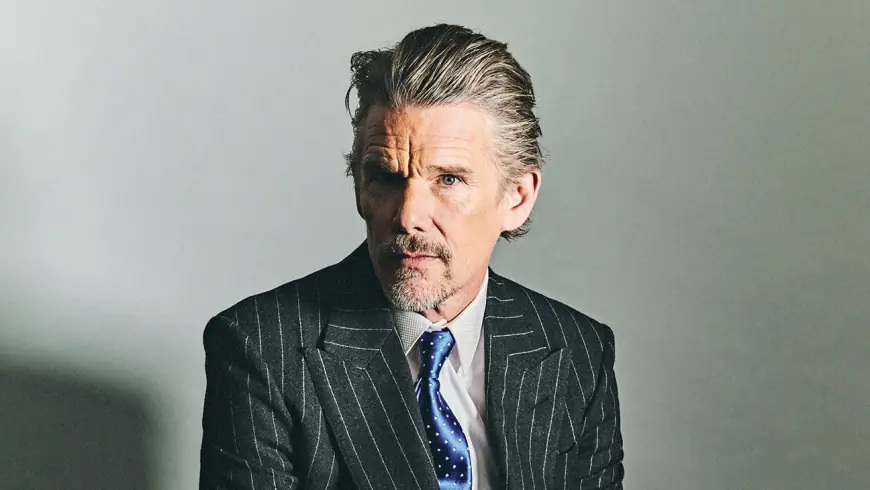
ethan hawke has secured a Best Actor Oscar nomination for his portrayal of Broadway lyricist Lorenz Hart in Blue Moon, a milestone that follows a long career of reinvention. The nomination crowns a role he prepared for nearly a decade and that required intense physical transformation, complex workshops and a close working relationship with the film’s director.
Ethan Hawke’s transformation and the work behind Blue Moon
The role of Lorenz Hart demanded a dramatic physical and emotional overhaul. The actor committed to a striking look for the part, shaving the top of his head to create a comb-over and ultimately removing the rest of his hair at wrap to move on. He described the process of becoming Hart as one of the hardest parts he has undertaken, likening the physical challenge to a risky downhill run that forced him to confront vulnerability while inhabiting a small, brittle man who alternates between charm and a plea for relevance.
Preparation for the role stretched across many years. The project moved through workshops and long conversations with the filmmaker, who had conceived the idea more than a decade earlier and waited for the actor to age into the part. When production finally came together, the shoot itself was compact, and the actor described a ritual of saying goodbye after filming — walking on a beach overseas to make peace with ending the performance.
Why the nomination matters: career context and creative partnership
The nomination represents a distinct moment in a career that spans multiple decades and a large body of work. The performer is fifty-five and has been working in the industry for more than four decades, with close to ninety films to his credit. This is his first nomination in the Academy’s Best Actor category and adds to a wider tally of nods earned over time.
Central to the film’s emergence is a long-standing collaboration between the actor and his director. Their creative relationship dates back decades, allowing time for trust, repeated experimentation and a shared approach to character work. That continuity made it possible to develop a film that plays out largely in a single setting and depends heavily on sustained, dialogue-driven performance. The project required careful calibration: a script dense with anecdote and memory, camera choices that hold focus on the protagonist, and a willingness to strip away vanity in service of character.
How Blue Moon fits into a pattern and what comes next
- Decades of collaboration enabled risk-taking: the actor and director have worked together for more than thirty years, building a shorthand that supports character-driven experiments.
- Long preparation, compact production: nearly ten years of preparatory work translated into a brief, intensive shoot and a performance that dominates the film’s runtime.
- Recognition at a new level: the nomination marks a first in the Best Actor category for an artist with an extensive past record of nominations and achievements.
The film’s focus on a real-time, single-party setting makes the performance the engine of the piece; the role’s difficulty and the deliberate pace of preparation suggest why the moment of recognition feels consequential. The actor has reflected on the rare nature of landing a part that offers such an opportunity to push beyond previous boundaries, and he has tied that growth to long-standing creative friendships and a renewed interest in character acting.
Recent developments highlight both craft and continuity: a transformative role, an unusual first award memory from early in his career, and the kind of collaborative patience that allowed the project to incubate until the timing felt right. Details around future projects were not outlined here; the current focus is on how this performance reshapes perception of the actor’s range and opens new career possibilities.