
























Sam Rockwell On-Set Reading Becomes a Fan Moment — Haley Lu Richardson’s Push and What It Means for Viewers

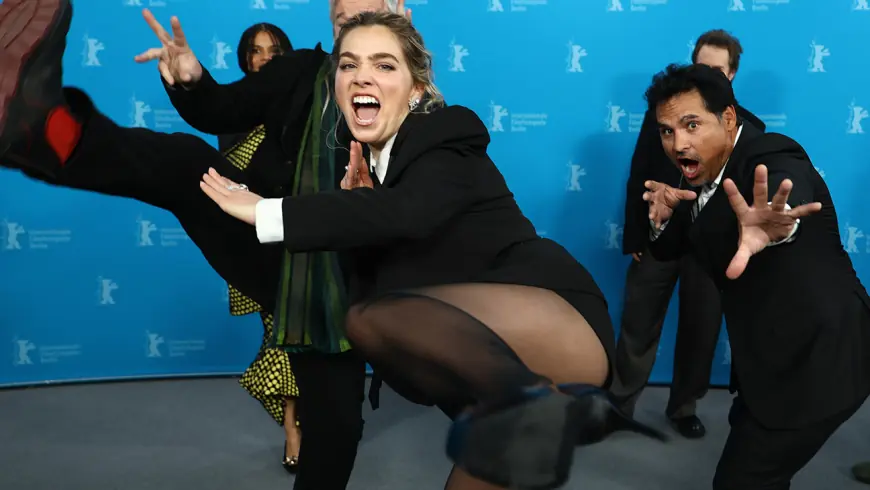
Why this matters now: For viewers who follow performances and actor collaborations, Haley Lu Richardson’s anecdote about urging sam rockwell to try the White Lotus monologue offers a rare behind-the-scenes window into how on-set conversations shape casting choices and creative risk-taking. It also reframes Richardson’s role in Gore Verbinski’s Good Luck, Have Fun, Don’t Die as more than a scene-stealer — she’s an active creative interlocutor with immediate influence on a colleague’s career decision.
Sam Rockwell’s rehearsal moment and why fans should care
Here’s the part that matters: a year before that White Lotus monologue became widely talked about, Richardson read it with Rockwell while they were working together on their new film. At the time he was still undecided about taking the part, and she told him she thought he should do it. That exchange is small but revealing — it places Richardson in the role of a trusted sounding board for a high-profile choice, and gives audiences a connective thread between her work in Good Luck, Have Fun, Don’t Die and his later, heavily noticed performance.
What’s easy to miss is how that single rehearsal moment underscores the informal ways actors test material and influence one another before roles are finalized. For fans who track performances closely, these backstage dynamics help explain how certain performances come to feel inevitable once they arrive on screen.
Inside the project and Richardson’s creative footprint
Good Luck, Have Fun, Don’t Die is described as a sci‑fi comedy that skewers artificial intelligence, and Richardson plays Ingrid, a party-ready character with electromagnetic sensitivity that complicates human connection. She shares scenes with an ensemble that includes Sam Rockwell, and her performance is noted for frequently stealing scenes.
- Richardson drew inspiration for Ingrid from a contemporary singer-songwriter, using that artist’s energy and mannerisms as a style reference while preparing the role.
- On set, she and Rockwell rehearsed the White Lotus monologue together; she urged him to accept the part when he was undecided.
- Richardson’s recent slate also includes a new independent drama premiered at a major festival, a streaming series where she plays a widow alongside another lead, and a poetry book co‑authored with a childhood friend that explores being a twenty‑something.
For those following sam rockwell’s career arc, the rehearsal anecdote retroactively connects two moments: his later-noted monologue and the collaborative atmosphere on the set where he was persuaded to proceed. That link matters because it nudges how viewers interpret both performances — as discrete achievements and as parts of an informal creative conversation.
Mini timeline (embedded context):
- On set of Good Luck, Have Fun, Don’t Die — Richardson and Rockwell read the White Lotus monologue together.
- At the time, Rockwell was undecided about taking the role; Richardson urged him to take it.
- A year later, the monologue had become a widely discussed moment.
The real question now is how this anecdote will shape audience attention: will viewers rewatch the film looking for traces of that rehearsal energy, or will Richardson’s off‑camera role in encouraging a colleague remain a footnote? Either way, it’s a tangible reminder that decisions about roles sometimes happen in quiet, collaborative moments rather than formal meetings.
Writer’s aside: It’s easy to overlook, but this kind of on-set nudging often goes unseen even though it can change the trajectory of a performance that audiences later remember.
For fans who enjoy connecting performance dots, this is an invitation to watch both projects with a fresh eye — paying attention to how small rehearsals can ripple into headline moments. Details may continue to emerge, and those will fill out how much influence that single reading had on the work that followed.