

























Resident Evil Requiem: a player-first guide to characters, tones and platform trade-offs

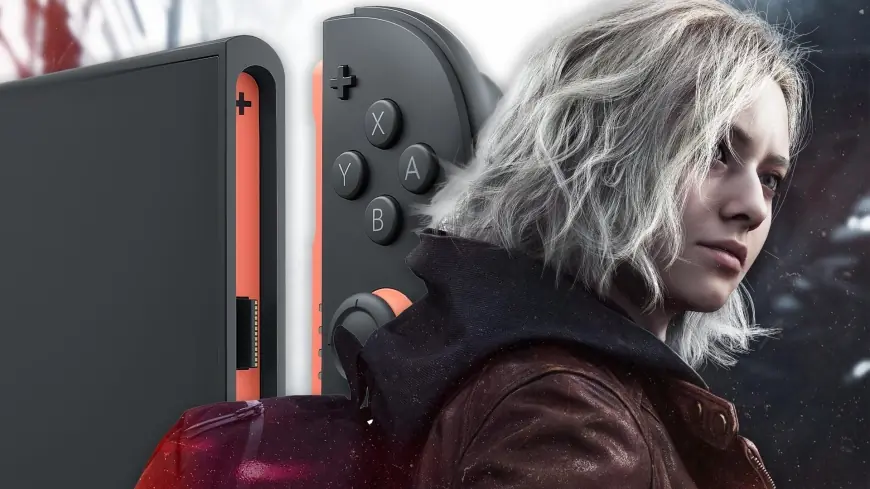
What matters right away for fans and newcomers is how resident evil’s new entry asks you to pick a stance: vulnerability or punch-through power. Requiem arrived to excited fans on Friday and introduces FBI analyst Grace Ashcroft as a playable lead while keeping series stalwart Leon Kennedy. For players this means distinct pacing, camera options and hardware winners — most notably a technical leap on one handheld platform thanks to DLSS, plus different risks and rewards depending on your preferred playstyle.
Players first: how tone and choice land for different audiences
Here’s the part that matters: Requiem deliberately splits its focus between disempowered, nerve-shredding horror and cathartic, action-forward combat. That split affects what players feel first—Grace’s sections deliver scarcity, stealth and puzzle-style pressure, while Leon’s sequences lean into spectacle and firepower. If you value creeping tension, Grace’s flashlight-and-pistol setup is engineered to keep you short on resources; if you prefer empowered combat, Leon’s third-person default emphasizes crowd-clearing fights where ammo still matters but momentum favors the player.
Who this changes for is concrete: longtime fans who’ve tracked the franchise’s shifts between terror and action; newcomers choosing a platform; and Switch 2 owners deciding whether portable compromises are acceptable. Voice acting and scripted beats aim to hold emotional weight across both approaches, even when the game leans into cinematic or campy moments.
Resident Evil Requiem on consoles: image quality, DLSS and the PS5 Pro edge
Requiem ships across PC, PlayStation 5, Xbox and Nintendo Switch 2. On PlayStation 5 Pro, ray-tracing and higher internal image quality are described as a game-changing visual upgrade. The Nintendo Switch 2 port takes a different technical route: base rendering is much lower — docked at 540p and handheld at 360p — but uses an Nvidia DLSS-style upscaler that produces image quality the analysis finds better than Xbox Series S’s native 720p in many scenes.
Performance trade-offs are explicit: the Switch 2 build runs with an unlocked frame-rate, so docked play swings roughly between 30fps and 60fps and handheld can dip to the mid-20s. That variability affects fluidity and, in places, visual stability. Series S runs almost flawlessly in contrast, and PS5 still wins on absolute clarity thanks to higher internal resolution and a 4K UI, but the gap is narrower than raw numbers imply.
Characters, cameras and level design that steer player decisions
New playable FBI analyst Grace Ashcroft is described as tenacious and nervous and functions as the primary conduit for the horror half of the game; her sections open at a gutted hotel tied to traumatic memories and outfit her with a flashlight and a pistol that never feels plentiful. Leon Kennedy returns as an older, battle-hardened lead whose third-person default supports more visceral, over-the-top combat — severing limbs with a hatchet and taking on hordes that the game sometimes uses to showcase his competence.
Camera choice is a consumer-facing option: Grace can use a first-person view while Leon defaults to third-person, and the player can swap perspectives. The level design preserves the franchise’s appetite for labyrinthine areas and puzzle-box survival scenarios, where decisions about burning scarce bullets or sprinting through danger directly affect pacing and player stress.
Switch 2 compromises, DLSS gains and practical limitations for portable play
Technical concessions on Switch 2 include pared-back geometry, lower-quality textures and a replacement of strand-based hair with animated, textured "cards, " which is most noticeable in cutscenes. Despite those cuts, much of what drives the experience remains intact; the principal visual penalties are hair fidelity and frame-rate variability. DLSS-style upscaling dramatically improves perceived detail — fine elements such as wires and fences can look temporally stable after upscaling — and handheld upscale strategies can make 360p base renders look acceptable on a 1080p screen, though artefacts like hatched patterns appear in places.
If you’re wondering why this keeps coming up: the lack of hard frame-rate caps and incomplete variable refresh (VRR) support mean drops beneath certain thresholds create jarring moments. Optional 30fps or 40fps caps and fuller VRR support would stabilize fluidity; without them, portable and docked sessions can feel uneven.
Also noteworthy is how Series S also drops the stra — unclear in the provided context.
Rewind in brief: thirty years ago a game named Resident Evil helped define survival horror as a mix of tension, puzzles and inventory management; earlier lineage includes a 1989 title called Sweet Home. The label "survival horror" was explicitly used to market Resident Evil’s release in 1996 by director Shinji Mikami, tying the term to fixed camera angles, encroaching zombies and scarce ammunition.
What’s easy to miss is how deliberately the new team balanced nostalgia with change: director Koshi Nakanishi framed the work as a tough balancing act between familiarity and freshness, and producer Masato Kumazawa emphasized that fear remains the franchise’s signature mood and a human emotion the team wants to channel positively. Freelance commentator Vikki Blake has noted the series’ past pivots toward action left some players feeling the horror root had been neglected — a tension Requiem aims to reconcile.
In short, platform choice now carries clear gameplay and visual consequences: choose Grace on any system for tighter horror, pick Leon for theatrical action, and weigh Switch 2’s DLSS-assisted visuals against its variable frame-rate if portable stability matters to you. The real test will be whether those trade-offs satisfy both longtime fans and players seeking a single, consistent tone.