

























Canadian EV Buyers Uninfluenced by Vehicle Origin

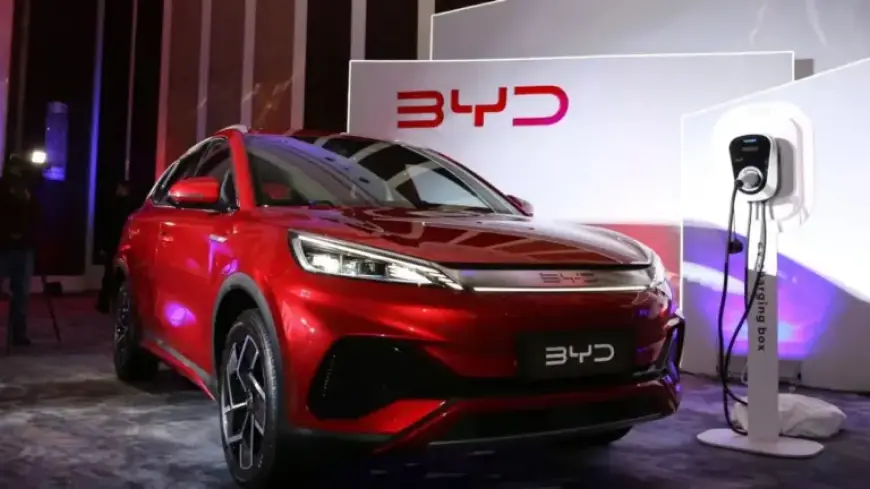
A recent survey by Nanos Research Group, conducted for Bloomberg News, reveals that a significant portion of Canadian electric vehicle (EV) buyers remain indifferent to the country of manufacture. The survey indicates that 53% of respondents stated that a vehicle manufactured in China would not affect their purchase decision. In contrast, 15% indicated that a Chinese origin would make them more likely to buy, while 28% said it would deter them.
Changing Attitudes Towards Chinese-Made EVs
The current findings suggest a notable shift in consumer attitudes compared to 2024. Back then, 61% of Canadians expressed reluctance to purchase a Chinese-made EV, while only 25% felt it would have no impact, and 9% were more inclined to buy. This evolving sentiment aligns with recent policy changes by Prime Minister Mark Carney’s government that aim to ease trade tensions with China.
Background on Trade Policies
Under the previous administration led by Justin Trudeau, Canada imposed a 100% surtax on Chinese electric vehicles. This action was designed to protect the domestic market from subsidized imports, mirroring similar measures in the United States. China’s retaliation included tariffs on certain Canadian agricultural products, heightening trade frictions between the two nations.
Recent Developments in EV Trade Agreements
Prime Minister Carney announced a recent trade agreement allowing Canada to import up to 49,000 Chinese electric vehicles annually at a reduced tariff of about 6%. In exchange, China has agreed to lower duties on Canadian food exports. This new arrangement has led to the establishment of a quota system that aims to balance market access with import controls.
- The quota system includes a focus on vehicles priced at or below C$35,000 (US$25,700).
- Goals include expanding access to affordable electric mobility for Canadian consumers.
However, industry experts warn that the initial volume of imports may be dominated by higher-end models already on the market, such as Tesla vehicles produced in China.
Political Reactions and Concerns
The trade agreement has faced criticism both domestically and internationally. Ontario Premier Doug Ford referred to the initiative as a potential national security threat, labeling Chinese EVs as “spy vehicles.” Furthermore, U.S. officials have expressed concerns that this policy could undermine North American trade defenses against Chinese industrial overcapacity.
Falak Kothari, a leading figure in the manufacturing sector, voiced additional concerns regarding this market opening. He emphasized the need to address issues such as cybersecurity and supply-chain resilience, noting that brands like BYD could take advantage of the new quota to establish a presence in Canada.
Domestic Measures Supporting EV Adoption
In tandem with the import quotas, the Canadian government is implementing domestic strategies. This includes reinstating consumer rebates of up to C$5,000 for electric vehicles and tightening emissions standards. The aim is to foster collaboration with U.S. and Chinese automotive firms to boost local manufacturing.
Industry Minister Mélanie Joly articulated the government’s vision of combining foreign investments with Canadian manufacturing capabilities. The overarching goal is to develop strong partnerships aimed at producing vehicles for both domestic and export markets.
Survey Details
The Nanos survey, conducted from January 31 to February 4, involved 1,009 Canadian respondents. It carries a margin of error of 3.1 percentage points, with a confidence level of 95%.
While critics like U.S. Transportation Secretary Sean Duffy caution against the implications of importing Chinese vehicles, some U.S. officials have downplayed the impact on American exports, viewing the situation as limited.
Fernando Enciso Pérez Rubio from Grupo Autofin México noted that protective trade measures could adversely impact consumer affordability, potentially limiting choices in the entry-level EV market. If vehicle prices rise, many consumers might delay purchases or turn to the used car market, which has already become dominant in other regions.