

























U.S. Military Enhances Presence Against Iran: An Overview

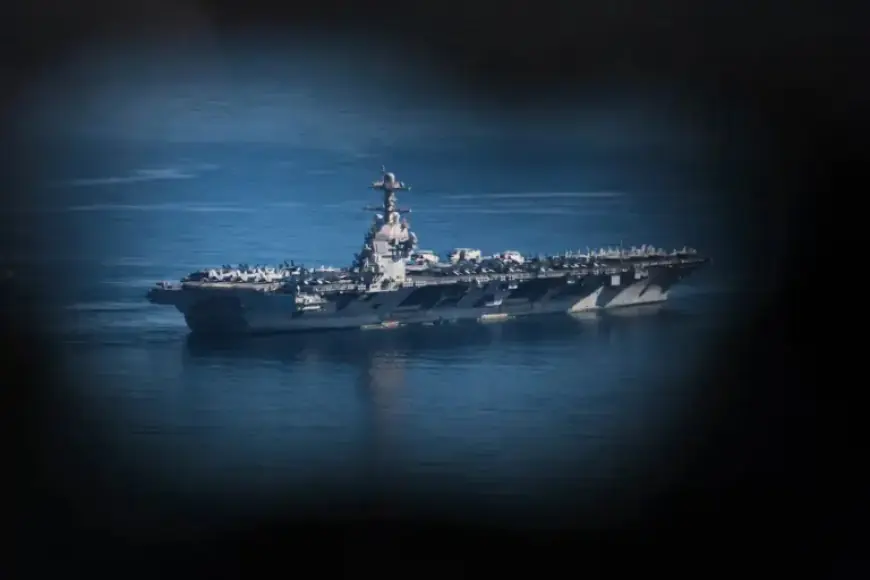
The ongoing adversarial relationship between the United States and Iran has intensified recently with a significant increase in U.S. military presence in the Persian Gulf and the Mediterranean Sea. In the last few weeks, U.S. warships and bombers have been deployed, aiming to pressure Iran regarding its nuclear enrichment activities. The potential for military conflict between the two nations, fundamentally at odds for 47 years, is becoming alarmingly plausible.
U.S. Military Buildup in Response to Iran
This military escalation includes the movement of key assets such as the aircraft carrier USS Abraham Lincoln and three guided-missile destroyers. Additionally, the USS Gerald R. Ford, recognized as the largest warship globally, has also been incorporated into the region’s naval forces.
U.S. Military Bases in the Region
The U.S. maintains a robust and permanent military presence in the Middle East. Key facilities include:
- Al Udeid Air Base, Qatar: The largest U.S. base in the Middle East with several thousand military personnel.
- Naval Support Activity, Bahrain: Base of the U.S. Fifth Fleet, monitoring over two million square miles.
- Muwaffaq Salti Air Base, Jordan: Home to at least 24 F-15E Strike Eagle fighter jets and other advanced aircraft.
- Al Dhafra Air Base, UAE: Equipped with reconnaissance aircraft and unmanned aerial vehicles.
| Base Location | Key Equipment |
|---|---|
| Al Udeid Air Base, Qatar | Largest base, multiple military personnel |
| Muwaffaq Salti Air Base, Jordan | 24 F-15E jets, 4 EA-18G Growlers |
| Khalifa Bin Salman Port, Bahrain | Three Littoral combat ships |
| Al Dhafra Air Base, UAE | Reconnaissance aircraft and UAVs |
Iran’s Military Capabilities
In response, Iran has enhanced its military readiness. The nation relies heavily on its missile arsenal, which can reach targets as far as 2,000 kilometers, allowing it to strike parts of Europe. However, Iran lacks the capability to hit the United States directly.
The Iranian air defense infrastructure has been compromised. Following military engagements last year, U.S. and Israeli forces successfully penetrated Iranian airspace, leading to significant damage to Iranian military sites.
Structure of Iran’s Armed Forces
The Iranian military consists primarily of two branches: the regular armed forces and the Islamic Revolutionary Guard Corps (IRGC). The IRGC, which reports directly to Supreme Leader Ayatollah Ali Khamenei, oversees Iran’s missile programs and plays a crucial role in maintaining internal security through the Basij militia.
These developments have made the region a focal point for renewed tensions, reminiscent of previous conflicts, such as the U.S. invasion of Iraq in 2003. The situation remains fluid, with both nations poised to respond to any provocations as the geopolitical landscape continues to evolve.