

























Texas State Basketball at a turning point: late-season form could reshape Sun Belt positioning

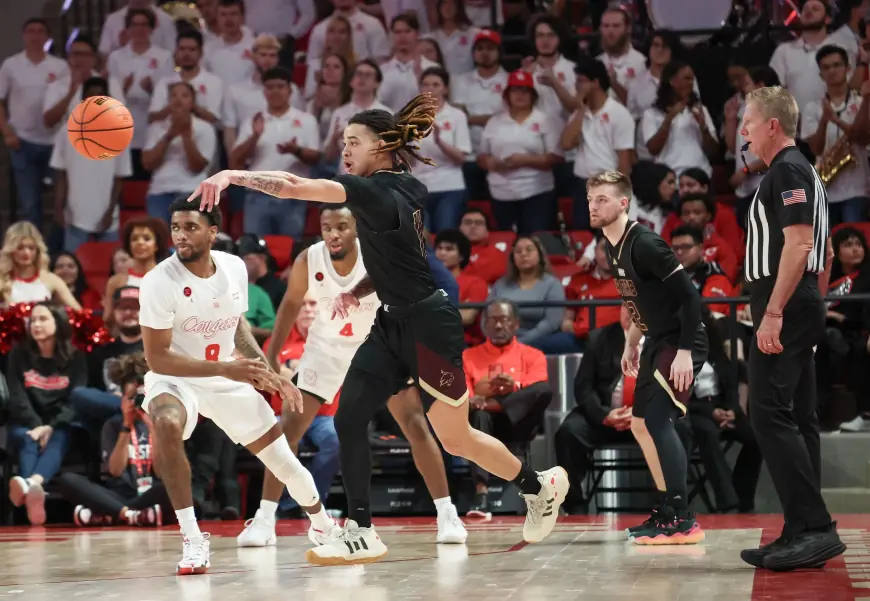
The tightness of the conference standings means one night can shift postseason pecking order — and that’s exactly what’s at stake for texas state basketball on Friday. With an eight-game home streak on the line, a recent loss to Louisiana interrupting a longer run and a slender margin separating multiple teams in the Sun Belt, the Bobcats’ performance at Strahan Arena will be felt across seeding and momentum for the stretch run.
Texas State Basketball impact: who feels the pressure and why
Here’s the part that matters: Texas State’s home form and offensive hot streak are the immediate levers that change how the final standings shake out. The Bobcats enter at 18-12 overall and 10-7 in conference play; a win preserves their surge after a seven-game run was snapped, while a loss hands a boost to a group of rival teams separated by just a single game at the top of the table. DJ Hall’s dual role as leading scorer and rebounder (15. 4 points, 7. 4 rebounds) concentrates responsibility on one player, and Texas State’s recent shooting and free-throw efficiency suggest they can impose their style at home.
What’s easy to miss is the contrast between Texas State’s offensive rhythm and the Mountaineers’ recent defensive fluctuations — that mismatch is the clearest lever for an upset of expectations on Friday night.
- Texas State enters 18-12, 10-7 Sun Belt; Appalachian State is 19-11, 11-6 Sun Belt.
- Bobcats have won eight straight at home; Mountaineers have won three of their last five road games.
- Texas State averages 74. 3 points per game; Appalachian State averages 72. 5.
- DJ Hall leads the Bobcats with 15. 4 points and 7. 4 rebounds; Kasen Jennings leads the Mountaineers with 15. 4 points and 4. 2 rebounds.
- Texas State was held to a loss by Louisiana after a seven-game winning streak; Appalachian State snapped a two-game skid with an 89-74 win over Georgia Southern.
Game details and matchup context for Friday, Feb. 27
The matchup is scheduled for 8: 00 PM ET at Strahan Arena on Friday, Feb. 27. The immediate matchup dynamics: Texas State shoots at a higher clip overall (47% field goals, 33% from three) and has converted free throws at a markedly better rate in recent games, while Appalachian State has been sturdier defensively on the season but has surrendered elevated scoring in its last few outings. The Bobcats are giving up 71. 1 points per game; the Mountaineers concede 65. 6.
Offensive balance for Texas State leans on Hall (15. 4), Mark Drone (13. 7) and Kaden Gumbs (nine), and the Bobcats have recently pushed pace higher, converting more possessions into points in their three most recent games. Appalachian State’s scoring is led by Jennings (15. 4), Alonzo Dodd (13. 8) and Luke Wilson (10. 7), and the Mountaineers’ season numbers indicate efficient shooting overall but trouble containing opponents in a short recent sample.
Expect the interior versus perimeter battle to influence possession outcomes: Texas State has been effective at generating second-chance opportunities with a strong offensive rebounding presence, while the Mountaineers have mixed results limiting opponent scoring runs in their last three games.
Micro timeline: Feb. 27 — matchup at Strahan Arena, 8: 00 PM ET; recent form — Texas State’s seven-game streak ended in a loss to Louisiana; Appalachian State’s previous game was an 89-74 win that halted a two-game skid.
The real question now is how much the Bobcats’ recent shooting efficiency and home-court momentum outweigh Appalachian State’s season-long defensive profile. If Texas State sustains the shooting and free-throw percentages noted in its late run, the home streak and seeding implications tilt in their direction; if the Mountaineers can tighten perimeter defense and limit offensive rebounds, they blunt the Bobcats’ advantages.
Signals that will clarify the next turn include: whether DJ Hall again tops the scoring and rebounding charts for Texas State, the Bobcats’ offensive rebounding rate early in the game, and Appalachian State’s ability to force turnovers on the road. The contest is compact in consequence because the conference standings are compressed and small swings have outsized effects on final positioning.
Editorial aside: The bigger signal here is that single-game momentum swings in a congested conference often predict which teams carry confidence into postseason play — and Friday’s result will ripple beyond one box score.