
























Planets Aligning 2026: Planetary Alignment 2026 Creates a Rare Evening “Planet Parade”

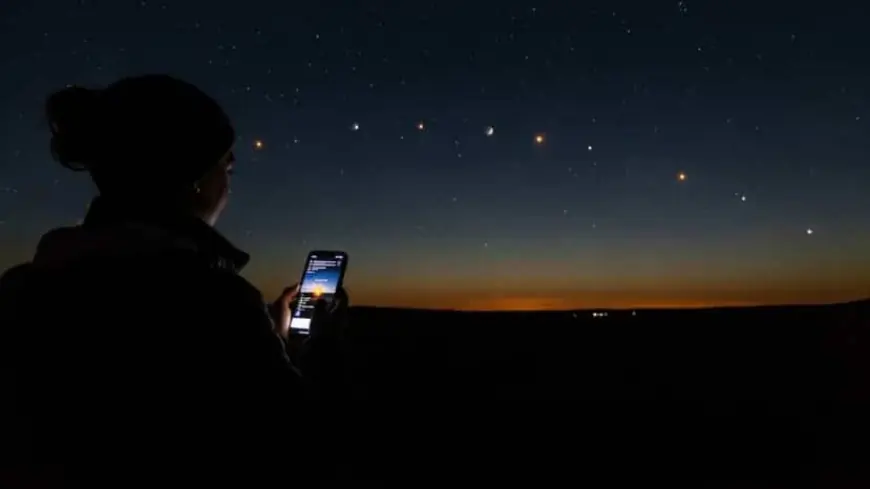
Skywatchers searching for planets aligning 2026 will have a prime window this weekend as a planetary alignment 2026 sets up a striking dusk display across much of the world. The event is often called a “planet parade” because multiple planets appear spread along the same arc of sky from Earth’s viewpoint, offering a chance to spot several worlds in one session—some with the naked eye and a couple with binoculars or a small telescope.
This planet alignment 2026 is primarily an evening-sky spectacle, best seen shortly after sunset, with viewing chances spanning several nights around Saturday, February 28, 2026 (ET).
Planetary Alignment 2026: Date, Best Time, and Where to Look
For most observers, the best plan is simple: go outside 30 to 60 minutes after local sunset on Saturday, February 28, 2026 (ET), find a clear view of the western horizon, and start scanning along the path the Sun takes across the sky (the ecliptic). In the United States, that often translates to roughly 6 to 7 p.m. ET for many locations in the Eastern time zone, though sunset varies by city.
A key reason this lineup can be tricky is that several planets sit low in twilight. A high vantage point, unobstructed horizon, and minimal light pollution will make a big difference.
Planets Aligning 2026: Which Planets Are In the Lineup?
The most-discussed planets aligning lineup includes Mercury, Venus, Saturn, Jupiter, Uranus, and Neptune visible above the horizon in the same general evening window. What you actually see depends on sky clarity and equipment:
-
Jupiter and Venus are the easiest targets, bright enough to stand out even in fading twilight.
-
Saturn can be visible to the naked eye, but it may look faint because it sits lower and closer to the sunset glow.
-
Mercury is the “blink-and-you-miss-it” planet—very low, quick to drop, and often swallowed by haze near the horizon.
-
Uranus and Neptune are the challenge objects, typically requiring binoculars (Uranus in ideal conditions) or a telescope (Neptune for most viewers).
This is the heart of the planetary alignment 2026 experience: several obvious planets plus a “bonus round” for anyone with optics.
Planet Alignment 2026 Reality Check: What an “Alignment” Really Means
Despite the dramatic name, a planet alignment 2026 does not mean the planets form a perfect straight line in space. The visual effect happens because the planets orbit in nearly the same plane, so from Earth they appear arranged along the ecliptic—like beads on a curved string.
It also does not create special gravitational effects on Earth. The significance is observational: it’s an accessible, memorable way to see how the Solar System is laid out, with multiple planets occupying the same part of the sky at once.
How to Watch Planetary Alignment 2026: Simple Viewing Plan
The best strategy is to start with the brightest objects and work toward the harder ones. Begin by locating Venus (the brightest “star-like” object at dusk) and Jupiter (bright and steady, often higher than the low-horizon planets). From there, sweep closer to the horizon for Saturn and Mercury, then use binoculars or a telescope to attempt Uranus and Neptune.
Below is a quick guide for the planet alignment 2026 session:
| Planet | Visibility | What to expect during planetary alignment 2026 |
|---|---|---|
| Venus | Naked eye | Brightest target near dusk; easy “first find” |
| Jupiter | Naked eye | Very bright and steady; often higher in the sky |
| Saturn | Naked eye (sometimes) | Faint in twilight; low and easier with darker skies |
| Mercury | Naked eye (difficult) | Very low; best shortly after sunset with clear horizon |
| Uranus | Binoculars (best case) | Faint; easier from dark sites; optics recommended |
| Neptune | Telescope (typical) | Very faint; usually the hardest to confirm |
How Long Will the Planets Align in 2026?
While February 28, 2026 (ET) is a widely shared peak date for planets aligning 2026, the practical viewing window stretches across multiple evenings in late February and early March. The lineup shifts night to night as the planets continue their steady motion, and visibility can improve or worsen depending on haze, clouds, and how quickly twilight fades in your location.
If Saturday is cloudy, the best move is to try again on the nearest clear evening, keeping the same rule: start about 30–60 minutes after sunset and focus on a clean western horizon.
Why This Planetary Alignment 2026 Is Getting So Much Attention
Multi-planet evenings happen more often than many people realize, but the combination of several bright naked-eye planets plus two outer planets above the horizon at the same time makes this planetary alignment 2026 feel special. It’s also well-timed for casual stargazers: early evening viewing, short setup, and a clear “wow” factor when Venus and Jupiter pop into view.
For anyone who’s never tried planet-spotting, planet alignment 2026 is an ideal entry point—start with the bright pair, then see how far down the lineup you can go before the horizon and twilight win.