
























Planets Aligning: How and When to See a Six-Planet Parade This Weekend

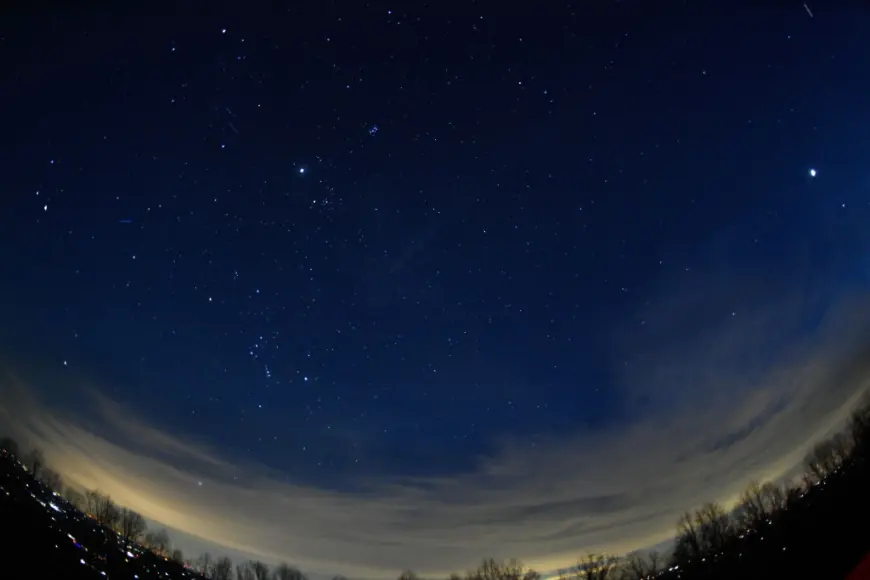
This weekend brings a rare planetary parade as planets aligning in the evening sky will place six worlds — Mercury, Venus, Jupiter, Saturn, Uranus and Neptune — in a curved formation visible from Earth. The window centers on Feb. 28 and covers a few days either side, with the best alignment expected on Saturday; early evening viewing around 6: 00 p. m. ET is recommended for U. S. observers.
Planets Aligning: When to Look
The core visibility window runs for several days surrounding Feb. 28, with Saturday offering the most compact line-up. Observers in the U. S. should head outside in the early evening; around 6: 00 p. m. ET is a practical starting point. The parade will be visible over multiple evenings, but Mercury will become harder to spot after the central dates, while Jupiter and Venus will remain easy to find for months.
Where the planets will appear
The six planets will form a curved line across the sky. In the northern hemisphere, Jupiter will sit high toward the south‑east, while Mercury, Saturn, Neptune and Venus will cluster nearer the western horizon. Venus will be the brightest of the group; Mercury will be much fainter to its right, with Saturn and Neptune a little above. Uranus will be faint and located below the group of stars traditionally known as the Seven Sisters. In the southern hemisphere the pattern appears reversed.
Viewing tips and gear
Find a site with little to no light pollution and an unobstructed view of the western horizon. Check the weather for clear skies and give your eyes time to adjust to the dark before scanning the horizon. Four of the planets — Mercury, Venus, Saturn and Jupiter — should be visible to the naked eye under good conditions. Uranus and Neptune will require optical assistance; binoculars or a small telescope will help bring those two into view. Mercury can be tricky to catch with the unaided eye, so binoculars may improve your chances. Never use binoculars or a telescope to look at the sun.
- Key takeaways: Six planets will be visible together; best viewing around 6: 00 p. m. ET; binoculars will help with Uranus, Neptune and Mercury.
Planetary parades of multiple worlds are fairly common on an annual basis, but seeing as many as six at once is notably rarer. All seven visible planets were seen together in the recent past, and the next full line-up of that scale is not expected again until 2040. Observers who plan for clear horizons and early evening outings over the central weekend have the best chance to witness this compact arrangement in the sky.