
























Planet Alignment 2026: How and When to See Six Planets Aligned

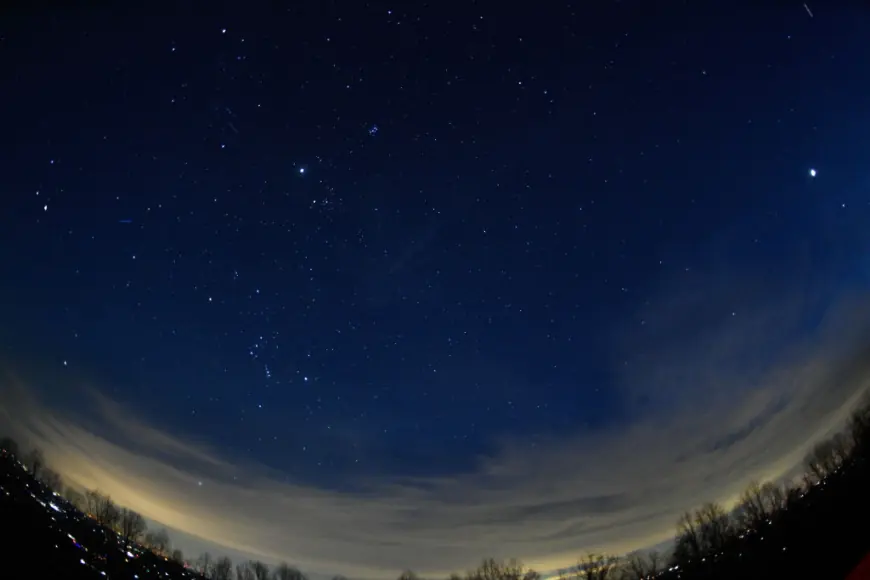
This weekend presents a rare planetary parade: six planets will appear together in the evening sky, a sight that should be visible from both hemispheres. planet alignment 2026 brings Mercury, Venus, Jupiter, Saturn, Uranus and Neptune into a roughly curved line, offering skywatchers an uncommon chance to observe most of the solar system at once.
Planet Alignment 2026: What to Expect
The planets will form a curved line across the sky. Observers can expect Venus to be the brightest of the group, with Mercury much fainter and more difficult to spot near the horizon. Jupiter will sit higher in the sky for northern-hemisphere viewers while Saturn, Neptune and Venus appear lower toward the western horizon. Uranus will be faint and will require optical assistance for most viewers.
When to Go Outside
The parade is concentrated in the early evening; plan to be outside around 6: 00 p. m. ET for the best viewing window. The alignment will be most closely lined up on Saturday and will be visible on the days immediately surrounding Feb. 28. Observers in both hemispheres can catch the event, though the parade’s orientation in the sky will look reversed between northern and southern latitudes.
Viewing Tips and Equipment Needed
Choose a spot with a clear view of the western horizon and minimal light pollution. Give your eyes time to adjust to the dark; four of the planets—Mercury, Venus, Saturn and Jupiter—should be visible to the unaided eye under clear skies, while Uranus and Neptune will require binoculars or a small telescope. Mercury may be especially tricky to pick out without optical help because it sits closest to the horizon at sunset.
Practical Notes and What Comes Next
Planetary parades happen periodically, and seeing four or five planets at once is relatively common. Seeing six at once is less common, and a full lineup of all visible planets has been rare in recent years. If skies remain clear over the next few nights, observers should have repeated chances to see the grouping; cloud cover or an obstructed horizon will limit visibility. Future full lineups of this scale are not frequent, so this weekend represents a timely opportunity for wide public viewing.
Key takeaways:
- Six planets—Mercury, Venus, Jupiter, Saturn, Uranus and Neptune—will appear together this weekend.
- Best viewing is in the early evening, around 6: 00 p. m. ET; Saturday is the peak night.
- Binoculars or a small telescope will help reveal Uranus and Neptune; Mercury may require optics too.