
























Anthropic Ai Faces Pentagon Ultimatum Over Guardrails and Domestic Surveillance

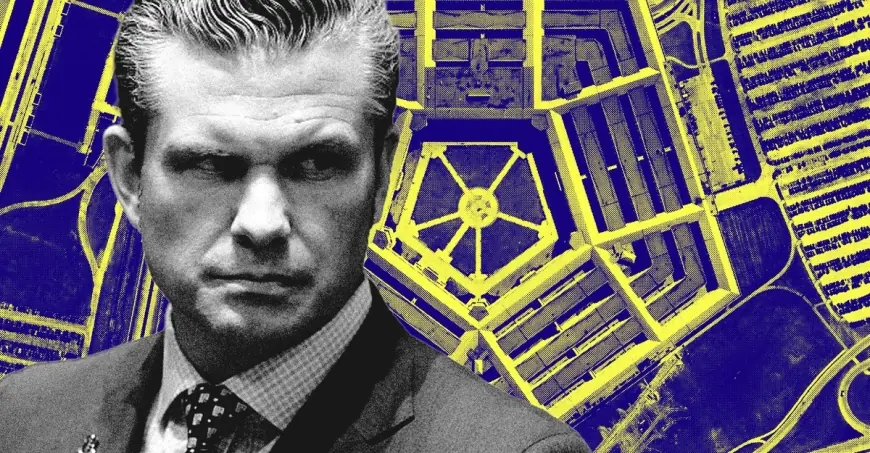
On Tuesday, in a closed-door meeting, Secretary of Defense Pete Hegseth issued a blunt ultimatum to Anthropic CEO Dario Amodei: strip the ethical guardrails from your AI models by Friday or face the full weight of the state. The Secretary warned he could invoke the Defense Production Act or designate Anthropic as a supply-chain risk if the company does not allow the Department of Defense "all lawful uses" of its Claude models. Yesterday evening, Amodei rejected the offer, saying the Pentagon's threats do not change the company's position. This standoff matters because it crystallizes a dispute over the national-security risks, domestic surveillance, and technical limits of powerful AI.
Anthropic Ai's Guardrails and What the Company Refuses to Yield
Anthropic has insisted that its Claude model not be used for domestic surveillance or to build fully autonomous weapons that operate without a human in the loop. The company frames its principal objection as targeting mass surveillance rather than a categorical refusal to support military capabilities. It has carved out exemptions for missile defense and cyberoperations, while seeking an exclusion that would bar its technology from being used for large-scale domestic monitoring.
The hesitation about autonomy is presented as technical: large language models are not yet reliable enough to operate without human oversight. Pushing these systems too far, too quickly, the company argues, increases the risk of critical mistakes. That rationale frames the guardrail request as a safety-first measure intended to preserve time for further research and development rather than an ideological stance against military use.
Why the Pentagon Ultimatum Escalates the National-Security Debate
The Defense Department's demand for access to Claude under the rubric of "all lawful uses" rests on a procurement-style logic: if traditional defense contractors do not dictate operational use of their systems, why should an AI company be allowed to constrain government application? That logic assumes AI is analogous to other defense technologies, but the company and other observers say it fails to account for the uniqueness of modern AI—particularly its capacity to scale data processing and inference in ways that can change the nature of surveillance and targeting.
Officials signaled two enforcement options to compel cooperation: invoking the Defense Production Act or designating Anthropic as a supply-chain risk. The latter step would effectively blacklist the company from doing business with entities that touch the Department of Defense. If the ultimatum is enforced, observers in the current debate warn it could weaken military effectiveness and increase the likelihood of a catastrophic accident stemming from rushed deployment of unreliable systems.
Surveillance Risks, Legal Questions and the Road Ahead
A central dividing line is domestic surveillance. The Department of Defense has authority to conduct domestic surveillance in support of civilian agencies. Under an administration that might invoke special domestic powers or seek broad mapping of dissent, access to AI capable of transcribing and correlating speech at scale raises the prospect that technology could identify vast numbers of people and create sweeping maps of public activity. That outcome, critics say, would alter the practical protections offered by constitutional limits on search and privacy.
Amodei has warned that the sheer scale of AI changes the act of recording and correlation, with the potential to convert otherwise legal public recordings into tools for mass targeting. The company frames its exclusion requests as efforts to prevent precisely that outcome while still allowing for defensive and allied use cases that it deems consistent with democratic values.
This standoff is developing and details may evolve. The immediate facts are clear: the Pentagon pressed for broad access to Claude, the company refused to strip key guardrails, and enforcement steps were threatened that could reshape how government buys and controls advanced AI. The coming days will determine whether negotiation narrows the gap, or whether compulsory measures and formal designations escalate the conflict.