
























Burger King Whopper Changes Signal a Broader Shift Toward Quality, AI and Franchise Focus

Why this matters now: The burger king whopper changes are positioned as more than a menu tweak — they’re part of a coordinated push to elevate core product quality while rolling out operational technology and franchise-level priorities. That combination aims to protect margins, improve consistency in restaurants, and respond to visible competitive pressure in the burger category.
Burger King Whopper Changes and what they mean for operations and franchisees
Here's the part that matters: the company pairs product upgrades with system-level moves that affect operators’ economics. At investor-focused briefings, leadership outlined four strategic initiatives — changes to core menu items, broader use of artificial intelligence in restaurants, extending a higher marketing fee rate, and continuing refranchising of restaurants formerly operated by Carrols — framing the Whopper update as one lever in a wider plan to reposition and modernize the chain.
The implications are concrete. The chain declined to share precise impact on cost-of-goods-sold for franchisees but said the brand and franchisees have invested in the sandwich while working to ensure costs did not increase. Management has emphasized boosting four-wall profits for franchisees after several major operator bankruptcies, making the financial footprint of any menu upgrade a central consideration.
Event details: what changed on the sandwich
On Feb. 26, 2026 in Miami, leadership framed the Whopper refresh as the first significant change to the sandwich in nearly 10 years and the result of direct Guest feedback, including an initiative inviting Guests to call or text President Tom Curtis. The updated sandwich remains served with over a quarter-pound of 100% flame-grilled beef and is described as delivering a higher-quality experience from bun to toppings to packaging.
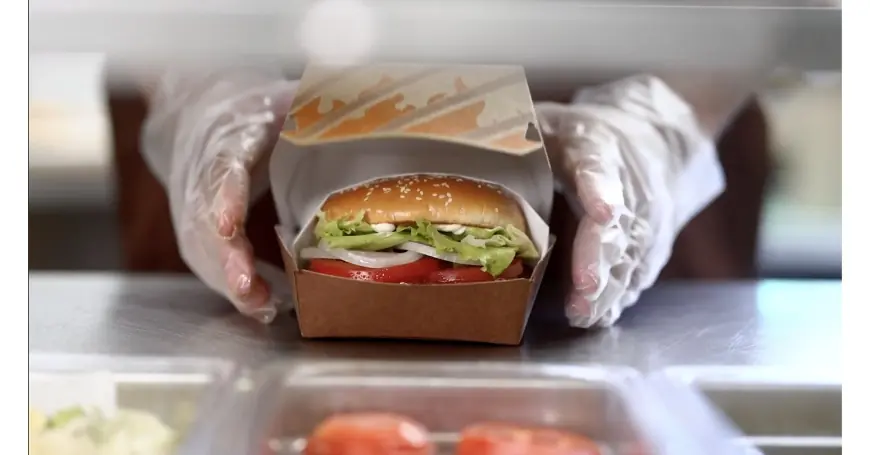
Specific product shifts include a more premium, better-tasting glazed bun; reformulated better-tasting, creamier mayo; and redesigned packaging that replaces a paper wrapping with a box intended to preserve sandwich integrity from kitchen to Guest. The sandwich is presented stacked tall with freshly cut onions and tomatoes, crisp lettuce, tangy pickles, and the improved mayo — refinements meant to elevate flavor balance and consistency without changing the beef patty or the core lettuce, tomato and onion toppings.
Testing was conducted in select markets and the changes performed well after a development process spanning years. Guests nationwide are invited to try the updated Whopper. A correction was issued removing the phrase "and free of artificial colors, flavors and preservatives" from an earlier paragraph in the announcement.
AI, headsets and the push to modernize in the kitchen
Operational modernization is being pushed forward alongside the Whopper changes. The brand is deploying a voice-AI headset tool named "Patty" designed to unify point-of-sale, kitchen equipment, inventory, and digital ordering into one command center. Patty was built using an OpenAI voice model and is intended to remove out-of-stock items from digital ordering channels, answer questions about menu item preparation and product details without interrupting service, and analyze drive-thru audio to promote order accuracy and provide coaching insights.
Other quick-service companies have pursued comparable systems; these back-of-house automations are being sold as a way to reduce service friction and limit stockouts that can undermine guest experience and digital sales.
Strategy, market pressures and the path forward
Management framed these moves as extensions of a years-long Reclaim the Flame program that prioritizes core menu food quality and faster refranchising. The strategy responds to an environment where quick-service pricing advantage over fast casual has eroded, prompting brands to bolster perceived quality or value. One competitive datapoint cited during the strategic discussion was a rival testing a larger, premium burger with multiple patties and upgraded ingredients — the Whopper changes are described as a response to similar industrial pressures.
- The company pairs menu upgrades with franchise and marketing adjustments; franchisees and the brand both invested in the Whopper while aiming to avoid higher costs for operators.
- Guest feedback channels — including direct calls and texts to the president — drove product decisions, and the Whopper refresh is the first major one in nearly a decade.
- Operational tech rollout (Patty) is intended to reduce stockouts, improve order accuracy and provide coaching drive-thru audio analysis — the scale and timeline of rollout remain unclear in the provided context.
- Next commercial signals to watch include performance in the test markets, any disclosure of cost impacts for franchisees, and the pace of Patty deployment across restaurants.
The real question now is whether improved bun quality, packaging and a creamier mayo will move the needle enough on comps to justify the system investments already underway. It’s easy to overlook, but continuity of execution at the restaurant level — not just marketing — will determine if the refinement translates into sustained sales and stronger unit economics.
For context: the brand was founded in 1954, operates more than 19, 000 locations in more than 120 countries and U. S. territories, and nearly all restaurants are owned and operated by independent franchisees, many family-owned. The chain notes the Whopper remains an iconic flame-grilled sandwich and also referenced a recent platform called "Whopper by You" launched last year that returned a Guest-inspired creation to the menu.
Writer's aside: The bigger signal here is how product-level tweaks, customer-driven feedback loops and restaurant AI are being stitched together as a single playbook — that integration will matter far more than any single ingredient change.
Do not sell or share my personal information: