























Sainsburys restructure puts 300 head‑office roles at risk and forces a split between supermarket tech and Argos operations

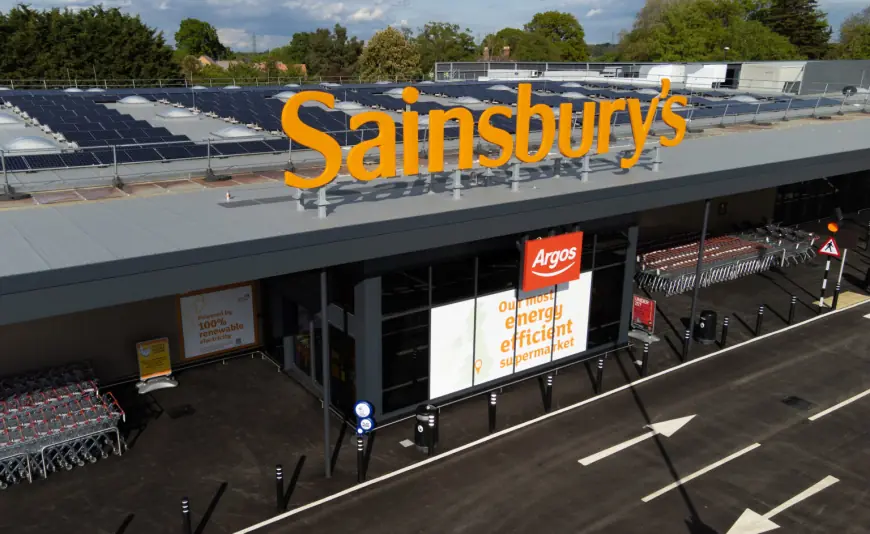
The immediate consequence is a sharper organisational divide: sainsburys is moving to separate technology and leadership for its supermarket and Argos businesses, with around 300 head‑office roles affected. That shift is intended to change how data, delivery and convenience leadership operate, and it arrives alongside wider cost‑and‑tech moves across the grocery sector that are already reshaping staffing and operating models.
Sainsburys: operational consequences and next structural moves
Most of the 300 roles at risk sit in technology and data as the company consolidates routine reporting and reorganises the unit into one dedicated team for Argos and two teams for the supermarket. Head office operations will be streamlined to remove duplication and speed decision‑making. Employees affected have entered a consultation period. The group said the changes affect less than 1% of its roughly 140, 000 workforce.
How the changes touch Argos deliveries and leadership
Argos will get a separate leadership board and a dedicated technology team. The restructure of local delivery hubs will change shift patterns so teams work more regular hours with less overtime; the firm said delivery drivers’ roles are not at risk. The new leadership structure is expected to be headed by managing director Graham Biggart, creating clearer separation between Argos and the supermarket business.
Store leadership and convenience: four new regional director roles
The plan introduces four regional store director roles focused on convenience: one in the North of England, one in Central England and two in the South. The stated intention is to provide clearer leadership lines for supermarkets and convenience formats because customers use those formats differently. The move also extends to Sainsbury’s Local, where regional directors are being introduced to sharpen execution.
Where this sits inside the group’s strategy and recent moves
The overhaul forms part of year three of the group's Next Level strategy. It follows earlier restructuring announced in January of last year that cut more than 3, 000 roles, removed about 20% of senior management posts and closed 61 in‑store cafés. The supermarket group has also been integrating its rapid delivery service into a single app platform; a previously standalone rapid service app was decommissioned in favour of a single digital experience.
Sector pressure and related retailer moves
Technology investment — including AI forecasting tools and warehouse robotics — is being pitched as a way to improve efficiency while the sector faces heavy price competition. Other chains are also changing head‑office and operational footprints: one rival announced substantial cuts in bakery roles, another unveiled reductions and new roles in head office, and online/tech partners have been reducing staff numbers in response to softer demand. Different retailers have cited figures ranging from around 180 head‑office role reductions to larger global reductions in tech and fulfilment workforces.
- What’s easy to miss is the timing: Argos was bought in 2016, has struggled since the Covid period and the group points to weak consumer confidence, heavy online competition and discounting for a fall in Argos sales over the key Christmas quarter.
- Performance snapshot: supermarkets’ sales increased by 3. 4% in the three months to 3 January, while Argos sales fell 1% in the same period.
- Speculation remains about the future of Argos after an approach from JD. com in the autumn; the restructure and separate board will likely sharpen that discussion.
Mini timeline and what could confirm the next turn
- 2016: Argos was acquired by the group.
- January (previous year): the company announced cuts of over 3, 000 roles and the closure of 61 cafés as part of broader cost savings.
- Three months to 3 January: supermarket sales rose 3. 4% while Argos sales fell 1% in the period.
- Autumn: the business received an approach from JD. com, fuelling speculation about Argos' future.
- Now: roughly 300 head‑office roles are at risk as tech and delivery functions are reorganised; employees are in consultation.
The real question now is whether the structural split and dedicated tech teams will reverse Argos’ recent sales weakness or accelerate moves toward a standalone path for the chain.
What's easy to overlook, based on the group's own framing, is that these changes are described as affecting under 1% of a c. 140, 000 workforce — a small slice numerically but one targeted at core digital and operational functions that could reshape delivery and data workflows.
Here’s the part that matters for staff and customers: the combination of new regional convenience directors, a separate Argos leadership board, and reworked shift patterns for delivery teams signals a pivot from blended operations toward clearer, function‑specific structures. That will be the clearest proof of whether the strategy is truly about focus and efficiency, or the first step toward larger strategic decisions about Argos' place in the group.
Staff impact, consultations and claimed rationale
Employees affected have entered consultation. The company framed the shifts as freeing up teams to focus on food, service and value by maximising data and technology, while also aiming for tighter cost control and organisational simplification. Uncertainties remain in the provided context about the detailed timetable for consultations and any final decisions.
Editor’s aside: the emphasis on separating tech teams for Argos and the supermarket is a classic organisational hedge — it preserves shared scale while reducing day‑to‑day conflict between different operating models, but execution will determine whether the split delivers faster customer‑facing improvements or merely shifts complexity back to the group.