

























Pakistan Afghanistan escalation raises risk of wider conflict as claims and casualties remain unclear

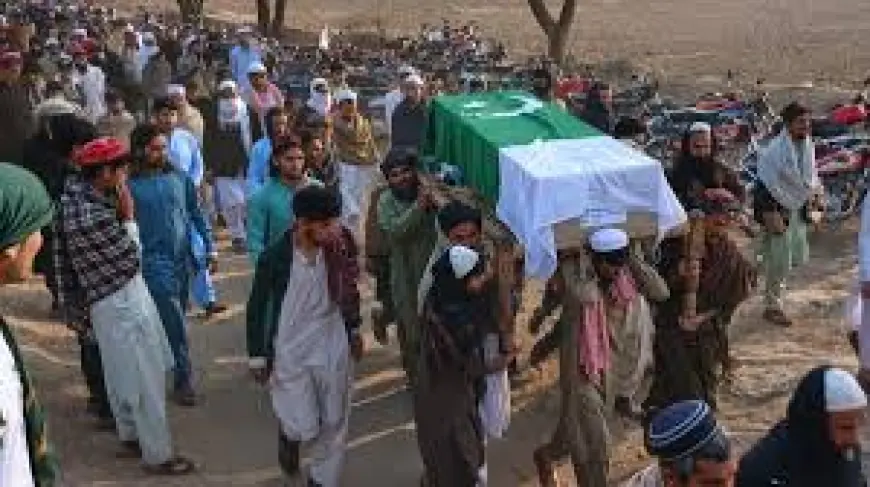
The pakistan afghanistan flare-up matters now because commanders and civilians closest to the border are already facing the immediate effects of heavy strikes while regional diplomacy strains under contradictory claims. With a defence minister declaring "open war", a prime minister vowing "the full capability to crush any aggressive ambitions", and both sides issuing large, conflicting casualty tallies, the uncertainty itself is the central risk.
Pakistan Afghanistan: the biggest unknowns and risks
Here's the part that matters: the surface facts — strikes on Kabul, a defence minister's declaration, and a Taliban announcement of a major offensive — are only the start. The real question now is how disputed claims, alleged captures and a deleted social-media post will shape military decisions and diplomatic pressure. Analysts say it is unlikely the Taliban will fight a conventional war with Pakistan, and other analysts note this is the first time Pakistan has directly targeted sites linked to the Taliban government rather than only alleged militant positions. International actors have already urged restraint.
What happened — consolidated details
- Pakistan launched airstrikes last night on major Afghan cities, including the capital Kabul, and struck two other provinces; Pakistani forces targeted 22 locations across Afghanistan, with named sites including Kabul, Kandahar, Paktia, Nangarhar, Khost and Paktika.
- The Pakistani strikes on Friday followed an announcement that the Afghan Taliban had launched a major offensive against Pakistani military posts near the border on Thursday night.
- Pakistan released footage it says shows strikes on Kabul.
- A spokesperson for the Afghan Taliban posted on X that it had responded with renewed attacks against Pakistani troops; that post was later deleted.
- Afghan officials say they attacked Pakistani border troops in retaliation for earlier airstrikes by Islamabad; Pakistan framed the action as a response to what it called "unprovoked firing" from across the border.
- The prime minister of Pakistan said the country has "the full capability to crush any aggressive ambitions", while the defence minister declared "open war" on the Afghan Taliban.
Claims and counterclaims — the numbers
Both sides have issued competing tallies and operational labels that deepen uncertainty rather than resolve it.
- Pakistan's armed forces spokesperson, Lt Gen Ahmed Sharif Chaudhry, claimed at least 274 Taliban fighters were killed and more than 400 injured since the launch of Operation Ghazab lil-Haq.
- Afghanistan’s Taliban government says 55 Pakistani soldiers were killed, and that eight of its own fighters had died and 11 were injured.
- Afghanistan added that 13 civilians were injured after a reported Pakistani attack on a refugee camp in Nangarhar province, east of Kabul.
- Afghanistan also claims to have captured several Pakistan soldiers; Islamabad denies those capture claims.
- Both sides claim to have inflicted heavy casualties on the other, but the true numbers remain unclear.
Regional reactions, diplomatic context and analysis
Calls for restraint have arrived from multiple international actors, with the UN, China, Iran, Turkey and Saudi Arabia urging both sides to stop fighting. This episode marks a major escalation from an earlier ceasefire that was brokered by Qatar and Turkey and halted deadly clashes in October; negotiations since then failed to produce a lasting agreement.
Since the Taliban returned to power in Afghanistan in 2021, relations between the two neighbours have fluctuated; the disputed Durand Line, described as 1, 600 miles long in prior context, remains a central friction point. Islamabad accuses Afghanistan of harbouring Pakistan Taliban (TTP) militants who launch attacks from the border — a dynamic analysts say feeds repeated tit-for-tat violence.
Journalist Kathy Ganon called the strikes "a serious escalation, but it's not new, " and described the tit-for-tat violence as "really problematic, " warning that shifting political alliances and the use of militant groups by states complicate predictions. Analysts also emphasize that a conventional, symmetrical conflict between Pakistan and the Taliban appears unlikely.
Live coverage of developments was paused for the day as analysis continued. The report lists Tessa Wong and Ayeshea Perera as editors, with reporting credited to Mahfouz Zubaide and Yogita Limaye and an Afghan service.
- The most immediate implication is intensified danger for border troops and civilians in areas named above, and higher strain on regional diplomacy.
- Civilian harm and claims of captured soldiers are likely to shape domestic political pressure in both capitals and could complicate any return to ceasefire talks.
- Verification of casualty figures and the status of captured personnel would serve as a forward signal that the situation is stabilizing; a failure to verify would point toward further escalation.
- If Pakistan continues to target sites associated with the Taliban government rather than only alleged militant positions, it could alter the operational and diplomatic thresholds in the neighbourhood.
It's easy to overlook, but the deleted social-media post and inconsistent public tallies matter: they increase uncertainty for commanders and diplomats trying to gauge intent and next steps.
The real question now is whether the competing claims and declared "open war" posture will translate into sustained conventional operations, or whether international pressure and on-the-ground limits will force a return to negotiated pauses.