

























Lesley Manville headlines exclusive Midwinter Break screening and critical debate

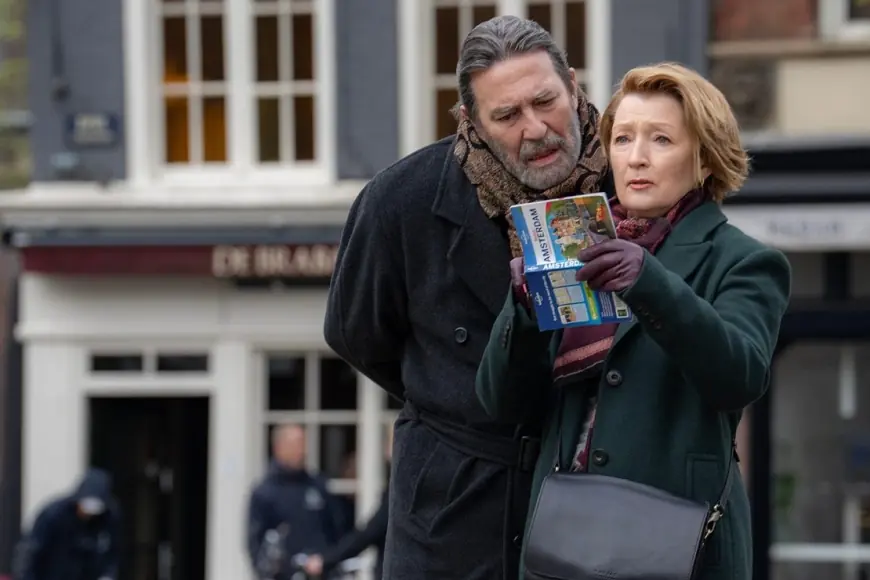
An exclusive preview screening of Midwinter Break on Tuesday, March 17 brings renewed attention to the film’s central performance by lesley manville and to its director Polly Findlay. The film’s portrait of a longtime retired couple confronting a marriage at a crossroads is drawing notice for its performances, pacing and religious undercurrents ahead of the one-night preview.
Preview screening: March 17, single showing and ticket terms
The preview screening will take place on Tuesday, March 17, with doors opening at 6pm for a one-night-only event. Tickets are £5 per person and include a complimentary popcorn; booking fees apply. The invitation to the preview emphasizes that this is a single occasion and that attendees should check the venue website for more information and accessibility.
Administrative details appended to the event notice list a company registration: Registered in England No. 894646, with a registered office at 1 London Bridge Street, SE1 9GF.
Lesley Manville and Ciarán Hinds play Stella and Gerry
Midwinter Break centers on Stella, played by Lesley Manville, and Gerry, played by Ciarán Hinds. The couple are described as longtime retirees whose relationship of decades has reached a crossroads while on holiday in Amsterdam. The plot summary stresses that after so much time and so many memories, long-held promises and deeply concealed wounds threaten to come to light and force them to confront their future.
The film repeatedly returns to scenes of the pair together: close-ups, long walks and quiet moments that lay bare the couple’s dynamic as they navigate what has been built and what might be undone.
Polly Findlay’s move from stage to screen
Polly Findlay directs Midwinter Break; she is described as an Olivier Award–winning British theatre and film director whose stage work has included productions with the National Theatre and the Royal Shakespeare Company. This project is identified as her first film. The screenplay is based on a novel by Bernard MacLaverty, with MacLaverty co-writing the screenplay alongside Nick Payne.
Observers note that Findlay’s theatre background shapes the film’s focus on interiority and long conversational sequences that emphasize performance over cinematic flourishes.
Faith, home and trauma in Stella and Gerry’s story
The couple’s tensions are sketched through concrete, recurring points of friction: Gerry’s drinking and Stella’s devout Catholicism—with Gerry’s lack of shared faith noted as a dividing line. Their differing definitions of “home” are also foregrounded. For Gerry, home is Edinburgh, where they have lived for most of their married life; for Stella, home is Ireland, specifically Belfast, the place of their birth from which they fled during the Troubles.
The Amsterdam trip functions as a catalyst: Stella quietly seeks to visit the Begijnhof, once an intentional semi-monastic community for lay Catholic women, hoping to honor a promise she made to God decades earlier and to feel at home. The screenplay frames that desire as potentially requiring Stella to leave her life and marriage behind. The ultimate question the film poses is not only “Where is home?” but whether unclear in the provided context
Pacing, runtime and critical reactions to performance
Critical commentary included with early reviews characterizes the film as very slow, at times almost glacial, with long scenes in which people sit, walk or stare out windows. The runtime is noted as 90 minutes, and one reviewer observed that at that length the picture can feel like the longest hour and a half one has sat through, adding that a viewer could literally take a brief bathroom break at almost any point without missing plot developments. The same commentary notes there are no extra scenes during or after the end credits.
Despite remarks about pace, the acting receives consistent praise. Lesley Manville is singled out as especially brilliant, with every small expression and pause said to carry significant weight. The pair’s lived-in chemistry is described as making their decades together believable, and close-up work on the couple is called strong. Some commentary finds the Amsterdam setting underused and judges the film to land around a B grade for viewers balancing patience against subtle performance-driven drama.
An accompanying note from an app-based film-break service describes its product as 100% free (donation supported) on iPhone and Android, operates a PERA waitlist and offers guidance on the best times to step out during a movie while explaining what happens on screen during those breaks.