






















Marathon Server Slam Kicks Off as Bungie Opens Final Beta Stress Test Ahead of March 5 Launch

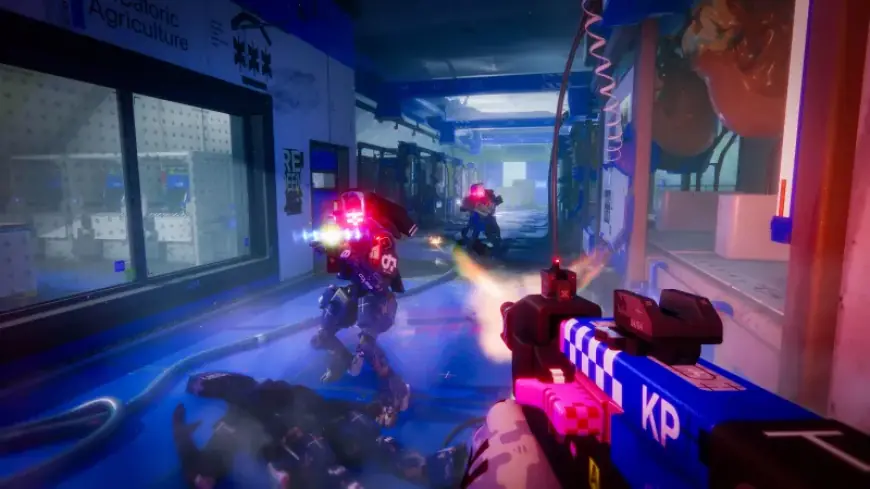
The marathon server slam opens this weekend as a public playtest for Bungie’s extraction shooter, offering early access on multiple platforms and banking rewards for the game’s March 5 release. The event matters because it doubles as a technical stress test intended to validate global infrastructure before full launch.
Marathon Server Slam schedule and platforms
The marathon server slam runs from February 26 at 10 a. m. PT / 1 p. m. ET to March 2 at 10 a. m. PT / 1 p. m. ET. Players can join on Steam, PlayStation 5 and Xbox Series X|S; cross-play and cross-save are enabled. Bungie has included the preview in Steam Next Fest and is offering the weekend free to anyone who wants to participate.
Bungie frames the weekend as a technical stress test
Bungie described the Server Slam as a chance to “turn everything on worldwide, ” invite as many players as possible, and observe the systems as people log in, crew up, infil, exfil, log out and repeat. Because the primary aim is infrastructure validation, teams will be standing by to monitor performance, address issues and make adjustments throughout the weekend. When systems break, Bungie treats those failures as actionable data that can improve the March 5 launch.
Rewards, progression and delivery for launch
Everyone who completes the introductory mission during the weekend will unlock a Beta. exe emblem and a Complex Study player background exclusive to Server Slam participants. Time spent in the preview will also bank loot rewards for launch based on progress: completing the first mission unlocks the Standard Arrival Cache; reaching Runner Level 10 unlocks the Enhanced Arrival Cache (Green); and reaching Runner Level 30 unlocks the Deluxe Arrival Cache (Blue). Cosmetic and loot rewards will be delivered after Marathon launches on March 5, and Bungie warns the rollout will take some time to reach all players.
Viewers can also earn cosmetics by tuning into streamers on Twitch throughout the Server Slam weekend; full claiming instructions are available through the game’s support channels.
Setting, maps and what the preview includes
Marathon is set on Tau Ceti IV, a derelict space colony where player characters called Runners and hostile UESC security forces roam. The setting is placed in the year 2893, 99 years after events of the original Marathon and hundreds of years after the colony’s founding. Maps in the preview include futuristic research facilities and lush forests, with players scavenging for loot while facing both PvE and PvP threats and seeking extraction.
The planet surface is only the beginning; players will eventually work their way toward the Cryo Archive and the first floor of the UESC Marathon orbiting above. The Server Slam will not include all maps and content coming to the full game, but it offers a large chunk of the experience for a weekend of play. It is unclear in the provided context whether Cryo Archive arrives at launch or only when Season 1 begins.
Launch content, Season 1 and Runner customization
Bungie says more will arrive when Marathon launches and Season 1 kicks off: additional zones, factions, contracts, gear, deeper progression and Ranked mode. At launch the sixth Runner Shell called Thief will be available, though it is not playable during the Server Slam. Ranked mode and other content are slated to arrive in Season 1.
Joe Ziegler’s 11 beginner tips ahead of the weekend
Marathon game director Joe Ziegler shared 11 tips aimed at new players ahead of the Server Slam. The guidance is presented as a foundation for newcomers to build on as they learn the game’s extraction mechanics and the risks of meaningful persistence and loss that define the genre.
What makes this notable is that the Server Slam is positioned to serve two goals at once: it gives players a sizable preview of Marathon’s gameplay while deliberately stressing live systems so Bungie can refine launch-day performance based on real-world failure points.