






















Murder Case Revisits Arlene Fraser Disappearance — An Enraging Tale of Domestic Violence and a Frustrating Whodunnit

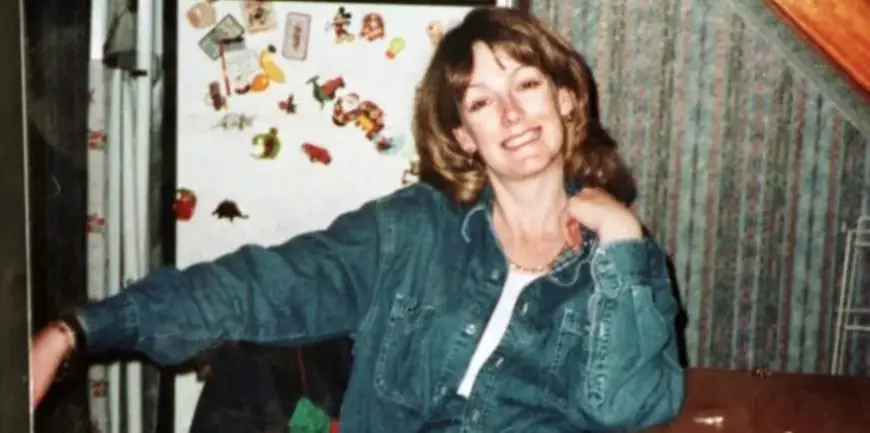
The new two-episode documentary revisits the disappearance of arlene fraser and the legal battles that followed, casting renewed light on a case defined by an abrupt vanishing, missing evidence and long, unresolved pain for a family that has searched for answers for decades. The programme combines a sober reflection on violence against women with the contours of a whodunnit in which concrete proof repeatedly proved elusive.
Arlene Fraser: the disappearance in Elgin
When police arrived at Arlene Fraser’s house in Elgin, Moray in April 1998 they found a scene that suggested time had stopped: a bicycle on its side in the yard, a vacuum cleaner still plugged into a socket in the hall and washing on the line. She had stood in her dressing gown to wave her two children off that Tuesday morning and had since vanished. The timeline of that morning is sharply drawn: Arlene phoned her son’s school at 9. 41am to check when she needed to pick him up; when the school rang back 10 minutes later there was no answer. She failed to attend a planned meeting with a friend at 11am.
Background: a life marked by abuse and attempts to move on
Before marrying Nat, Arlene was described as friendly and popular. Nat attended their wedding with a black eye, a detail that was then regarded as an amusing misfortune. Energetic and free, she adjusted to motherhood but experienced repeated trauma: she stayed at Moray Women’s Refuge in 1990 and again in 1992, returning to Nat both times. The refuge’s co-founder Lorna Creswell observed that many women she tried to help went back to their abusers. By April 1998 Arlene had begun to move on; on the day she was last seen she was scheduled to meet a divorce lawyer. Five weeks earlier Nat placed his hands around her neck until she lost consciousness and he was facing an attempted murder charge.
The investigation, the missing evidence and the frustrating gaps
There was an obvious chief suspect but no means of proving his guilt: there was no body, no weapon, no forensic evidence and no incriminating witness testimony from the day. Nat had an alibi so strong it stopped the case dead, even as numerous anomalies suggested guilt — including his dispassionate reading of a prepared statement at a press conference in which he said, "Arlene, if you’re watching this, then please get in touch. " The disappearance led to massive searches across the Scottish Highlands and a reward of £20, 000, yet Arlene’s body has never been found.
Key forensic and circumstantial puzzles
Nine days after Arlene vanished, her gold wedding, engagement and eternity rings — which she was known to wear constantly — appeared on a peg in her bathroom. Investigators treated that as a significant sign that someone with access to her body had placed them there. During legal proceedings a former friend of Nat testified that Nat had told him the body had been burned and the ashes scattered. The prosecution later advanced the theory that Nat did not kill her himself but instructed or moved others to do so in order to avoid a costly divorce settlement.
The trials, convictions and ongoing incarceration
Nat was not arrested and charged until 2001, three years after Arlene vanished, following an investigation by Grampian Police. He was first convicted of murder in 2003, but that conviction was quashed in 2011 after a Supreme Court ruling. The Crown pushed for a retrial in 2012 and a second jury found him guilty. The judge, Lord Bracadale, described the murder as "calculated" and sentenced him to life imprisonment with a minimum term of 17 years. He lost several appeals and took his case to the European Court of Human Rights, and he continues to maintain his innocence from his cell. As of 2026 Nat remains incarcerated at HM Prison Addiewell in West Lothian; now in his 70s, he has spent more than a decade behind bars for the second time.
Family toll, campaigning and the limits of closure
The human toll is evident throughout the documentary. The mystery of the 33-year-old mother-of-two from Elgin has haunted Scotland for more than 25 years. Her sister, Carol Gillies, has spent decades campaigning for the truth and has said, "We just want to find her. We want to be able to put her to rest. " Experts featured in the programme stress that isolated incidents of violence rarely stand alone; as Dr Emma Plant of the Moray Violence Against Women and Girls Partnership notes, virtually no man throttles his wife just the one time, and "There is no such thing as an isolated incident of violence against women. "
The documentary uses archive footage and interviews to replay the twists and surprises of the investigations and trials, but many questions remain unanswered. The combination of a powerful alibi, missing physical evidence and the absence of a body has left Arlene’s family in agonising limbo while the case continues to provoke debate and sorrow.