






















Nvda Earnings Spark Market Juggle: Record Revenue, Lukewarm Reaction and Broader Wall Street Ripples

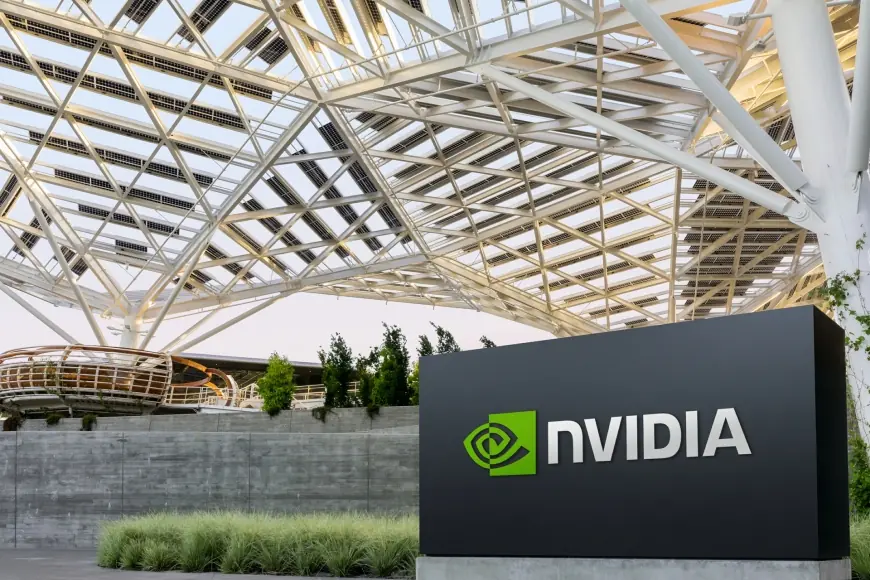
NVDA’s latest results landed as a blockbuster on the numbers but left investors wanting more detail, and that ambivalence — described here with the shorthand nvda — helped stall U. S. stock futures. The tension between headline-beating revenue and questions about sustainability is reshaping how traders weigh AI winners and losers.
Nvda earnings and market reaction
nvda reported record revenue of $68. 1 billion for the fourth quarter ended January 25, 2026, a rise of 20% from the prior quarter and 73% year over year. For fiscal 2026 the company posted revenue of $215. 9 billion, up 65% from a year earlier. Gross margins for the quarter were 75. 0% (GAAP) and 75. 2% (non-GAAP); fiscal 2026 gross margins were 71. 1% (GAAP) and 71. 3% (non-GAAP). EPS for the quarter was $1. 76 (GAAP) and $1. 62 (non-GAAP); fiscal 2026 EPS was $4. 90 (GAAP) and $4. 77 (non-GAAP).
Despite the numbers, U. S. stock futures stalled on Thursday. Dow Jones Industrial Average futures moved up 0. 1% after solid wins on Wednesday, while contracts on the S&P 500 and the tech-exposed Nasdaq 100 were little changed. Nvidia shares initially jumped after the after-hours release but pared gains to less than 1%, reflecting a lukewarm investor response.
Why the market hesitated over nvda
The company posted big beats on quarterly revenue and profit and issued guidance above expectations, but the outlook lacked granular detail on the drivers behind the forecast. Notably, the guidance does not include potential revenue out of China, a point that left some on Wall Street asking questions about competitive threats and the staying power of AI buildout demand.
At the same time, executive commentary emphasized a surge in AI adoption. Leadership described an agentic AI inflection, named specific technologies and people positioned as leaders in inference, and said enterprise adoption of agents is accelerating as customers rush to invest in AI compute — what management characterized as factories powering an AI industrial revolution.
Capital returns, governance and near-term mechanics
During fiscal 2026 the company returned $41. 1 billion to shareholders through share repurchases and cash dividends, and at the end of the fourth quarter it had $58. 5 billion remaining under its share repurchase authorization. The next quarterly cash dividend was scheduled at $0. 01 per share to holders of record on March 11, 2026, with payment on April 1, 2026.
Beginning in the first quarter of fiscal 2027 it will include stock-based compensation expense in its non-GAAP financial measures. For the full year fiscal 2027, GAAP and non-GAAP tax rates were expected between 17. 0% and 19. 0%, excluding discrete items and material changes to the tax environment.
Conference call, reconciliations and follow-up items
The company scheduled a conference call with analysts and investors at 2 p. m. Pacific time (5 p. m. Eastern time) to discuss fourth-quarter and fiscal 2026 results and current financial prospects. A live, listen-only webcast was made available and will be recorded and available for replay until the next conference call on first-quarter fiscal 2027 results.
Management reiterated use of non-GAAP measures — including non-GAAP gross profit, gross margin, operating expenses, operating income, other income (expense), net, non-GAAP net income or earnings per diluted share, and free cash flow — and showed reconciliations of GAAP to non-GAAP measures. The reconciliation disclosures for fiscal years 2025 and 2026 adjust GAAP measures to exclude stock-based compensation expense and acquisition-related and other costs; the reconciliation text in the provided context ends midphrase and is unclear in the provided context.
Broader market context: AI fear, earnings swirl and macro calendar
The wider market reaction reflected mounting worries over AI’s payoff versus disruption. Fears of an AI bubble and an "AI scare trade" have buffeted stocks in recent weeks, with the technology’s challenge to legacy software increasingly visible. Salesforce shares fell about 4% after a revenue forecast missed estimates, extending an AI-driven sell-off in that software group.
Beyond tech, earnings noise included a massive full-year loss at Stellantis tied to an EV-related charge of $26 billion, offset by improving second-half results that suggested a turnaround effort under CEO Antonio Filosa may be taking hold. Stellantis — which includes brands such as Ram, Jeep, Fiat and Alfa Romeo — reported second-half net revenue of 79. 25 billion euros, in the range of a 78–80 billion euro forecast and roughly 10% higher than the prior-year second half of 71. 86 billion euros. The company posted a second-half adjusted operating income loss of 1. 38 billion euros, in the company’s provided forecast range of 1. 2–1. 5 billion euros; this marked a reversal from a 185 million euro gain in the second half of 2024 and a sharp drop from a 10. 2 billion euro profit in 2023. For the full year, Stellantis reported a net loss of 22. 3 billion euros driven by 25. 4 billion euros of unusual charges. Stellantis stock was little changed in premarket trade in New York.
Other companies on the earnings docket included Warner Bros. Discovery, Dell Technologies and CoreWeave. On the macro front, a weekly update on jobless claims was due later as a labor-market health check, and investors were awaiting the January wholesale inflation reading on Friday to help evaluate the odds of an interest-rate cut.
Political and energy backdrop
Coverage includes a note that during a recent State of the Union address President Trump touted an energy policy framed as "Drill, baby, drill" with aims of more hydrocarbon drilling and lower gas prices. A year into the president’s second term, oil and gas production was described as at or near all-time highs and national gasoline prices averaged below $3 per gallon. The context added that the president’s ambitions had come at a cost for the U. S. oil and gas industry; the provided context then contains a truncated fragment, "Capita, " which is unclear in the provided context.
Recent coverage by Pras Subramanian highlighted the Stellantis results and second-half improvement noted above.