




















Expert take: To sit or stand — The moment Trump’s State of the Union speech changed the chamber dynamic

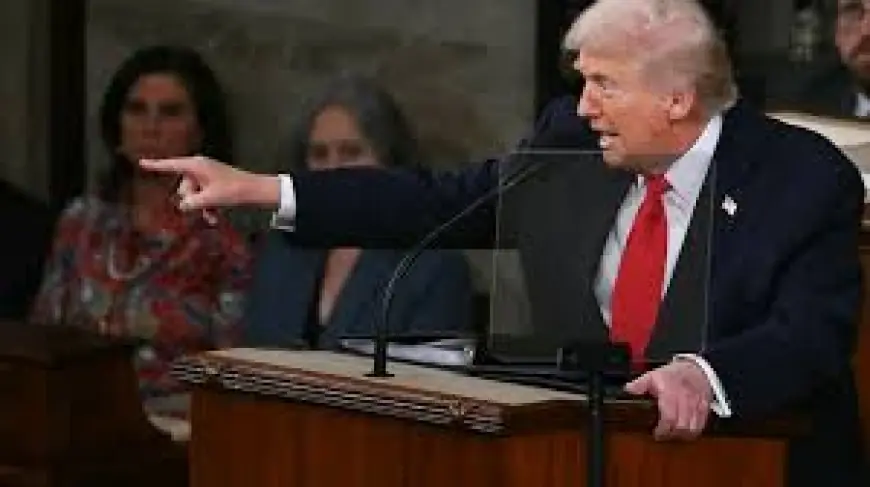
Expert observers will point to one unmistakable flash in a marathon State of the Union address as the moment that crystallized the night: President Donald Trump invited lawmakers to stand if they agreed that the first duty of government is to protect American citizens, not "illegal aliens, " turning a routine applause line into a political test that left many Democrats seated or absent. That exchange — set against a lengthy speech in which the president repeated claims that the U. S. is "winning so much" even as his approval slips and labeled Democrats "crazy" for remaining seated — is already being framed as the defining instant of the evening.
What played out in the House chamber
The speech took place in the House chamber at the U. S. Capitol in Washington on Tuesday, Feb. 24, 2026. Republican members of Congress rose while many Democrats stayed in their seats; some Democrats had earlier boycotted the whole affair. Vice President JD Vance and House Speaker Mike Johnson of La. were seen applauding during the address. Photographers present included Alex Brandon and Mark Schiefelbein, who captured images of the divided chamber.
Expert view of the sit-or-stand moment
About halfway through the address, the president asked the chamber to participate: stand if they believed that protecting Americans, not "illegal aliens, " was the government's first duty. The invitation was framed as a clear test of allegiance, and Democratic members who remained seated faced an immediate political dilemma. The moment was described in the speech as illustrative of how the State of the Union reveals what representatives really believe.
Why Democrats faced a damned-if-you-do, damned-if-you-don't choice
Democrats who attended — distinct from those who had boycotted — confronted two unattractive options. Standing would have signaled agreement with a president their party disdains; remaining seated risked being portrayed as unsupportive of the stated proposition and made them a visual foil in the president's campaign pitch. That calculated tension was part of the invitation's effect: it turned the chamber into a stage for political theater where optics and messaging overtook routine bipartisan ceremony.
Political theater and the 'state of the disunion' impression
The speech’s length and tone fed the sense of spectacle. The address was described as a marathon and explicitly characterized as L-O-N-G. Critics of the tactic called it blatant political theater; the moment, and the broader tone of the speech, helped seal the impression that the president was delivering what some labeled a "state of the disunion" rather than a conventional State of the Union.
Key lines from the address and their effect
The president used the platform to assert victories and urge support, declaring the nation was "winning so much" even as his approval slips. He framed the State of the Union as a chance for Americans to see what their representatives believe, then offered the standing line: "If you agree with this statement, then stand up and show your support: The first duty of the American government is to protect American citizens. Not illegal aliens. " That direct framing forced instant visual tests of loyalty across party lines.
What’s unclear and what to watch next
How this sit-or-stand moment will play out politically beyond the speech is unclear in the provided context. Observers may track whether the visual division reshapes messaging or mobilizes supporters on either side, but specific outcomes and longer-term impacts are not contained in the details provided here.
For now, the memorable instructional moment and the optics it produced — Republicans standing, many Democrats seated or absent, high-profile applause from the vice president and the House speaker, and a chamber photographed by Alex Brandon and Mark Schiefelbein — are the concrete elements that will define how this State of the Union is recalled.