
























Samsung unveils Galaxy S26 lineup with Privacy Display, higher prices and AI upgrades

Samsung used an Unpacked event at San Francisco’s Palace of Fine Arts to pull forward its flagship refresh, revealing the Galaxy S26, S26+ and S26 Ultra along with Galaxy Buds 4 and a slate of AI updates. The announcements matter now because preorders opened Feb. 25 and the new models begin shipping March 11, setting the stage for a direct market clash with Apple’s latest iPhone lineup.
Samsung Unpacked at San Francisco’s Palace of Fine Arts
The company staged Unpacked on Wednesday in San Francisco’s Palace of Fine Arts, a move described as getting out ahead of rivals who will appear at Mobile World Congress. Editors had hands-on time with all three handsets after the presentation. Alongside the phones Samsung introduced the Galaxy Buds 4 and several software-level AI enhancements intended to work across devices.
Galaxy S26 pricing, storage and preorder timeline
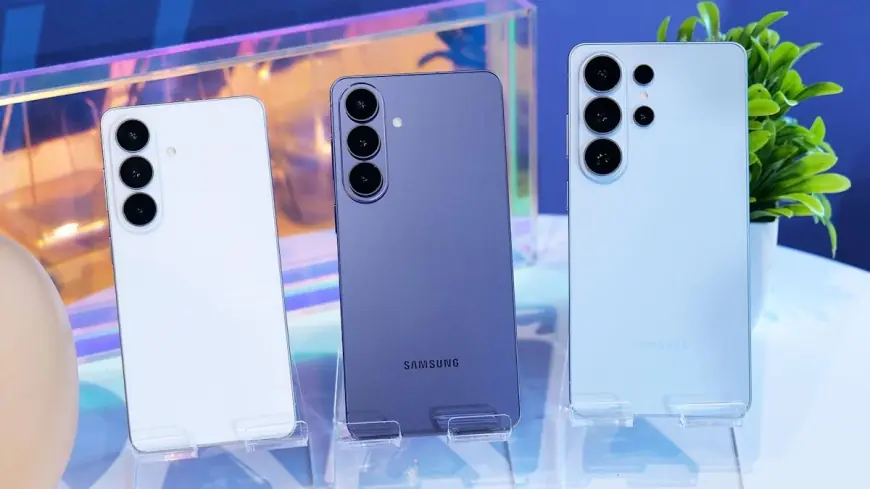
Samsung raised prices on the non-Ultra models: the Galaxy S26 starts at $900 and the S26+ at $1, 100 for the 256GB variants, each $100 higher than their predecessors. The Galaxy S26 Ultra begins at $1, 300, unchanged from the prior Ultra. Preorders opened Feb. 25 and the phones will be available starting March 11. Color options include a cobalt violet purplish shade, sky blue, black and white; silver and rose gold (pink gold) finishes are online exclusives.
Galaxy S26 Ultra display, S Pen and the new Privacy Display
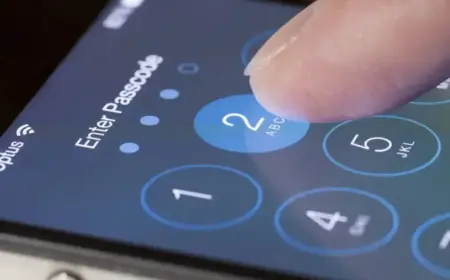
The S26 Ultra features a 6. 9-inch AMOLED display with QHD+ resolution of 3120 x 1440 and a 120Hz refresh rate, and Samsung states a 500 PPI for the panel. The Ultra keeps support for an S Pen that slots into the phone’s base. Its headline feature is a Privacy Display designed to block viewing from acute angles by blacking out portions of the screen; enabling it causes a small drop in brightness and offers multiple customization options. Privacy Display can be configured to activate when a password or PIN is requested, when notifications arrive, or when certain apps open, and the company says it is a first-of-its-kind smartphone implementation.
Snapdragon 8 Elite Gen 5, Exynos 2600 and regional chip choices
All three Galaxy S26 models will run on the Snapdragon 8 Elite Gen 5 for Galaxy platform. In North America, China and Japan Samsung is sticking with Qualcomm chips rather than using its Exynos 2600. That chip and regional choice matter because Samsung declined to reduce memory specifications despite industry-wide RAM shortages, a decision the company linked to preserving AI processing capabilities; the shortage is cited as a factor in the $100 price increases for the base models.
Camera, AI features and Galaxy Buds 4
Physically, the camera modules mirror last year’s hardware, but Samsung added computational upgrades: a ProScaler image upscaling engine, an MDNIe chip to improve color precision, and an Object Aware Engine intended to better render skin tones and hair textures. Video stabilization now attempts to keep the horizon level while tracking a moving person or pet. Software tools such as Now Brief and Auto Eraser have been reworked and extended to work with more apps. The Galaxy Buds 4 were announced alongside the phones as part of the package of hardware and AI updates.
How the Galaxy S26 family stacks up to the iPhone 17
The launch invites direct comparisons to Apple’s iPhone 17 line. Samsung’s baseline S26 is lighter than the regular iPhone 17 at 167g versus 177g. Both phones use 6. 3-inch displays, but the S26 lists 2340 x 1080 resolution and about 411 PPI while the iPhone 17 lists 2622 x 1206 resolution and 460 PPI; both support refresh rates up to 120Hz. At the top end the S26 Ultra’s higher-resolution 3120 x 1440 panel and S Pen support contrast with Apple’s 6. 9-inch iPhone 17 Pro Max spec of 2868 x 1320 and 460 PPI. Price comparisons show Apple’s regular iPhone 17 starting at $800 and the iPhone 17 Pro Max at $1, 200 for 256GB, versus Samsung’s $900 and $1, 300 entry points for equivalent storage on the S26 and S26 Ultra lines. One visible design difference is that the new phones have aluminum frames rather than the titanium used on recent Pro-tier handsets, and Galaxy models do not include a programmable Action button found on some competitor devices.
What makes this notable is the combination of modest hardware carryover with targeted software and privacy differentiators—the Privacy Display and expanded AI tools—that Samsung is using to justify higher entry prices while keeping Ultra pricing steady. The company’s choices around chip suppliers, memory configuration and the timing of preorders and ship dates set the terms for how the S26 series will compete this spring.