



















Larry Summers’ Resignation Forces Institutional Reckoning and Leaves Major Questions About Harvard’s Epstein Review

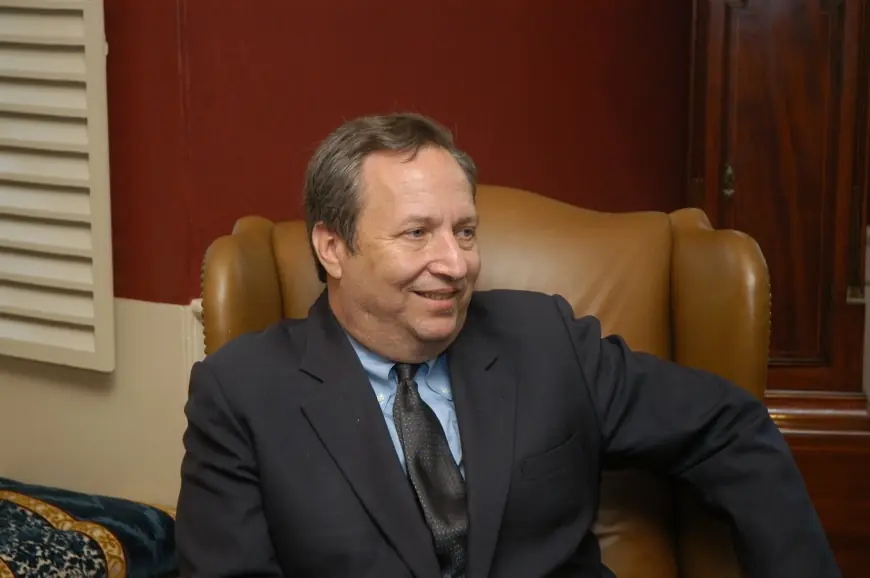
Why this matters now: larry summers’ choice to relinquish his University Professorship and leave teaching at the end of the academic year shifts an internal investigation into Jeffrey Epstein–linked documents from a personnel issue to a broader institutional moment, altering governance, reputational risk and the review’s scope for the university and the profession.
Larry Summers’ departure and the immediate consequences for Harvard and the field
Summers will step away from formal faculty responsibilities: he will relinquish Harvard’s highest faculty distinction, remain on leave until the end of the academic year, and will not teach or accept new advisees. He also resigned from his role as co-director of the Mossavar-Rahmani Center for Business and Government at the Kennedy School, a position he had held since 2011. The move follows intense scrutiny of his correspondence with Jeffrey Epstein and a widening institutional review; the American Economic Association has issued a lifetime ban against him, and he has stepped back from several major organizations.
Event details embedded in the larger picture
Summers’ career—described in the record as spanning prize-winning research, service as United States Treasury Secretary, and the Harvard presidency—has been upended amid revelations from documents tied to Jeffrey Epstein. Email disclosures released in 2025 by a congressional oversight body, and an earlier cache disclosed in November, show thousands of exchanged messages that discuss women, politics and Harvard-linked projects over at least seven years, with contact continuing as late as July 2019, the day before Epstein’s arrest. A late-December tranche of records showed Summers named as a successor executor in a 2014 draft of Epstein’s will; Summers’ spokesperson said he had no knowledge of being included in that early draft.
How the university framed the resignation and the ongoing review
Harvard has characterized the resignation as connected to an ongoing review of documents related to Epstein that were recently released by the government. The probe explicitly covers Summers’ ties and extends to other university affiliates and donors implicated in the records. Summers said the decision was difficult, noted his gratitude to thousands of students and colleagues since he first arrived as a graduate student 50 years ago, and described an intention, free of formal responsibility as President Emeritus and a retired professor, to engage in future research, analysis and commentary on global economic issues.
Compressed timeline and institutional backstory
- 1998–2008: Epstein donated more than $9 million to Harvard and affiliated programs.
- 2001–2006: Summers served as Harvard president.
- 2008: Harvard ceased accepting Epstein donations after his guilty plea to child sex offenses.
- 2014: A draft of Epstein’s will designated Summers as a successor executor (unclear in the provided context whether Summers knew of this inclusion).
- July 2019: Contact between Summers and Epstein continued up to the day before Epstein’s arrest.
- November 2025: Summers announced he would stop teaching while the university reviewed documents.
- 2025 (post-November): Congressional-document disclosures and later tranches in late December widened scrutiny.
It’s easy to overlook that the email exchanges include personal as well as institutional topics: messages from 2018 and 2019 show social and private discussions that intensified the reputational fallout.
Consequences beyond the resignation
Here’s the part that matters: the resignation does not close the review. The American Economic Association has issued a lifetime ban, and the university’s investigation is explicitly broadening to examine other affiliates and donors named in the documents. Summers’ formal academic titles will be relinquished, even as he retains emeritus status and signals intent to do non-teaching research and commentary in future.
- Thousands of messages between Summers and Epstein are part of the public record; his name appears hundreds of times in the recent document batches.
- Summers is 71 and has held senior federal roles, including Treasury Secretary and director of the White House National Economic Council from January 2009 to November 2010.
- Epstein died in jail in 2019 while awaiting trial on federal charges.
- Epstein had been a visiting fellow at the university’s psychology department; the university later judged him unqualified for visiting-fellow norms.
Uncertainties and what would confirm the next turn
The real question now is how the university’s formal review will resolve whether institutional policies or donor-screening processes failed and what sanctions or policy changes will follow. Confirmation points that would mark the next phase include the review’s public findings, any disciplinary steps beyond resignations and bans, and disclosures clarifying Summers’ knowledge about his inclusion in estate drafts.
What’s easy to miss is how this resignation intersects with other university pressures: recent attention at the school has included coordination claims involving Gerald Chan and a proposed Tsinghua campus in Boston, reported shifts in faculty grading patterns, the naming of seven affiliates as 2027 Schwarzman Scholars, faculty disputes over the removal of an FXB Center director, and debates about double concentrations—items that together show an institution managing several contested issues simultaneously.
If you’re wondering why this keeps coming up: the combination of extensive email records, executive-level roles Summers has held, the designation in a 2014 will draft, and a formal university review turns an individual resignation into a potential institutional turning point.