





















Rashida Tlaib exchange at State of the Union hands Republicans a sharp midterm talking point — consequence-driven view

The State of the Union confrontation that included rashida tlaib is now being framed as a political gift for Republicans: campaign strategists say the sitting president’s public challenge and the visible split on the chamber floor create a usable narrative for the midterms. The fallout matters because it quickly converted a moment of heckling into aggressive social‑media attacks and official condemnations, compressing weeks of messaging into a single episode that campaigns can exploit.
Why this shift matters for campaigns and voters
Here’s the part that matters: Republican operatives are treating the scene as a ready‑made ad and a clarifying moment for undecided voters. Those strategists describe the moment as “huge” for the GOP because it presents a concise contrast — elected Republicans standing and Democrats remaining seated when the president asked legislators to show whether their priority was protecting American citizens over illegal immigrants. The White House characterized the exchange as a "must‑watch. " The bigger signal here is how quickly floor behavior translated into hardline social posts and public denunciations, shortening the feedback loop between a Capitol moment and campaign messaging.
How Rashida Tlaib’s exchange is being used by opponents
Republican strategists have framed the episode as a political misstep by Democrats. One GOP strategist suggested the silence of Democrats when Republicans stood amounted to an instantly writable ad; another called the moment a forceful illustration that Democrats have positioned themselves against priorities some voters expect their representatives to defend. Those comments emphasize consequence rather than process: the claim is that the exchange simplifies the choice voters will see in ads and debate scripts ahead of the midterms.
Event details embedded in the political aftermath
- President Donald Trump challenged lawmakers during his State of the Union to stand if they believe the first duty of government is to protect American citizens rather than illegal immigrants.
- Republicans in the chamber stood while Democrats remained seated after that challenge.
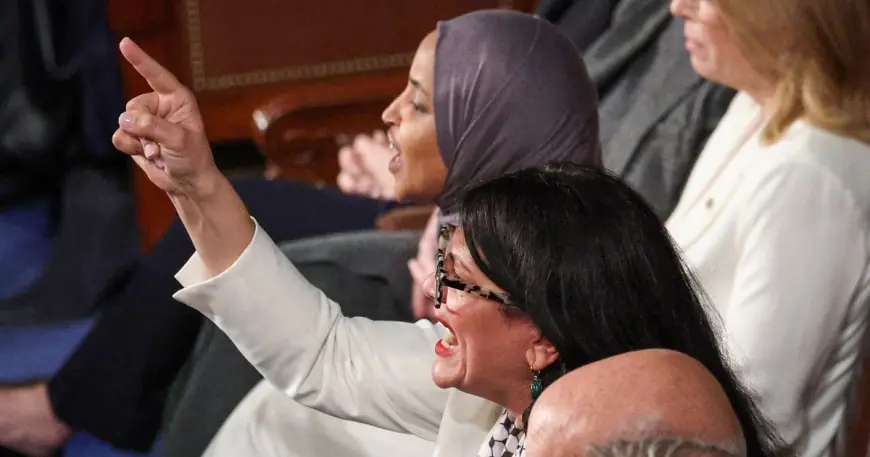
- Reps. Ilhan Omar (D‑MN) and Rashida Tlaib (D‑MI) shouted at the president during the address; the aloud exchanges included Omar shouting back when the president said Democrats should be "ashamed. "
- The shouting occurred during a section of the speech about curbing illegal immigration and a fraud investigation in Minnesota involving the Somali community.
- Both lawmakers later shouted, "You have killed Americans!" a reference made in the chamber to the deaths of Renee Nicole Good and Alex Pretti at the hands of federal immigration agents in Minnesota last month.
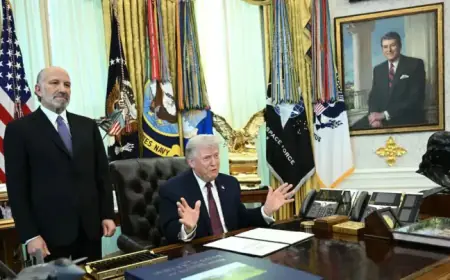
- Vice President JD Vance attended the address on the House floor on Tuesday, February 24, 2026, at the U. S. Capitol in Washington, D. C.
Follow‑up posts, rhetoric and additional actors
The president posted on social platforms in the day after the address, writing that Reps. Ilhan Omar and Rashida Tlaib should be sent "back from where they came. " He also used language calling the congresswomen "Low IQ, " saying they "should be institutionalized, " and describing them with phrases including "the bulging, bloodshot eyes of crazy people, LUNATICS, mentally deranged and sick. " The posts also dragged actor Robert De Niro into the criticism after De Niro spoke critically at a Democratic counterprogramming event called "State of the Swamp" on Tuesday night; the president suggested Omar and Tlaib "should actually get on a boat with Trump Deranged Robert De Niro. "
Responses within the Democratic caucus and from the lawmakers involved
House Democratic leaders publicly condemned the president’s post. House Minority Leader Hakeem Jeffries called the language "disgraceful" and characterized the rhetoric as xenophobic, unpresidential, unpatriotic and un‑American. Rep. Pete Aguilar defended the two lawmakers, stressing they are U. S. citizens, federally elected officeholders who are "in touch with the pulse of their communities" and who return frequently to their districts.
A spokesperson for Rashida Tlaib pointed to one of her recent posts on X, which said, "Can’t take two Muslimas talking back and correcting him so now he is crashing out. " Ilhan Omar later wrote on X, "I said what I said. I had to remind Trump that his administration was responsible for killing two of my constituents. " Spokespeople for Omar and for Robert De Niro did not immediately respond to requests for comment.
What’s easy to miss is that some lines in the available text are incomplete or truncated; for example, an item labeled "Lora Ries, dire" is unclear in the provided context, and a trailing sentence about the president's long attacks on Omar and Minnesota's Somali community is likewise unclear in the provided context.
- Tuesday, Feb. 24, 2026 — State of the Union address, public challenge to stand (event pictured on House floor).
- Tuesday night — Democratic counterprogramming event called "State of the Swamp" where Robert De Niro spoke.
- Wednesday — the president posted follow‑up messages on social platforms and Democratic leaders responded at a caucus retreat in Virginia.
Key takeaways:
- The chamber floor split turned into immediate campaign fodder for GOP strategists.
- President’s social posts escalated the dispute with language that party leaders called disgraceful.
- Two House Democrats publicly defended their actions and framed them as constituent‑rooted calls for accountability.
- The episode compresses message, imagery and social posts into a single political narrative that will be tested in midterm messaging.
The real question now is whether this flashpoint reshapes advertising buys, fundraising pitches or voter mobilization in the coming weeks; early commentary from operatives suggests it will be leveraged aggressively. The real test will be whether voters see the exchange as clarifying policy priorities or as another instance of capital theater that motivates the base rather than persuading the center.
It’s easy to overlook, but the mix of on‑floor behavior, immediate social‑media follow‑up and rapid public condemnations demonstrates how instant political narratives form in modern Washington.