























John Roberts and the Tariff Ruling: john roberts Under Public Fire

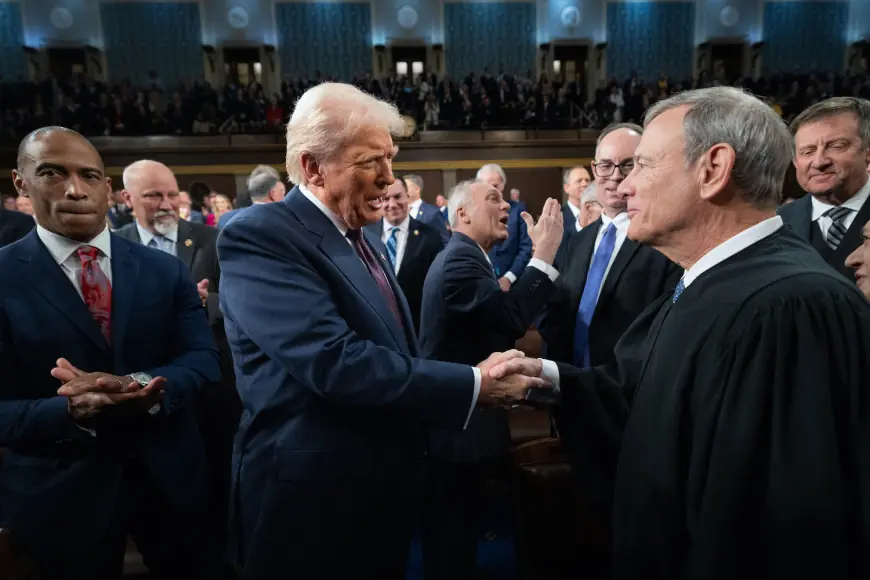
john roberts wrote the majority opinion in a 6-3 Supreme Court decision that struck down sweeping IEEPA tariffs on Friday (ET), and the ruling has immediately drawn fierce criticism from the president and pointed commentary about the chief justice’s strategy to avoid partisan conflict. The ruling and the president’s swift response have put questions about institutional credibility and legal doctrine back at the center of public debate.
John Roberts and Court Standing
The majority opinion was authored by the chief justice and carried the votes of justices appointed across ideological lines, including two Republican-appointed justices named in the decision and three Democratic-appointed justices. Commentators have framed the tariff ruling as addressing some complaints that the court had been unwilling to stand up to the president, while other critiques argue that the chief justice’s earlier moves have left him vulnerable to public rebuke.
john roberts Faces Direct Presidential Rebuke
Within hours of the decision, the president held a hastily assembled press conference at which he criticized the majority explicitly, calling the justices “fools and lapdogs for the RINOs and the radical left Democrats” and saying he was “absolutely ashamed” of Republican justices in the majority. The president also labeled the chief justice “very unpatriotic and disloyal to our Constitution” and described two majority justices as “an embarrassment to their families. ”
Following the ruling, the president imposed a 10 percent tariff under Section 122 of the Trade Act of 1974, a statute that the context notes is explicitly limited to 150 days unless Congress acts to extend it. The administration raised that new tariff to 15 percent the next day. The move under Section 122 sits uneasily with the administration’s prior legal argument in the case, which had contended that Section 122 tariffs would be unlawful under the circumstances that prompted use of the IEEPA authority.
A Push To Avoid Partisan Hostility?
Opinion headlines and commentary have taken sharply different tacks on the ruling. Some framed the decision as a declaration of judicial independence or a turning point for institutional integrity; other commentary argued that the chief justice’s effort to avoid appearing partisan is incomplete and vulnerable to attack. One commentator celebrated the ruling as proof that the court “continues to exercise independent judgment, ” while critics said earlier decisions and doctrinal choices left the chief justice open to the kind of public humiliation now on display.
The tariff ruling appears to have satisfied some critics who wanted the court to reassert limits on executive power. At the same time, the president’s immediate retaliatory steps and rhetorical attacks have underscored the fragility of that institutional gain.
- 6-3: The court struck down IEEPA tariffs in a 6-3 decision; the chief justice wrote the majority opinion (Friday ET).
- Section 122: The administration imposed a 10% tariff under the Trade Act’s Section 122, which is limited to 150 days unless Congress extends it, and raised it to 15% the next day.
- Political fallout: The president publicly criticized the majority and singled out individual justices by name.
Analysis and forward look: The immediate indicators in play are the court’s published majority opinion, the president’s public denunciations, and the new tariffs issued under Section 122 with a 150-day statutory limit. If Congress does not act to extend Section 122 authority, those tariffs will face an automatic time constraint. If the president continues to use rapid executive actions and public denunciations in response to unfavorable rulings, the court and the chief justice may confront recurring pressure that is both legal and political in nature. Observers will watch whether subsequent litigation, congressional responses, or changes in executive practice alter the current standoff.